


Books

Three books on war and government
Back in 1991, before I became a full-time writer, I was a Defense Department civilian employee.

BOOK REVIEW: ‘Disappearing the President’
Hunting down a time and place of the birth of the left-wing censorship mob takes you to South America.

BOOK REVIEW: ‘Melania’
Much of former first lady Melania Trump's newly published memoir, "Melania," rang true to me.

A roundup of crime, spy and military thrillers
I recall Otto Penzler, the owner of The Mysterious Bookshop in New York City, telling me that mystery, crime fiction, and thrillers were the best-selling genres of books today--and that business was good.

Tori Amos’ first children’s book is an ode to inspiration
Grammy-winning singer-songwriter Tori Amos is working on a children's book - her first - that she hopes will help young people follow their own paths of inspiration.

BOOK REVIEW: ‘Reagan: His Life and Legend’
Max Boot's new book on President Ronald Reagan is being met with mixed reviews, much as the book "Dutch" by Edmund Morris was.

BOOK REVIEW: ‘Stumbling Toward Utopia’
The sixties have been with us since, well, the sixties, a fact brought home to me some years ago when the Badger State's Capitol was occupied and defaced by thousands of leftists.

Reese Witherspoon teams up with bestseller Harlan Coben on her first suspense novel
Reese Witherspoon's latest literary news marks a new direction for the Oscar-winning actor, producer and founder of her own book club.

Oprah Winfrey chooses Elizabeth Strout’s ‘Tell Me Everything’ as her latest book club pick
Oprah Winfrey's latest book club pick will be a story of familiar faces - in more ways than one.

BOOK REVIEW: ‘Fire and Rain: Nixon, Kissinger, and the Wars in Southeast Asia’
Who remembers Pham-thi-Toi? She survived the My Lai massacre in 1968. Six of her relatives did not.

This best-selling book of all time will come to life in your hands
Bestseller book lists reflect both the times and its people, a snapshot that's sliced and diced by genre and format.

BOOK REVIEW: ‘Hitler’s People’
Nearly all Nazi war criminals were completely aware, remorseless, and proud that they had murdered millions of Jews and others whose mere existence "threatened" their imaginary Aryan race.

BOOK REVIEW: ‘Takeover: Hitler’s Final Rise to Power’
Another book about Hitler? Before you wonder whether anything fresh can be written about a man whose life have been the subject of more than 100,000 books and articles, let's note the words of a recent biographer.

BOOK REVIEW: ‘Climate Cult’
This past week, temperatures in much of the United States soared to near and above 100 degrees Fahrenheit. Temperatures this high are highly unusual, and humans are to blame. This is obvious, right?

BOOK REVIEW: ‘Religionless Christianity: God’s Answer to Evil’
The Christian church is once again at a historic crossroads.

BOOK REVIEW: ‘Ian Fleming: The Complete Man’
I've been an Ian Fleming aficionado since my teens, so I was pleased to read "Ian Fleming: The Complete Man," the new biography by Nicholas Shakespeare.

BOOK REVIEW: ‘The Achilles Trap’
In the 21 years since the U.S. invaded Iraq, the world has sought answers as to why our political and intelligence leaders blundered into strategic and moral catastrophe.

BOOK REVIEWS: ‘The Last Outlaws,’ ‘God Save Benedict Arnold’ and ‘A Murder in Hollywood’
I've recently read and enjoyed three interesting historical true crime books. The books cover Wild West bank robbers, a notorious traitor, a movie star and her gangster boyfriend.

BOOK REVIEW: ‘Did It Happen Here?’
The question of whether fascism threatens American democracy became a liberal preoccupation from the moment Donald Trump announced his run for the White House.
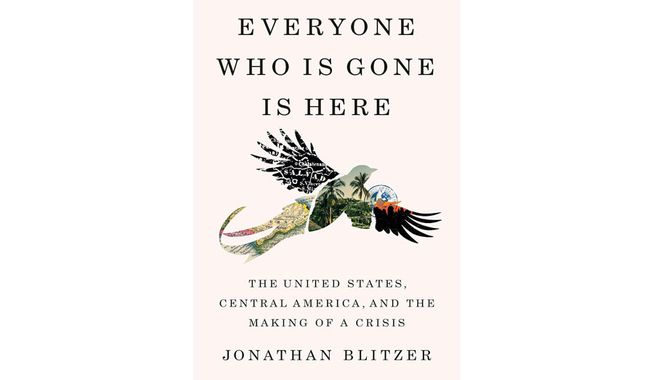
BOOK REVIEW: ‘Everyone Who Is Gone Is Here’
No issue better exemplifies our political dysfunction than immigration.
