Skip to content
Advertisement
Author profile

Miles Yu

yu123@washingtontimes.com

Miles Yu is the director of the China Center at the Hudson Institute and a visiting fellow at the Hoover Institution. His Red Horizon column appears every other Tuesday in The Washington Times. He can be reached at mmilesyu@gmail.com.

Columns by Miles Yu

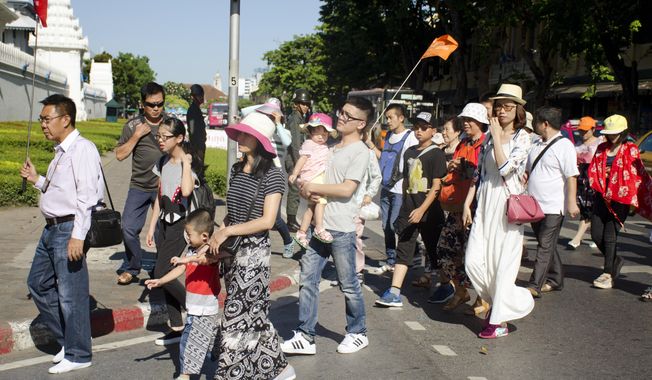
Chinese tourists cross the street in front of the Grand Palace in Bangkok, Thailand, Wednesday, Aug. 19, 2015. The bomb blast that ripped through a Bangkok shrine, leaving scores of casualties, may take a toll on  the country's tourism industry, the one bright spot in Thailand’s blighted economy. (AP Photo/Penny Yi Wang)

Inside China: Chinese tourism on the uptick

Little attention has been given to one spectacular story out of China these days: the massive numbers of Chinese tourists who are spreading out around the globe. And the rest of the world finds itself overwhelmed and largely unprepared for the growing onslaught of happy Chinese masses eager to spend and explore.

February 11, 2016
A petition drive aimed at giving Nebraska voters the final say on executions is running up against national opposition, led by a $400,000 donation from the Proteus Action League in Amherst, Massachusetts, a liberal nonprofit with ties to progressive billionaire George Soros. (Associated Press)

Inside China: George Soros vs. China

China's leaders are furious with the liberal U.S. business magnate George Soros for telling the World Economic Forum in Davos, Switzerland last week that "a hard landing is practically unavoidable" for the Chinese economy, and that monumental debt levels and deflation in China's slowing economy are to blame for the current global stock market turbulence.

January 28, 2016
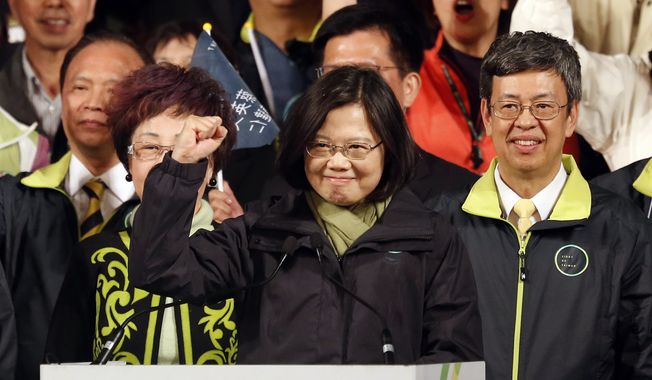
In this Saturday, Jan. 16, 2016 photo, Taiwan's Democratic Progressive Party, DPP, presidential candidate Tsai Ing-wen raises her hand as she declares victory in the presidential election, in Taipei, Taiwan. (AP Photo/Wally Santana, FIle)

Inside China: Taiwan’s referendum on China

Last Saturday voters in Taiwan overwhelmingly elected a Western-educated lawyer named Tsai Ing-wen of the opposition Democratic Progressive Party (DPP) to be the country's first female president. It was a watershed event in Taiwanese political history, not just for the lopsidedness of the result but, more importantly, for what it said about voter attitudes on an existential issue: the relevance of communist China to the island democracy.

January 21, 2016