Skip to content
Advertisement
Author profile
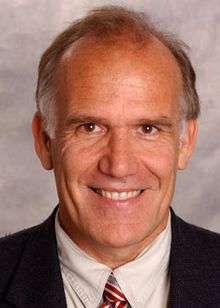
Victor Davis Hanson

Victor Davis Hanson

125795@example.com

Victor Davis Hanson is a distinguished fellow of the Center for American Greatness. He is a classicist and historian at the Hoover Institution, Stanford University, and the author of “The Second World Wars: How the First Global Conflict Was Fought and Won,” from Basic Books. You can reach him by e-mailing authorvdh@gmail.com.

Articles by Victor Davis Hanson

A firefighter checks on a homeless encampment in the path of a wildfire called the Dorsey Fire in Grass Valley, Calif., Sunday, Oct. 27, 2019. (Elias Funez/The Union via AP)

Is California returning to its wilderness roots?

About one-third of the nation's welfare recipients live in California. Millions of poor newcomers require enormously expensive state health, housing, education, legal and law-enforcement services.

October 30, 2019
Turkey illustration by Linas Garsys

Why is the U.S. still an ally to Turkey?

There are about 5,000 members of the U.S. military, mostly airmen, stationed at the huge, strategically located air base in Incirlik, Turkey, northwest of the Syrian border. The American forces at Incirlik are also the custodians of about 50 B61 nuclear bombs.

October 23, 2019
Illustration on the growing threat of China by Donna Grethen/Tribune Content Agency

Is America turning into China?

A little over 40 years ago, Chinese Communist strongman and reformer Deng Xiaoping began 15 years of sweeping economic reforms. They were designed to end the disastrous, even murderous planned economy of Mao Zedong, who died in 1976.

October 16, 2019
Illustration on the China threat by Donna Grethen/Tribune Content Agency

How China ‘woke’ the United States

In these times of near civil war, Americans agree on almost nothing. Yet, sometime in 2019, almost all of America finally got "woke" on China.

October 2, 2019
Illustration on the participatory nature of good citizenship by Linas Garsys/The Washington Times

The death of American citizenship

The concept of citizenship is being assaulted on the premodern side by the legal blending of mere residency with citizenship.

September 25, 2019
The Brexit Game Illustration by Greg Groesch/The Washington Times

Is England still part of Europe?

British Prime Minister Boris Johnson is desperate to translate the British public's June 2016 vote to leave the European Union into a concrete Brexit.

September 11, 2019
Illustration on the ghosts of World War II by Alexander Hunter/The Washington Times

The ghosts of World War II

World War II ended 74 years ago. But even in the 21st century, the lasting effects endure, both psychological and material.

September 4, 2019
Illustration on Bernie Sanders and Socialism by Alexander Hunter/The Washington Times

Why socialism, and why now?

The fresh celebrity "Squad" of newly elected identity-politics congresswomen -- Ilhan Omar, Minnesota Democrat, Alexandria Ocasio-Cortez, New York Democrat, Ayanna Pressley, Massachusetts Democrat, and Rashida Tlaib, Michigan Democrat -- often either claim to be socialists or embrace socialist ideas.

August 28, 2019
Non-aggression pact : A bad deal, 80 years ago illustration

Molotov-Ribbentrop Pact: A bad deal, 80 years ago

Some 80 years ago, on Aug. 23, 1939, Nazi Germany and the Soviet Union signed the Molotov-Ribbentrop Pact, formally known as the Treaty of non-aggression between Germany and the Union of Soviet Socialist Republics.

August 14, 2019
Illustration by Linas Garsys

Threats against Trump

Former Vice President and current presidential candidate Joe Biden has bragged on two occasions that he would like to beat up President Donald Trump.

July 31, 2019
Illustration on the Treaty of Versailles by Linas Garsys/The Washington Times

The lessons of the Versailles Treaty

The Treaty of Versailles was signed in Versailles, France, on June 28, 1919. Neither the winners nor the losers of World War I were happy with the formal conclusion to the bloodbath.

July 24, 2019
Illustration on Democratic party issue trajectories by Linas Garsys/The Washington Times

Why the Democrats are on a losing track

Presidential candidates from both parties usually sound hard-core in the primaries to appeal to their progressive or conservative bases. But for the general election, the nominees move to the center to pick off swing voters and centrist independents.

July 3, 2019
Illustration on calm over Iran by Linas Garsys/The Washington Times

Why the United States can afford to stay calm with Iran

President Trump recently ordered and then called off a retaliatory strike against Iran for destroying a U.S. surveillance drone. The United States asserts that the drone was operating in international space. Iran claims it was in Iranian airspace.

June 26, 2019