Skip to content
Advertisement
Author profile
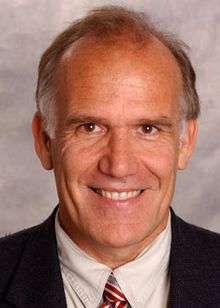
Victor Davis Hanson

Victor Davis Hanson

125795@example.com

Victor Davis Hanson is a distinguished fellow of the Center for American Greatness. He is a classicist and historian at the Hoover Institution, Stanford University, and the author of “The Second World Wars: How the First Global Conflict Was Fought and Won,” from Basic Books. You can reach him by e-mailing authorvdh@gmail.com.

Articles by Victor Davis Hanson

Illustration on illegal immigration and the border wall by Nancy Ohanian/Tribune Content Agency

For Democrats, a successful border wall means bad politics

There was likely never going to be "comprehensive immigration reform" or any deal amnestying the DACA recipients in exchange for building the wall. Democrats in the present political landscape will not consent to a wall. For them, a successful border wall is now considered bad politics in almost every manner imaginable.

December 19, 2018
Illustration on President Trump's need to reach out to minority voters by Alexander Hunter/The Washington Times

Is there a 51 percent solution for Trump?

President Trump's challenges are not really his economic policies and foreign affairs agendas. For the most part, they are supported by the American people and are resulting in prosperity at home and security abroad.

November 28, 2018
Illustration on 1968's lingering influence on current culture and policy by Alexander Hunter/The Washington Times

Did 1968 win the cultural war?

Fifty years ago this year, the '60s revolution sought to overturn U.S. customs, traditions, ideology and politics.

November 21, 2018
Illustration on rules for civil discourse by Linas Garsys/The Washington Times

A voluntary code of civic honor might help redeem lost credibility and self-respect

Amob of protesters associated with the radical left-wing group Antifa swarmed the private residence of Fox News host Tucker Carlson on the night of Nov. 7. They yelled, "Tucker Carlson, we will fight! We know where you sleep at night!" The mob's apparent aim was to catch Mr. Carlson's family inside and so terrify them that he might temper his conservative views. Only Mr. Carlson's wife was home at the time. She locked herself in a pantry and called police.

November 14, 2018
Illustration on the end of World War I by Linas Garsys/The Washington Times

When World War I ended

The First World War ended 100 years ago this month on Nov. 11, 1918, at 11 a.m. Nearly 20 million people had perished since the war began on July 28, 1914.

November 7, 2018
Illustration on the last minute gambits of the Democrat Party approaching the mid-term elections by Linas Garsys/The Washington Times

Midterm optics may be bad for ‘progressives’

For progressives, the looming midterm elections apparently should not hinge on a booming economy, a near-record-low unemployment rate, a strong stock market and unprecedented energy production. Instead, progressives hope that race and gender questions overshadow pocketbook issues.

October 24, 2018
FILE - In this Dec. 13, 2016, file photo, President-elect Donald Trump and Kanye West pose for a picture in the lobby of Trump Tower in New York.  Kanye West will visit the White House on Thursday to meet with President Donald Trump and his son-in-law Jared Kushner talk about manufacturing in America, gang violence, prison reform and Chicago violence. (AP Photo/Seth Wenig, File)

Could Trump win 20 percent of the African-American vote in 2020?

The provocative Donald Trump certainly seems to be disliked by a majority of African-American professional athletes, cable news hosts, academics and the Black Congressional caucus. Yet there are subtle but increasing indications that his approval among other African-Americans may be reaching historic highs for a modern Republican president.

October 17, 2018

A new era for the China-Russia-U.S. triangle

Mr. Kissinger's approach was sometimes called "triangulation." But distilled down to its essence, the phrase meant ensuring that China and Russia were not friendlier to each other than each was to the United States. Given that the Soviet Union was much stronger than China at the time, Mr. Kissinger especially courted Beijing.

October 10, 2018