



The White House found itself on the defensive Wednesday over President Obama’s recess appointment of a key official to help implement his health care overhaul plan, facing a bipartisan torrent of criticism from lawmakers who said the move short-circuits the legislative-oversight process.
In tapping Harvard Medical School professor Donald Berwick to head the Centers for Medicare and Medicaid Services while lawmakers are briefly out of town, Mr. Obama sidestepped a messy confirmation battle with members of the Senate GOP - something he said was necessary, given Republicans’ penchant for slow-walking his appointments.
But critics of the move, announced Tuesday evening and made official Wednesday, noted that Senate Democrats had yet to schedule a committee hearing on the nomination, and even the Democratic chairman of the panel with jurisdiction over CMS expressed dismay with the decision.
“I’m troubled that, rather than going through the standard nomination process, Dr. Berwick was recess-appointed,” said Senate Finance Committee Chairman Max Baucus, Montana Democrat. The Senate confirmation process, he added, is a check on executive power and “ensures that crucial questions are asked of the nominee - and answered.”
Republicans had been sharply critical of statements on health care access and other matters made by Dr. Berwick, who will likely play a critical role as aspects of Mr. Obama’s health overhaul package come into force.
The top Republican on the Senate finance panel, Sen. Charles E. Grassley of Iowa, said he requested a hearing on Dr. Berwick two weeks ago.
“The American people have a right to know about Berwick’s background, his past statements supporting rationing and government-run health care, and any potential conflicts of interest. All of that is hidden when the confirmation process is circumvented,” Mr. Grassley said.
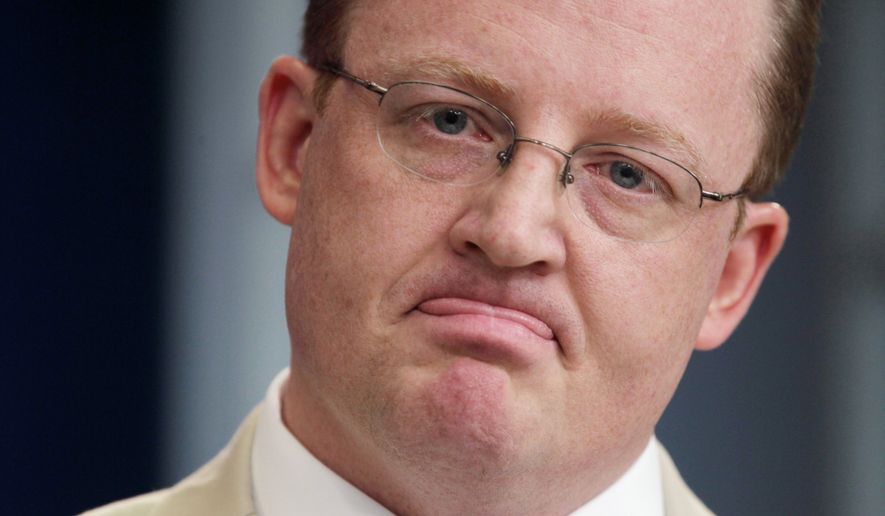
White House spokesman Robert Gibbs, facing questions over the president’s move at his daily briefing, said the swift appointment was necessary given the looming deadlines on the health care changes.
“There are aspects of the health care law that have to be implemented on a timeline that I’m sure many who oppose Dr. Berwick for political reasons didn’t want to see implemented,” Mr. Gibbs told reporters. “We are not going to have the viewpoints of a few hold up the law of the land.”
The White House had already come under fire for what critics said was overselling the credentials of Dr. Berwick. The Washington Times reported this week that two Harvard professor positions claimed for Dr. Berwick were essentially “honorary” posts with minor teaching and administrative duties.
Dean Zerbe, a former senior counsel for Mr. Grassley on the Senate Finance Committee, told The Times that there was a “yawning gap” between the White House account of Dr. Berwick’s professional career and what the nominee listed himself on Senate disclosure forms.
In addition to Dr. Berwick, Mr. Obama on Wednesday officially announced that he was making recess appointments of Joshua Gotbaum to be director of the Pension Benefit Guaranty Corp. and Philip E. Coyle III to be associate director for national security and international affairs in the White House Office of Science and Technology Policy.
Although the process was designed originally under the Constitution to fill executive branch posts when Congress was in the midst of a lengthy recess, modern presidents have exercised the power even when lawmakers were taking the shortest of breaks. Mr. Obama made his three most recent appointments while lawmakers were taking a weeklong break for the Fourth of July.
The administration argued that Senate Republicans intent on scoring “political points” were to blame for blocking Dr. Berwick and more than 180 other presidential nominations.
Nominations are a perennially thorny issue, with the president’s party accusing the opposition in Congress of delaying administration picks for key executive branch posts and the federal bench. Republicans similarly accused Democrats of stalling action on President George W. Bush’s nominees in the eight years before Mr. Obama took office.
Republicans and conservative groups also questioned Mr. Coyle’s nomination because of his past criticism of missile-defense systems. But it was a Democratic senator, Sherrod Brown of Ohio, who put a legislative hold on the nomination of Mr. Gotbaum to coax the government to intervene in an unrelated pension dispute between a private company and its retirees.
Despite his unhappiness with the process, Mr. Baucus added that he looked forward to dealing with Dr. Berwick and the CMS in implementing the health care law.
But Republicans charged that the president used the recess appointment to avoid public scrutiny of comments they say reveal Dr. Berwick’s affinity for government-run health care.
For instance, they have pounced on an interview he did last summer with a trade journal in which he praised Britain’s nationalized health care system and said: “The decision is not whether or not we will ration care - the decision is whether we will ration with our eyes open. And right now, we’re doing it blindly.”
White House officials pointed to support among major medical societies for Dr. Berwick, founder of a Boston-area think tank on health care policy, and shrugged off questions about his comments as political gamesmanship.
“This is the exact type of political game that the American people have come to understand dominates Washington and doesn’t actually make their health care more affordable,” Mr. Gibbs said when asked whether Mr. Obama agreed with Dr. Berwick’s statements.
Holds on nominees are a time-honored Senate tradition, and were employed by Mr. Obama himself during his four years in the chamber. In late 2005, he blocked all of Mr. Bush’s Environmental Protection Agency nominees to try to force the release of new rules on lead paint. A year later, he blocked a Federal Aviation Administration nominee to try to force the FAA to decide whether Midwest wind farms would interfere with radar.
Wednesday’s actions bring Mr. Obama’s total number of recess appointments to 18. His first round, made in March, included Craig Becker, a former union lawyer vehemently opposed by Republicans and leading business groups, to serve on the National Labor Relations Board.
Mr. Bush had made 15 such appointments by this time in his presidency, and made a total of 171 in his eight years in office. That compares with 139 recess appointments by President Clinton in his two terms.

Please read our comment policy before commenting.