



Second of two parts
SLOVAN, Pa. — Paul Battista opened his industrial supply store in this small town southwest of Pittsburgh 31 years ago in the hopes of doing big business with the infant solar-power industry. He called his store Sunnyside Supply as a nod to what he viewed at the time as the future of American energy.
Times have changed — and so has his customer base.
Sunnyside’s recent profits are through the roof, up more than 200 percent in the past three years. Mr. Battista’s workforce has tripled since 2008, from five to 15 employees. Solar power wasn’t the economic savior, however. Instead, the booming Marcellus Shale natural gas drilling industry gave the small-town businessman the means to build a bigger, better store and invest in new trucks to transport goods to gas companies drilling across western Pennsylvania.
“We’re modeling our business to what they need,” Mr. Battista said of his approach, which often involves nighttime trips across the state to fetch rare parts.
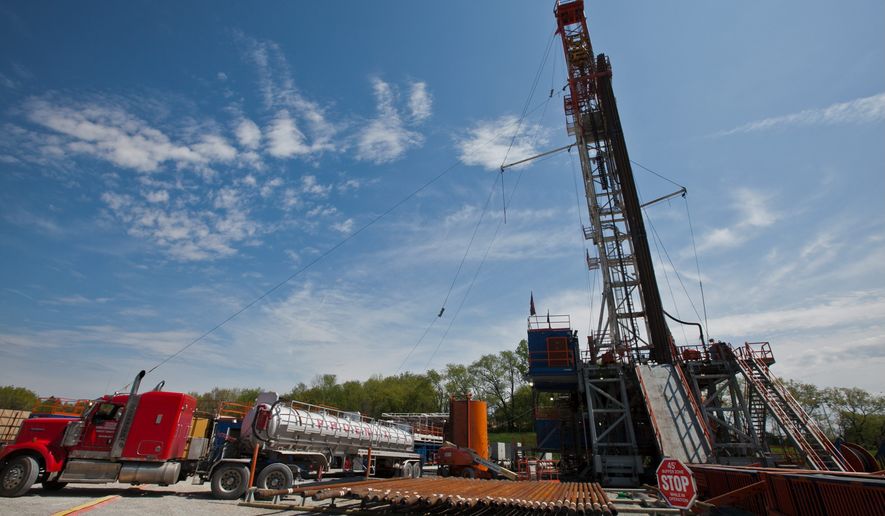
Sunnyside Supply’s success is just one side effect of the gas industry’s mad rush for Pennsylvania, one of the richest parts of the Marcellus Shale, a mammoth chunk of marine sedimentary rock stretching from New York as far south as Kentucky. Analysts say “the Shale” holds as much as 516 trillion cubic feet of natural gas, enough to supply America’s demand for a century or more.
A method called hydraulic fracturing, or “fracking,” is the key to harvesting the bountiful supply thousands of feet below ground. Millions of gallons of water are mixed with sand and chemicals and pumped into the ground, cracking open the rock and liberating the gas so it can be pumped to waiting pipelines.
The cutting-edge technology is revolutionizing the energy industry, changing the economic landscape across the state and giving new life to communities that were struggling to make ends meet.
Environmental critics have raised a number of concerns, including the risk of contaminating local water supplies and the impact on vulnerable small communities from billion-dollar outsider corporate interests focused first and foremost on making a quick buck. Other critics say the gas companies should face higher taxes to help the state’s dire financial situation.
Sen. Robert P. Casey Jr., Pennsylvania Democrat, has rejected the idea that drilling for natural gas and protecting the local environment are mutually exclusive, but he told a Capitol Hill hearing last week that there was reason to be cautious.
“I support responsible gas exploration, yet I strongly feel that we must protect against repercussions that not only harm the environment and put people at risk, but also hurt business and affect the economy. Damaging incidents can spark strong backlashes and end up stalling economic development.”
Early payoff
Still, the early payoff from the energy boom is readily apparent in these parts.
Newly paved roads are common in Washington and surrounding areas. Multibillion-dollar gas companies need sturdy pathways to move their rigs and other equipment. The decaying, pothole-riddled streets or dusty, unpaved routes of years past won’t cut it.
“Us as a township, we could never afford to even think of building a road like that,” said Mr. Battista, tools and equipment hanging on racks behind him and employees busily jotting down the day’s order.
Other businesses also are seeing huge paydays. Rig workers for drilling companies such as Range Resources, one of the biggest players in the game, end up at local bars and restaurants after their shifts.
But they also must eat on the job. The hectic schedule doesn’t allow them to clean up and take a formal one-hour lunch break. Instead, the food comes to them.
“It’s the best thing that ever happened to me,” said Frank Puskarich, owner of Hog Father’s restaurant in Washington and daily caterer to Range Resources’ “frack jobs” across the region. The boisterous barbecue pit master said he has hired eight employees who do nothing but prepare chicken, ribs, brisket, macaroni and cheese and other entrees for tired, hungry workers. He picked up the contract with Fort Worth, Texas-based Range Resources five years ago, and that also has helped drive business to his small establishment in Washington.
“It’s standing-room only for lunch” every day, Mr. Puskarich said. “[Business] has been tremendous. There’s a lot of work for people who want it, and not just in the food business.”
Along Interstate 80 in northeastern Pennsylvania, hotels are being built at a frantic pace. It’s tough to get a room in places such as Towanda in Bradford County — the epicenter of Marcellus Shale drilling in the northern half of the state.
Bradford County and nearby Tioga County now boast two of the lowest unemployment rates in the state, a stark change from just a few years ago.
“These towns a few years ago were on their last legs,” said Gene Barr, vice president of government and public affairs at the Pennsylvania Chamber of Business and Industry.
Others are receiving big checks simply because they are lucky enough to live on land suitable for drilling. Range Resources and other companies work out lease agreements with residents, usually farmers who part with a few acres in exchange for upfront money and monthly royalties for years. Many of those farmers carry on their work as usual, tending to their land and harvesting crops, but are able to invest thousands of dollars in new equipment because of their deals with energy giants.
A drive through backwoods areas of western Pennsylvania reveals new homes with expensive sport utility vehicles or luxury cars in driveways, just seven years after the first Marcellus Shale well was drilled in the state.
“The industry, by its very nature, has to have good relations with the landowners. They’re our business partners,” said Kathryn Klaber, president of the Marcellus Shale Coalition, a brotherhood of gas companies.
Schools also are jumping on the bandwagon, offering training programs for their students to lead them into jobs where they often earn $75,000 a year or more. The drilling companies recruit many of those students before they graduate.
A battle over taxes
Pennsylvania is attractive to big energy companies for another reason: no severance tax on natural-gas production.
The state’s competitors — including Texas, Oklahoma, Wyoming, Louisiana and West Virginia — all tax gas, but Pennsylvania remains the only state that does not. For years, lawmakers have debated whether such a tax is necessary. Critics contend that the industry has blocked a tax through intense lobbying efforts and the financial support for leaders in the state legislature.
One of most high-profile examples involved Senate President Pro Tempore Joseph B. Scarnati III, who accepted tickets for the February Super Bowl from a leading gas-drilling company. Afterward, he said he planned all along to reimburse the company for the tickets, lodging costs and other related expenses.
Mr. Scarnati earlier this month introduced a plan calling for gas companies to pay the state $10,000 for each well they drill in Pennsylvania. At least six other tax proposals are alive and well in the state, including one from state Rep. Greg Vitali, a Democrat who represents the affluent Philadelphia suburbs.
“I think it is political influence that’s at play here,” he said in an interview with The Washington Times on Monday. “The drilling industry has spent enormous amounts of money on political contributions. There is no good policy reason to not impose this tax.”
Mr. Vitali estimated that his plan would raise $200 million this fiscal year, money that would go a long way to plug Pennsylvania’s projected multibillion-dollar budget deficit. It would tax natural gas at 6 percent of the current market value of the fuel. He said that would still give his state an economic edge over others, some of which tax gas at nearly 10 percent.
The money would be split three ways: A third would go to the state’s general fund, a third to municipalities and a third to environmental stewardship programs, which fund water and forest-restoration efforts statewide.
Of the plans on the table, Mr Vitali’s would raise the most money over the next five years, according to an analysis from the Pennsylvania Budget and Policy Center. Other proposals would implement tax rates of about 3 percent.
Natural-gas proponents think critics are off base.
“It’s a myth that they’re not paying any taxes,” said Tom Ridge, former Pennsylvania governor and homeland security secretary and current adviser to the Marcellus Shale Coalition. He argues that the drilling companies already pay millions of dollars into state coffers each year in corporate and other taxes.
Others dispute that. The Budget and Policy Center released a report last month claiming that gas companies structure their books to avoid taxes.
Either way, a “tax” appears unlikely. Republicans dominate the House and Senate, and Gov. Tom Corbett, also a Republican, made a “no new taxes” pledge during his election campaign last year. Some say he could remain true to his word but still embrace an “impact fee,” as Mr. Scarnati and others have proposed.
Industry insiders also point out that gas companies don’t need the government’s help to start operations, as is often the case with large-scale wind- or solar-power projects.
“We’re not waiting for subsidies. We’re not waiting on new technology from anyone. This was done the old-fashioned way,” said Range Resources spokesman Matt Pitzarella.
Contact the author


Please read our comment policy before commenting.