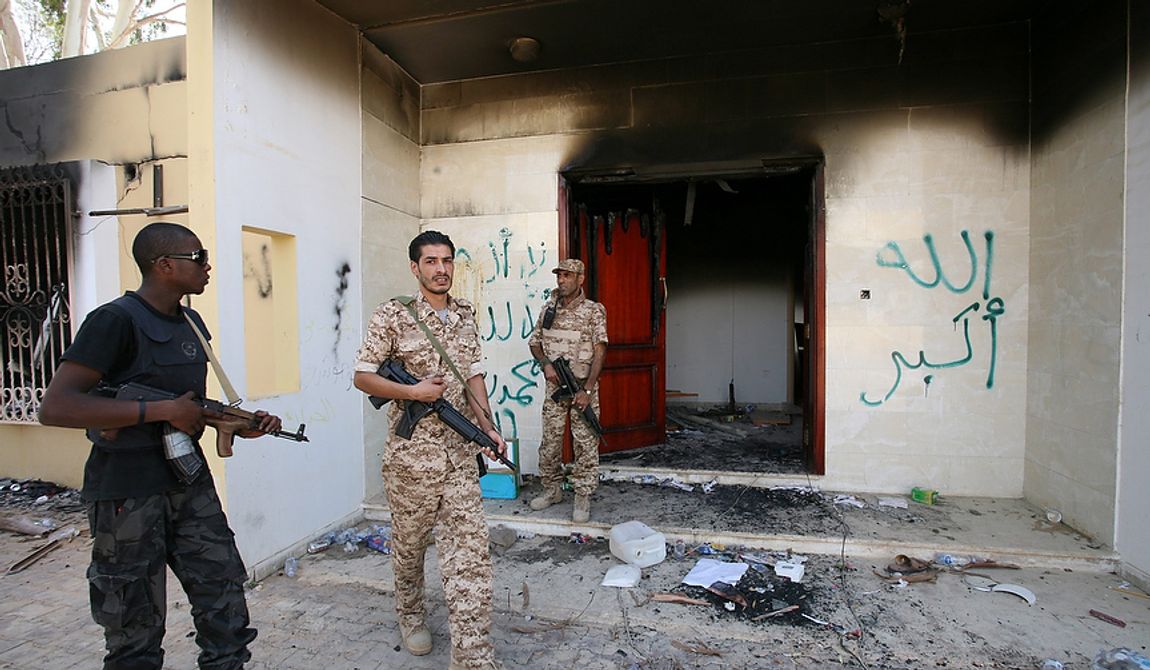
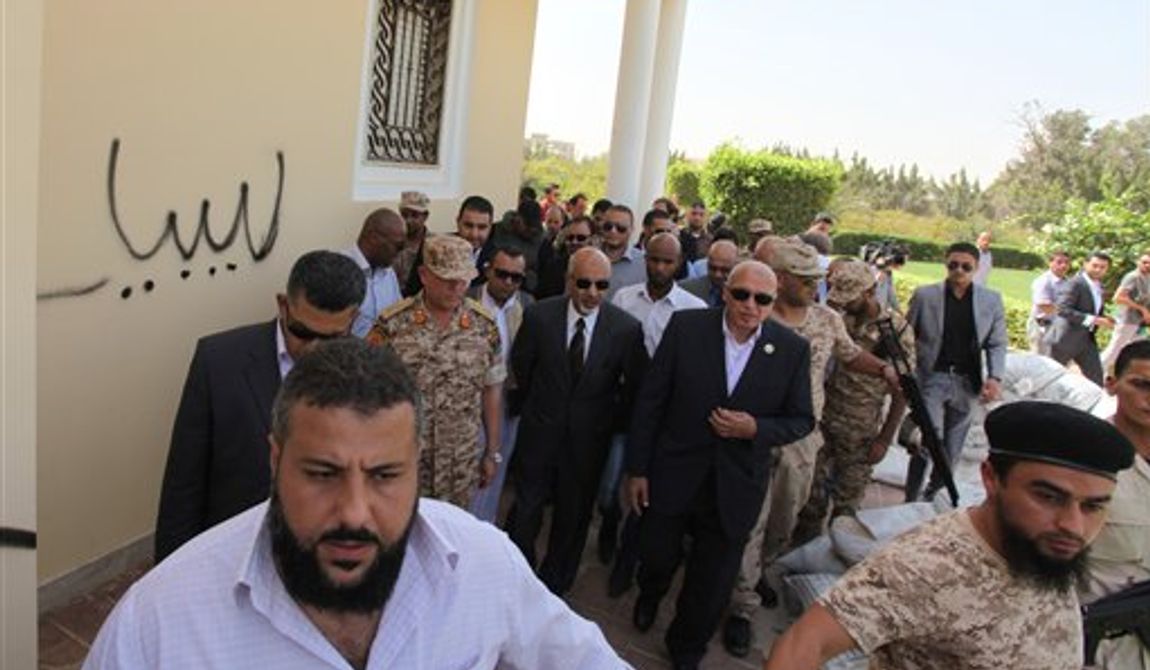
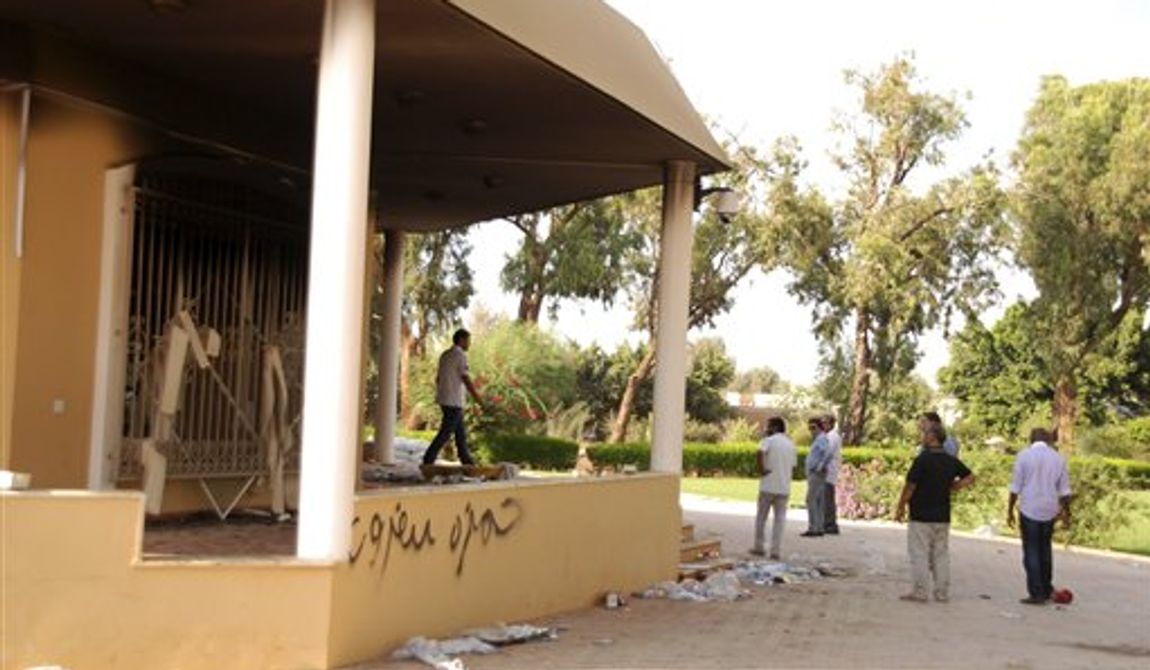

** FILE ** Libyan military guards check one of the burned-out buildings at the U.S. Consulate in Benghazi, Libya, on Saturday, Sept. 14, 2012, during a visit by Libyan President Mohammed el-Megarif to express sympathy for the death of J. Christopher Stevens, the U.S. ambassador to Libya, and his colleagues in the Sept. 11 attack on the consulate. (Associated Press)
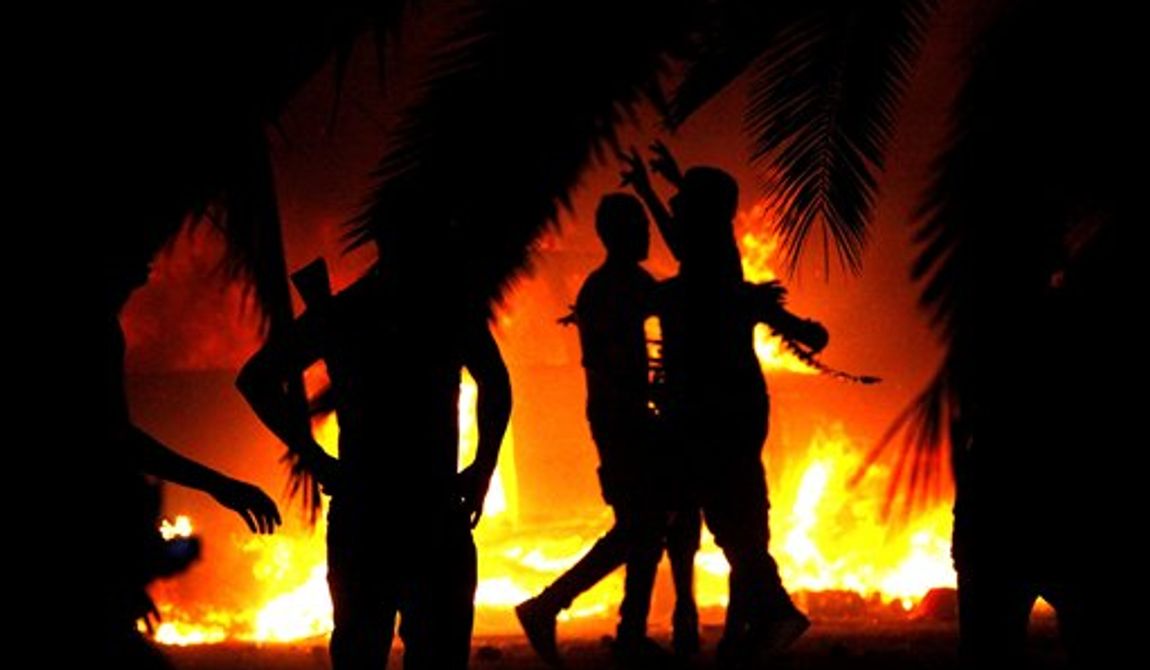
**FILE** Libyan civilians celebrate the raiding of Ansar al-Shariah Brigades compound in Benghazi, Libya, on Sept. 21, 2012, after hundreds of Libyans, military and police raided the Brigades base. (Associated Press)
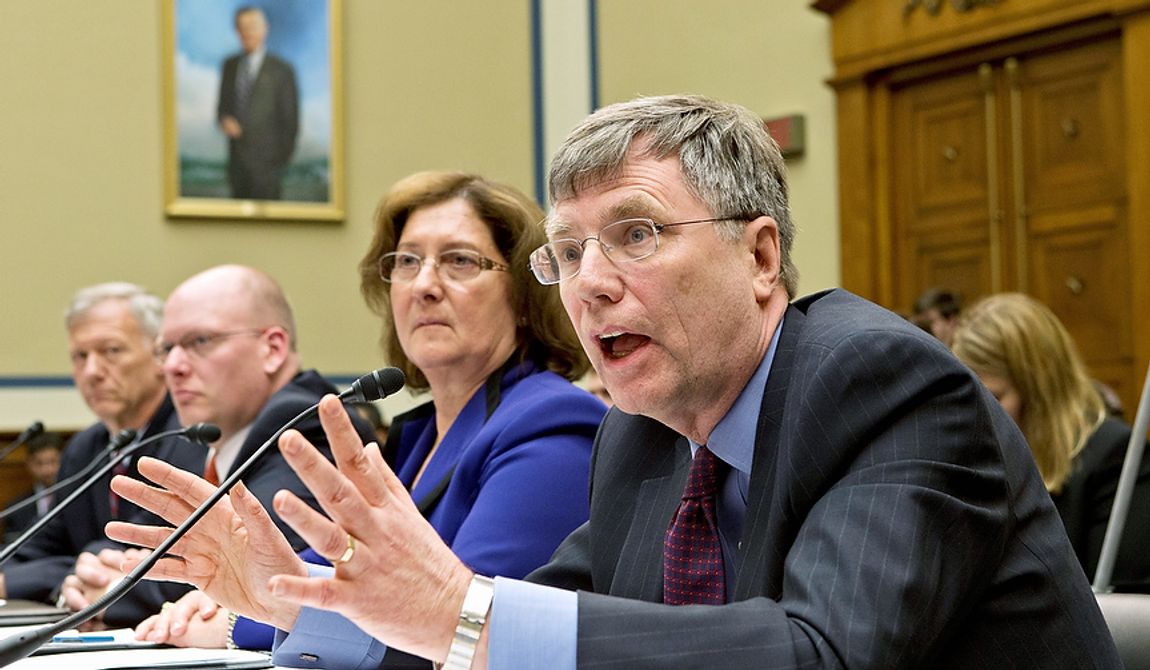
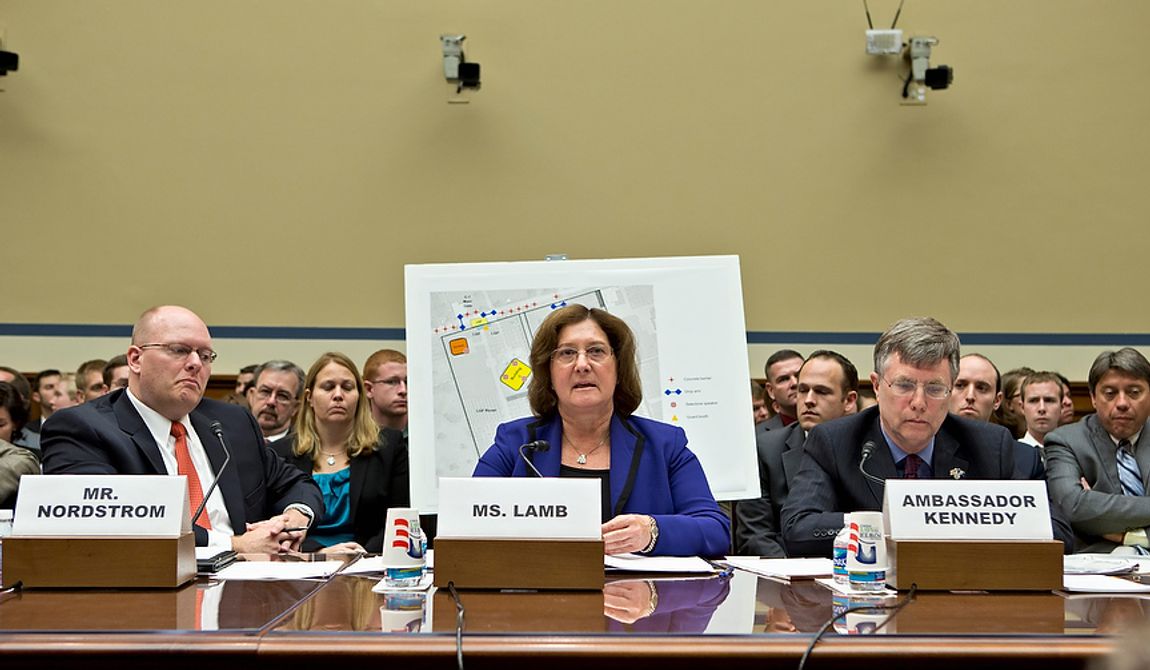
**FILE** Ambassador Patrick Kennedy (right), under secretary for management at the State Department, answers questions Oct. 10, 2012, on Capitol Hill during the House Oversight and Government Reform Committee hearing investigating the Sept. 11, 2012 attack on the American consulate in Benghazi, Libya. The attack resulted in the death of U.S. Ambassador Christopher Stevens and other Americans. From left are Kennedy; Charlene Lamb, deputy assistant secretary for international programs at the State Department's Bureau of Diplomat Security; Eric Nordstrom, a regional security officer with the State Department; and Lt. Col. Andrew Wood, a Utah National Guard Army Green Beret who was the top security official at the consulate in Libya. (Associated Press)
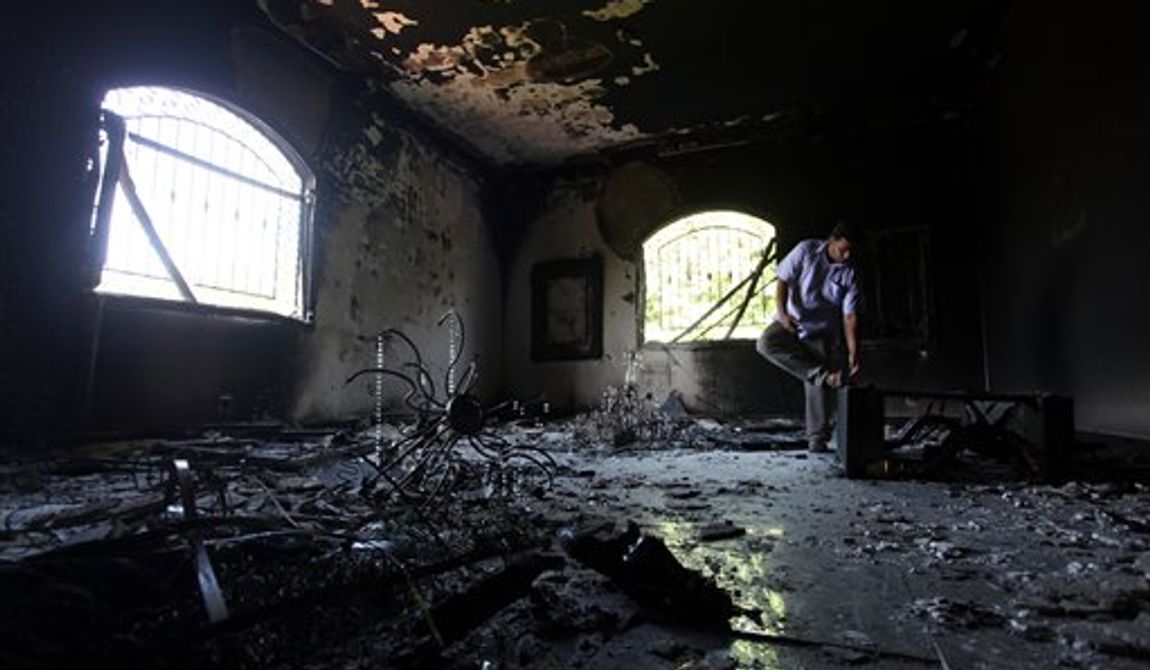
A Libyan man investigates the inside of the U.S. Consulate in Benghazi, Libya, on Thursday, Sept. 13, 2012, after an attack that killed four Americans, including Ambassador J. Christopher Stevens, two days before. (Associated Press)
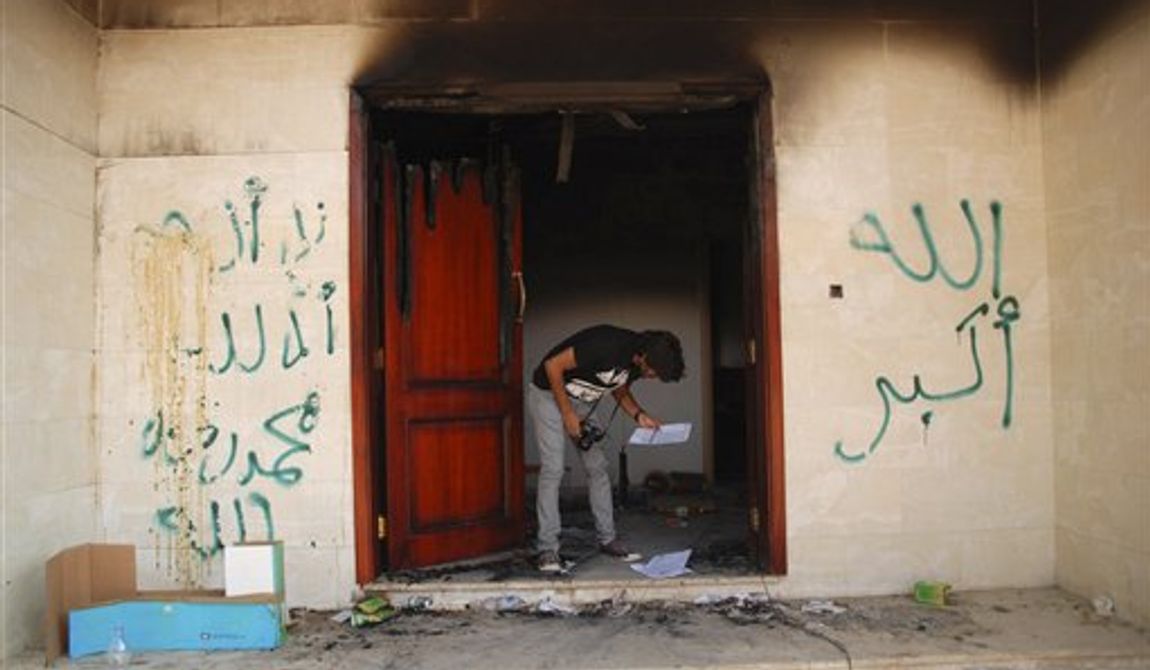
**FILE** A man looks at documents Sept. 12, 2012, at the U.S. consulate in Benghazi, Libya, after an attack that killed four Americans, including Ambassador Chris Stevens. The graffiti reads, "no God but God," "God is great," and "Muhammad is the Prophet." (Associated Press)
**FILE** President Mohammed el-Megarif (center) visits the U.S. Consulate in Benghazi, Libya, on Sept. 14, 2012, to express sympathy for the death of U.S. Ambassador Chris Stevens and his colleagues in the Sept. 11 attack on the consulate. (Associated Press)
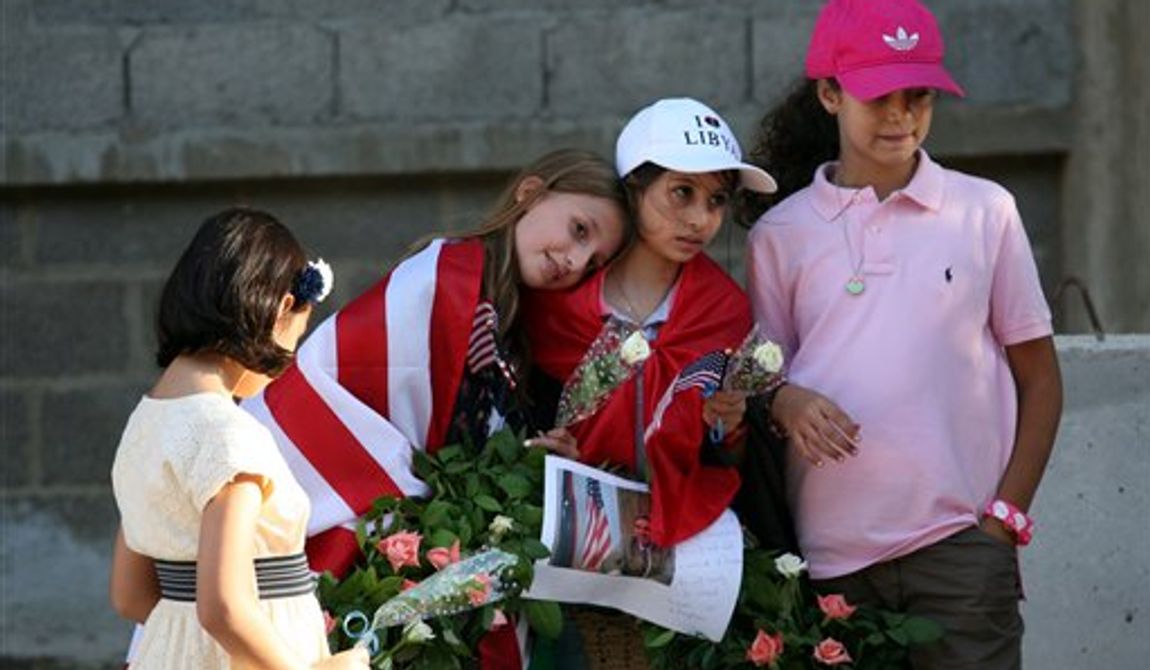
Libyan and American children carry a wreath Sept. 17, 2012, with a photo of U.S. Ambassador Chris Stevens on it as they gather in Benghazi, Libya, to pay their respect to the victims of the Sept. 11 attack on the U.S. consulate. Stevens and three other Americans were killed in the attack. (Associated Press)
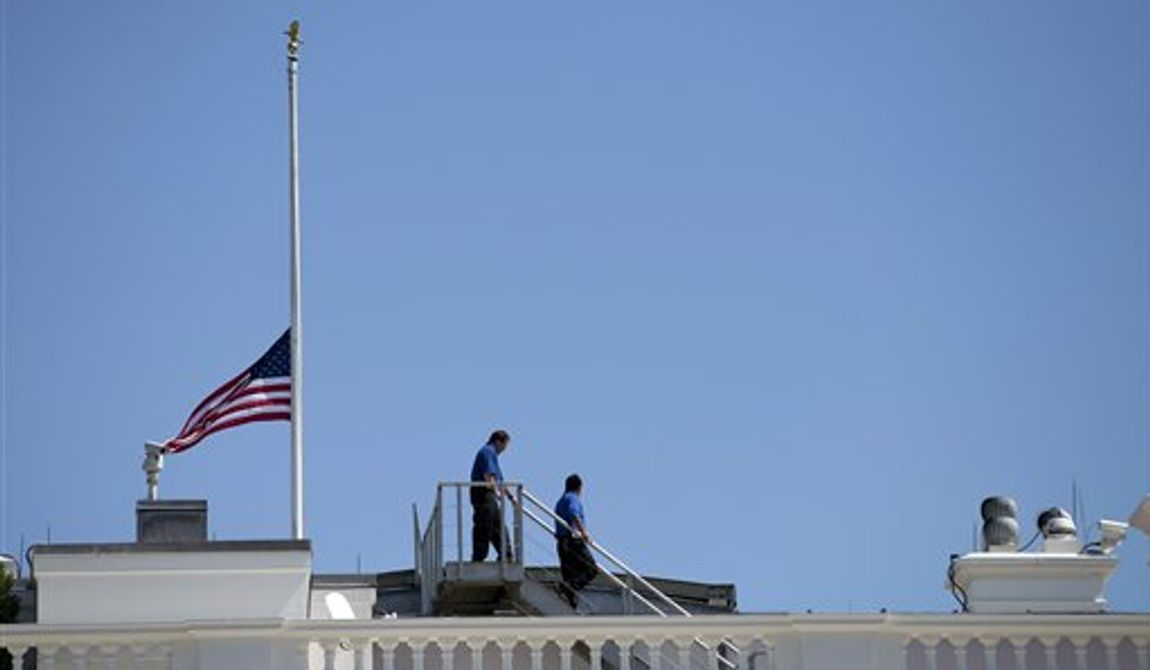
**FILE** White House workers walk on the roof of the White House on Sept. 12, 2012, after lowering the flag to half-staff for the death of U.S. ambassador to Libya Christopher Stevens. (Associated Press)
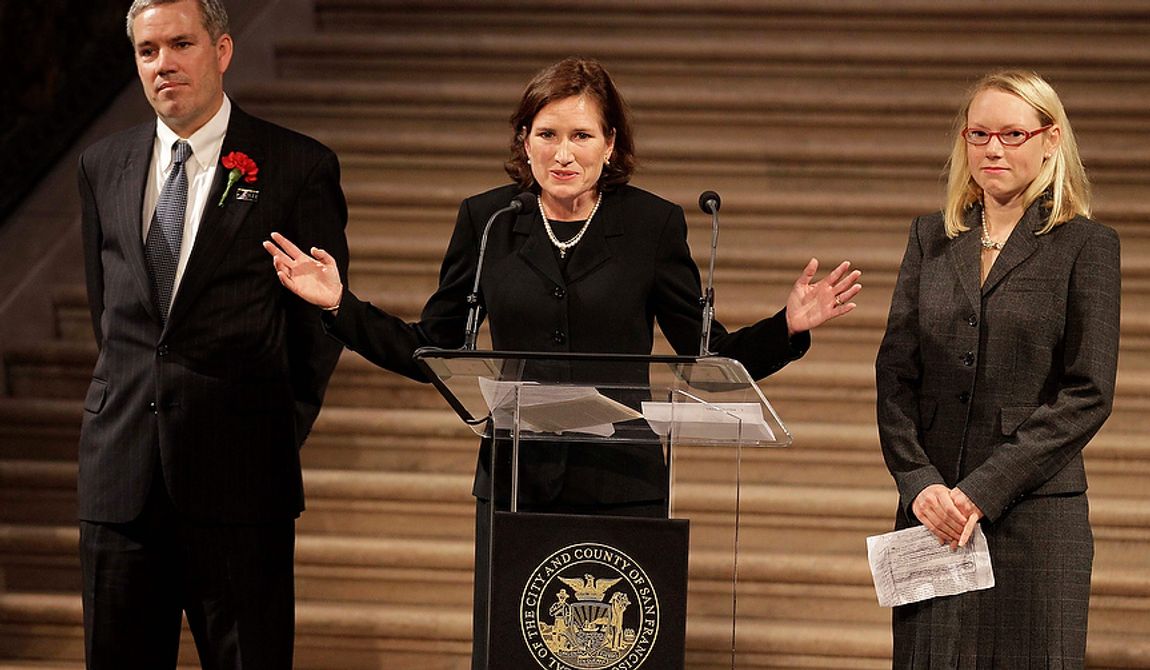
**FILE** Tom Stevens (left), Anne Stevens Sullivan (center) and Hilary Stevens Koziol, siblings of slain U.S. Ambassador J. Christopher Stevens, speak Oct. 16, 2012, about their brother during a public memorial in the rotunda at City Hall in San Francisco. Stevens, 52, and three other Americans were killed Sept. 11 when gunmen attacked the United States Mission in Benghazi, Libya. (Associated Press
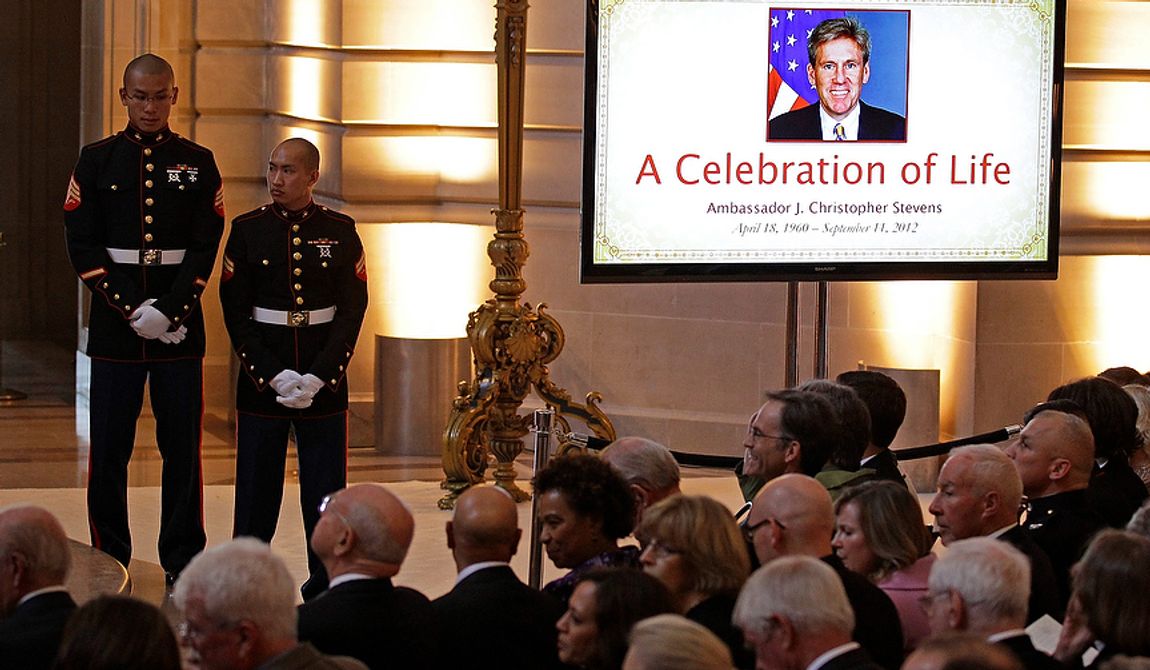
**FILE** A Marine honor guard stands during an Oct. 16, 2012, public memorial in the rotunda of City Hall in San Francisco to honor slain U.S. Ambassador J. Christopher Stevens. Stevens, 52, and three other Americans were killed Sept. 11 when gunmen attacked the United States Mission in Benghazi, Libya. (Associated Press)
**FILE** Two women hold each other Sept. 19, 2012, as they watch the hearse of former Navy SEAL Glen Doherty leave the Church of St. Eulalia in Winchester, Mass., after his funeral. Doherty, 42, and three others, including the U.S. ambassador to Libya, died in a Sept. 11 attack on the U.S. consulate in Libya. (Associated Press)
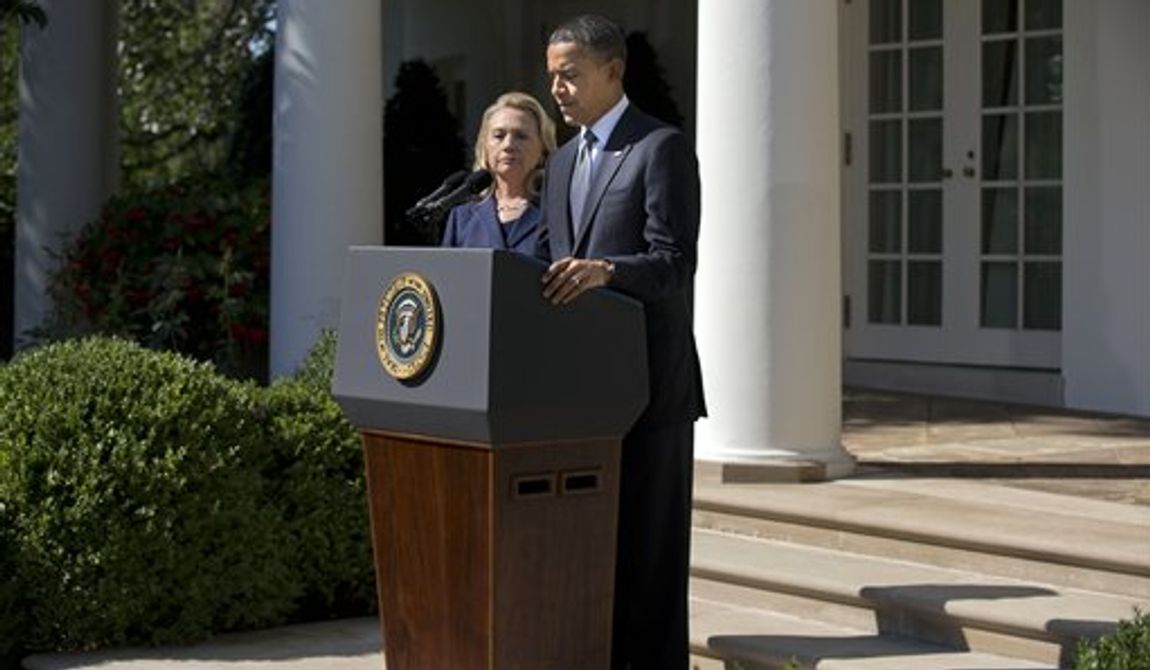
**FILE** Secretary of State Hillary Clinton looks on as President Obama delivers a statement Sept. 12, 2012, in the Rose Garden of the White House on the death of Christopher Stevens, U.S. ambassador to Libya. (Associated Press)
**FILE** Libyans gather Sept. 12, 2012, at the gutted U.S. Consulate in Benghazi, Libya, after an attack the previous day that killed four Americans, including Ambassador Chris Stevens. (Associated Press)
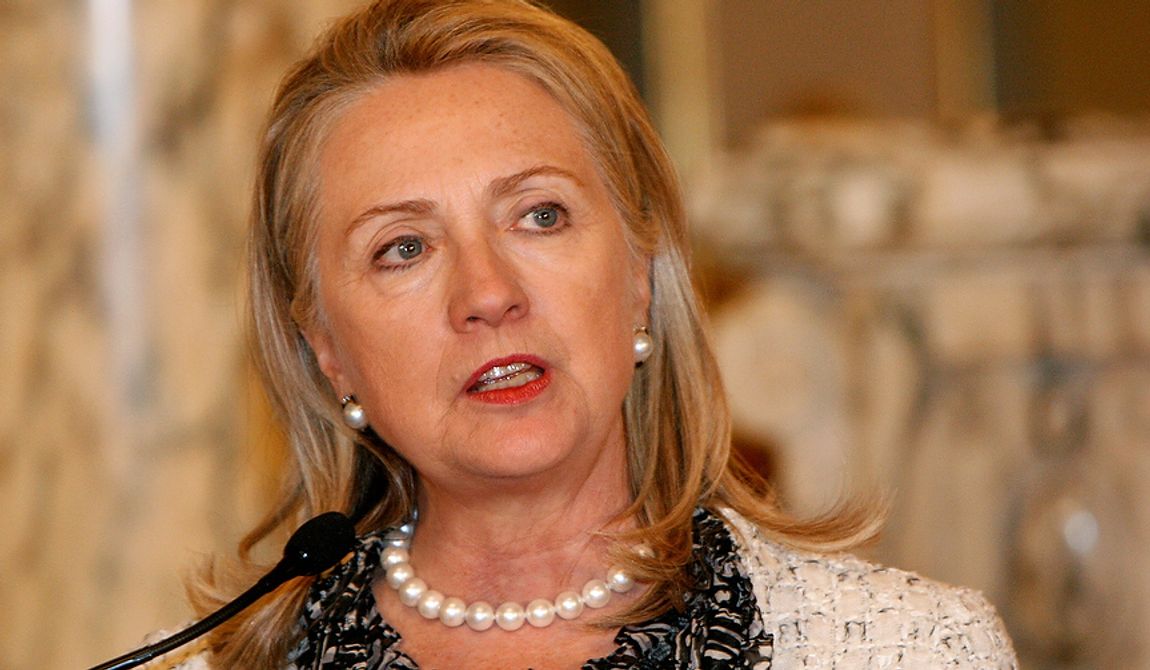
**FILE** U.S. Secretary of State Hillary Rodham Clinton speaks Oct. 15, 2012, in Lima, Peru, after meeting Peru's President Ollanta Humala. Taking responsibility for security at the U.S. Consulate in Libya, where an attack by extremists last month killed the U.S. ambassador and three other Americans, Clinton said that security at all of America's diplomatic missions abroad is her job, not that of the White House. (Associated Press)
**FILE** Charlene Lamb (center), deputy assistant secretary for international programs at the State Department's Bureau of Diplomat Security, testifies Oct. 10, 2012, on Capitol Hill before the House Oversight and Government Reform Committee hearing investigating the Sept. 11, 2012 attack on the American consulate in Benghazi, Libya, that resulted in the death of U.S. Ambassador Christopher Stevens and other Americans. She is joined by Eric Nordstrom (left), a regional security officer with the State Department, and Amb. Patrick Kennedy, under secretary for management at the State Department. (Associated Press)
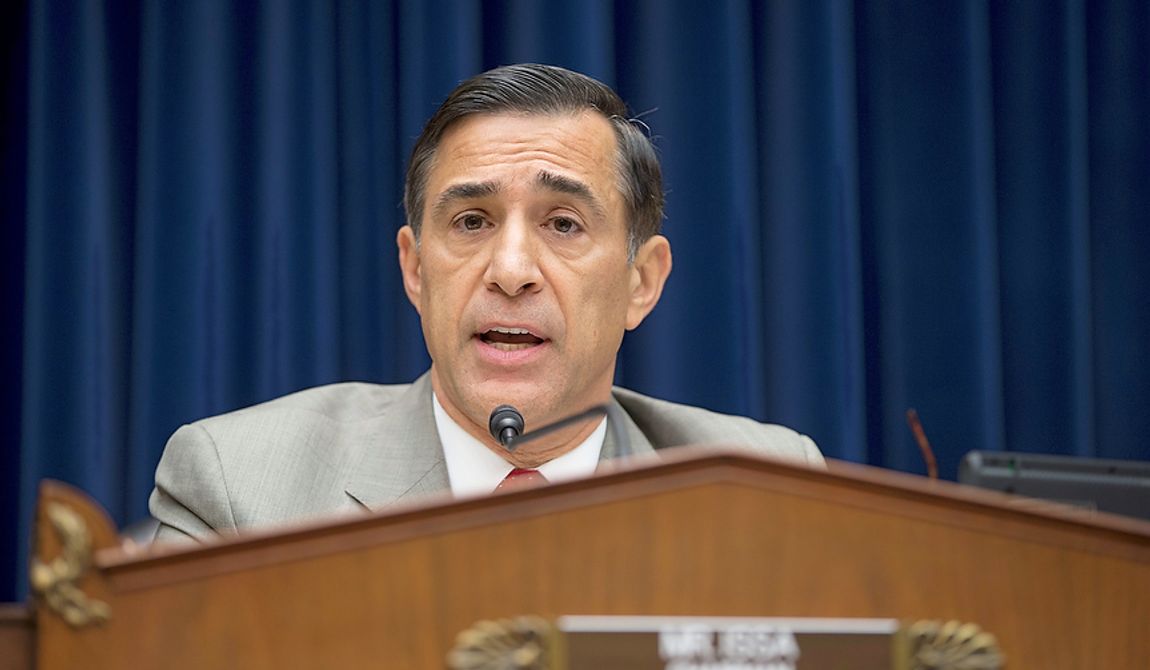
** FILE ** House Oversight Committee Chairman Rep. Darrell Issa, California Republican, delivers his opening statement Oct. 10, 2012, on Capitol Hill during the committee's hearing on the Sept. 11 attack on the U.S. Consulate in Benghazi, Libya, that resulted in the death of U.S. Ambassador Christopher Stevens. (Associated Press)
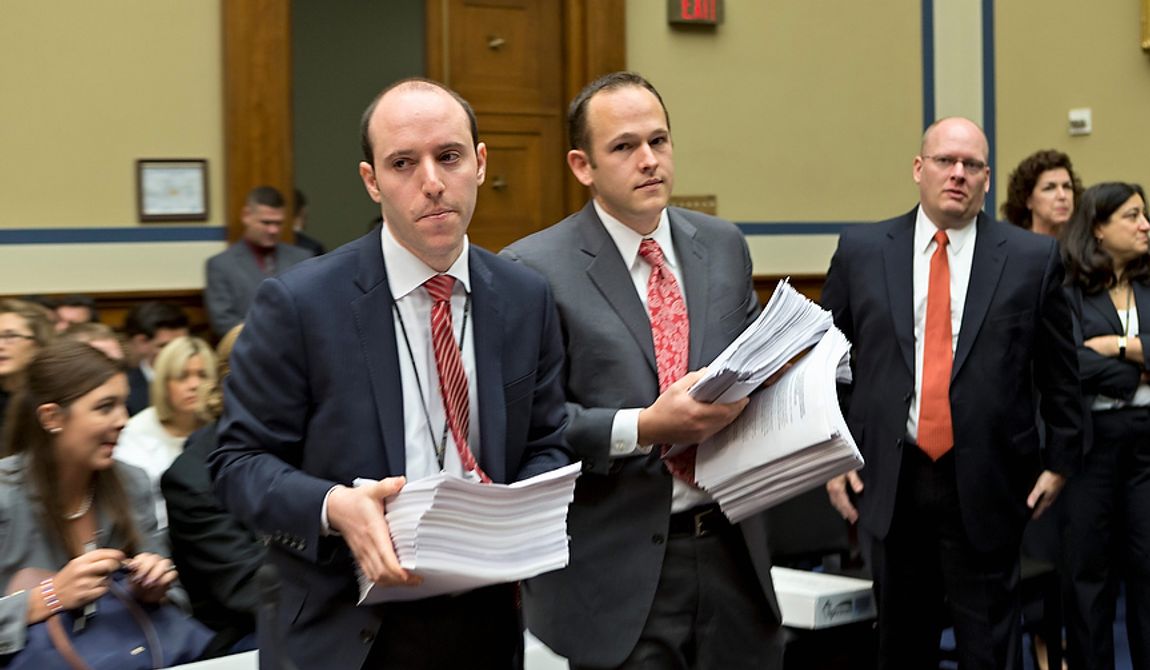
**FILE** Aides bearing armfuls of papers arrive Oct. 10, 2012, on Capitol Hill with witnesses from the State Department for the House Oversight and Government Reform Committee hearing investigating the Sept. 11 attack on the American consulate in Benghazi, Libya, that resulted in the death of U.S. Ambassador Christopher Stevens and other Americans. (Associated Press)House Speaker John A. Boehner on Thursday demanded that President Obama explain why his administration has struggled to handle the terrorist attack on the U.S. Consulate in Benghazi, Libya, in a move that could raise the political peril to the White House.
In a letter to Mr. Obama, the Republican speaker demanded that the president answer five questions including why his administration turned down requests for more security at the diplomatic post, and why the White House didn’t do a better job of acknowledging it as a terrorist attack until well after the fact.
“Our country will not be able to move on from the tragedy of Sept. 11, 2012, until the public better understands the answers,” Mr. Boehner wrote.
The Ohio Republican is stepping into a fight that his party’s presidential nominee, Mitt Romney, has shied away from in recent weeks. At this week’s foreign policy debate, Mr. Romney didn’t raise any questions about the White House’s handling of Benghazi, and instead repeatedly praised Mr. Obama’s decision-making.
But House Republicans have pushed the issue, including using their control of the House oversight committee to release internal administration emails that indicate some in the administration should have been able to spot the terrorist roots of the attack early on.
While Mr. Obama made a single reference to terrorism in his initial comments after the attack, his administration pinned blame for the assault on a backlash to a video mocking Islam. The White House has said it was reflecting what the intelligence community had indicated to it and wasn’t trying to mislead the public.
But Mr. Boehner said there are inconsistencies in what the administration said in September and information that the recently-released emails show was available to the White House.
“No one in your administration can substitute for your authority and voice to explain to the American people the strategy and policies you directed during and in the aftermath of the terrorist attack,” the speaker wrote.
Democrats, too, have questioned Mr. Obama’s handling of the Libyan attack, but have tried to avoid letting it damage his political prospects ahead of the Nov. 6 election.
The Senate intelligence committee, led by Sen. Dianne Feinstein, has announced it will hold hearings to try to get to the bottom of the situation — though they won’t begin until mid-November, or well after the election.
That drew criticism from Senate Republicans.
“The truth is this hearing should have been held weeks ago,” said Sen. Marco Rubio, Florida Republican. “By the time it takes place, two full months will have passed since the September 11th terrorist attack on our consulate in Libya. That’s way too long for the Senate to ask the important questions that have been building up.”
© Copyright 2013 The Washington Times, LLC. Click here for reprint permission.
Stephen Dinan can be reached at sdinan@washingtontimes.com.
Independent voices from the TWT Communities

A carefully guided tour through the confusing world of modern bookselling and publishing.

Empowering mind/body/spirit and health dialogue along with cutting-edge, conscious social, political, and world commentary with Adam Omkara. Join the Evolution!

A politically conservative and morally liberal Hebrew alpha male hunts left-wing viper