



JONESBORO, Ga. (AP) - Dead cat.
Boom.
Set heat.
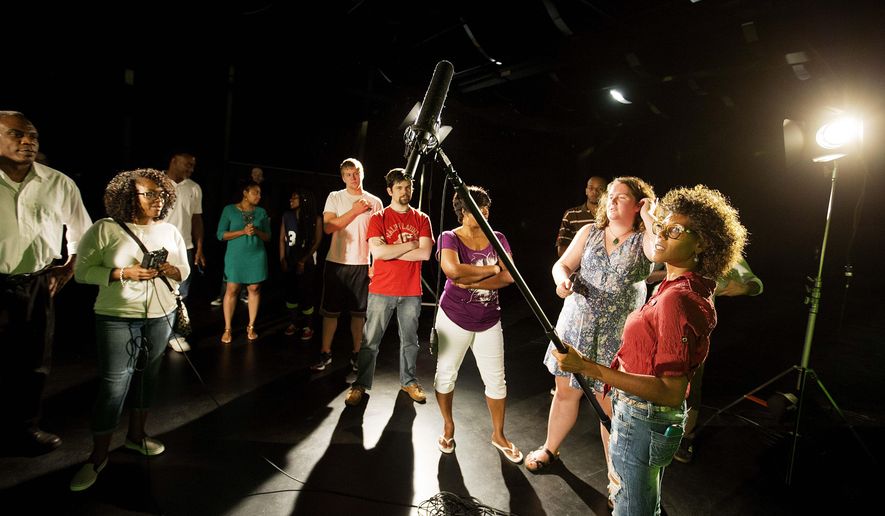
The vocabulary list is a little different for 20 Clayton State University students gathered Tuesday in a dark film studio located about 20 miles south of Atlanta.
The class is part of a broad effort to cement Georgia as a top option for filming blockbuster movies or hit TV series. Last July, representatives for top film and television producers including NBC and Marvel warned state officials that finding trained crew members is a struggle. Several of the state’s technical schools and universities immediately began developing programs.
The Clayton State program rolled out last fall at the former home of an airplane hangar where aviation industry workers trained during that industry’s boom in Georgia.
Meanwhile, a top university system official spent the year coordinating a “Georgia Film Academy” to churn out the skilled laborers needed on sets quickly and further develop those existing courses. An executive director announcement is imminent, and that person will be expected to have courses ready to accept students this fall and quickly hire other top officials.
The state’s generous tax credit, which isn’t capped or otherwise restricted, has drawn Hollywood in since 2008, including Georgia-filmed “Ant-Man” and part 2 of “The Hunger Games: Mockingjay” premiering later this year. Economic development officials list at least 12 studios, providing the sound stages needed for filming projects of various sizes.
But Georgia officials and industry observers say a lot is riding on the success of the various training programs in development or still in their infancy. Lee Thomas, deputy commissioner of the Georgia Film, Music and Digital Entertainment Office, said producers regularly call around to feel out available crews as they consider filming locations. Georgia can’t afford to be known for shortages, she said.
“We want to change the perception, we want to be proactive, we want to show people we really are doing something to meet the needs,” Thomas said.
A variety of options are envisioned: from a certificate program training electricians on film-set specifics up to a two-year degree in more specialized roles. Education and industry officials involved also want it to be nimble, able to add programs quickly as needed.
At Clayton State, students interested in the digital film technician program start with an introductory class reviewing job types along with camera shots and slang used on a set. On Tuesday, students watched instructor Akil DuPont explain how to prevent wind noise when recording actors.
(That’s where the vocabulary enters. “Dead cat” is slang for the fuzzy cover of a large “boom” microphone. Set heat refers to tensions getting high as deadlines approach.)
Joshua Cherof, 35, recently returned to Georgia after years of trying to get regular work in New York and Los Angeles where job competition is “cutthroat.” He said he’s encouraged by the training push in Georgia.
“There are no guarantees in this business, but it feels like here you have a better shot,” he said.
Georgia is expecting to lose roughly $273 million in the credits in fiscal year 2016, according to state budget documents. Production companies that spend at least $500,000 in qualified expenses are eligible for the 20 percent tax credit and can receive an additional 10 percent credit if the project includes a Georgia logo.
Criticism of the credits in Georgia has focused on how to ensure the industry sticks around if the incentives are eliminated or changed especially as a few other states eliminate or alter their programs. Industry officials have warned Louisiana, for instance, that reductions to the credit will send projects elsewhere.
Eric Witt, an industry contractor who helped develop New Mexico’s incentive program, said training, studios and incentives make up a three-legged stool.
“A lot of states only did one leg, the incentives, and their stool is starting to fall over,” Witt said. “Georgia now has realized if they do want to be in this industry long-term, they need to build that crew base.”

Please read our comment policy before commenting.