


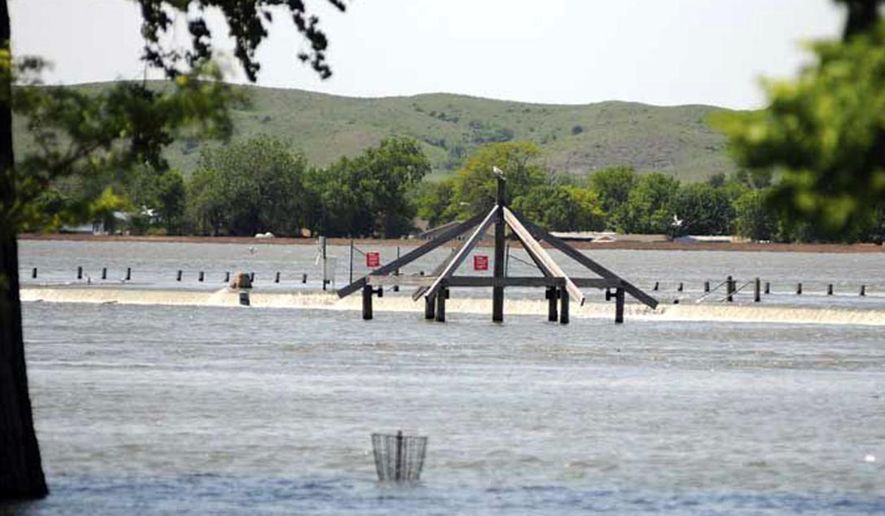

PIERRE, S.D. (AP) - On Tuesday, May 24, 2011, Pierre Mayor Laurie Gill got a call from the state Department of Public Safety asking her to come to a meeting at 4 p.m. That meeting would change her life.
Gloria Hanson, who now is Fort Pierre’s mayor but in 2011 was a private citizen, was finishing the remodel on her future husband’s home in Marion Gardens and getting ready for her wedding the next Saturday.
When Gill walked into the meeting room, she knew something big was about to happen. Former Fort Pierre Mayor Sam Tidball was there, as were public safety officials and some folks with the U.S. Army Corps of Engineers.
The meeting lasted about 45 minutes, Gill told the Capital Journal (https://bit.ly/1syPaDk ) on Monday, May 23, 2016, Nearly five years to the day after she learned the highest flood Pierre and Fort Pierre have seen since the Missouri River Dam system was finished in the 1960s was on its way downstream. That wasn’t immediately clear, however.
“We didn’t know how bad it was going to be,” Gill said.
A record snowpack in the Rocky Mountains combined with heavy spring rains through much of the upper Missouri River basin had led to a record amount of runoff making its way into the river. To compensate, the Corps of Engineers was going to have to release more water through Oahe Dam than it ever had been before.
Both Gill and Tidball were advised to start organizing a response to the impending flood immediately. Sandbagging efforts were put together and state government began hiring contractors to build levies. Both mayors also chose to run Pierre’s flood fighting efforts out of the Emergency Operations Center at the Mickelson Law Enforcement Center instead of City Hall.
“That was a big decision,” Gill said
The remodel on Hanson’s home was finished that Thursday, and she and her husband were to start moving in. On Friday their families arrived for the wedding, which went off without too many hitches that Saturday. On Sunday, Hanson and her husband went to a public meeting to find out what the flood would mean to them.
“They said we’d be safe,” Hanson said.
Less than 24 hours later things had changed. The couple was told their house would probably end up with about 4 feet of water in it before the flood was over.
“By Tuesday we were ripping all the stuff out of it,” Hanson said.
She estimated that more than 100 people helped build a sandbag wall around the home or take their possessions to higher ground for safe keeping.
“What was so amazing was people we didn’t know came in and started helping,” Hanson said.
The water was rising by Monday, May 31, Gill said. Pierre managed to protect its water wells so the residents were able to access clean water throughout the flood but millions of dollars’ worth of damage was done to the city’s other infrastructure, Gill said.
More than 100 sinkholes had to be repaired, pressure from the floodwater damaged the city wastewater system, grass and trees were killed in most of the city’s riverfront parks and the LaFramboise Island causeway was washed out.
So far Pierre has been reimbursed for $5 million worth of repairs to city property from the Federal Emergency Management Agency. Several projects have yet to be finished and reimbursed.
“We still have some work to do,” Gill said.
Hanson and her husband were out of their home for 100 days. For her, the 2011 flood was something she never thought could happen.
“When I was a child I witnessed the flood of 1952,” Hanson said. “The dams were supposed to protect us from all that.”
Hanson was elected Fort Pierre’s mayor in 2014 and said that city too is still feeling the effects of the flood. Many of Fort Pierre’s streets were heavily damaged by the flood and millions of dollars were spent trying to repair them. The city’s debt load has increased tremendously to pay for the needed repairs.
Hanson said Fort Pierre is still waiting for much of the reimbursements from FEMA to pay for the repairs.
Still, not all of the flood’s lasting effects have been negative, Hanson said.
“I think the most lasting effect is the feeling of solidarity,” she said.
When a powerful windstorm blew through Fort Pierre damaging trees and homes in June 2015, Hanson said, the city’s citizens were out by 6:30 a.m. and earlier to help each other cleanup.
“They weren’t waiting for anybody,” Hanson said. “They were just getting it done.”
Gill, too, said the flood had a few positive effects. The City of Pierre now has some experience in dealing with severe natural disasters and a big portion of the city’s old infrastructure has been replaced and updated.
“I think in kind of an ironic way we were able to get way ahead (on infrastructure updates),” Gill said.
Gill said it’s important to remember what happened during the summer of 2011.
“I think it’s important not to forget what we went through,” she said. “It’s important to keep pressure on the Corps of Engineers.”
___
Information from: Pierre Capital Journal, https://www.capjournal.com

Please read our comment policy before commenting.