



MONTPELIER, Vt. (AP) - Vermont’s Republican governor is fending off a primary challenge Tuesday from the owner of a produce store while Democrats are choosing among a transgender woman trying to make history, a 14-year-old and two others to be their gubernatorial candidate for November.
Voters also are electing candidates for the U.S. Senate and the House.
Gov. Phil Scott, who was first elected in 2016, is running against Keith Stern, of Springfield. Scott is facing a rebellion from his base because of his support for a series of gun restrictions that are mild by national standards. The restrictions, which Scott signed into law in April, came after the arrest of a Vermont teenager on charges he was plotting a school shooting.
It’s unclear how that will play out at the polls. Some are encouraging Democratic supporters of Scott’s gun stance to take GOP primary ballots and vote for Scott.
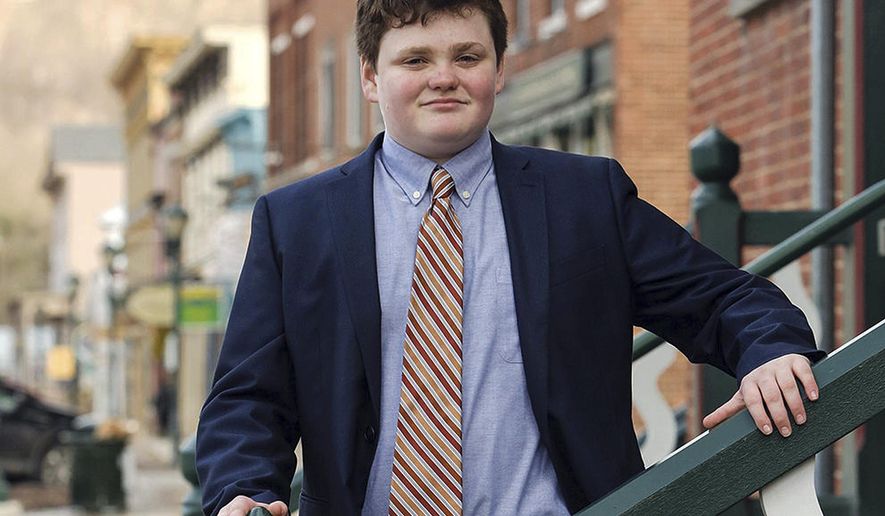
The four Democratic gubernatorial candidates are former electric company executive Christine Hallquist, who if elected would become the nation’s first transgender governor; environmental activist James Ehlers; dance festival organizer Brenda Siegel; and 14-year-old student Ethan Sonneborn, who’s taking advantage of a quirk in state law that doesn’t require gubernatorial candidates to be registered voters.
Democratic state Sen. John Rodgers, from Vermont’s remote and conservative Northeast Kingdom, is running a grassroots write-in campaign, largely motivated by his displeasure with firearms restrictions.
In East Montpelier Tuesday, town clerk Rosie Laquerre said voter turnout had been steady which was surprising since primary election turnout tends to be low. Among the voters Tuesday afternoon, Erin Green voted for Hallquist. She had been up in the air between Brenda Siegel and Hallquist, and opted for Hallquist, “because a lot of people I respect and admire were voting for Christine so I went in that direction.” She always votes in elections - “that was drilled into me as a kid so I vote, always.”
Lolly Cochran, of East Montpelier, a registered Democrat, turned out at the polls to support a candidate for state senate. In the governor’s race, she said she’s “kind of a fan” of Republican Gov. Phil Scott, after he signed gun restriction legislation. “I really applaud his signing of the gun laws and it horrifies me that the gun lobby is so opposed to him because of that and I struggle with that given the violence in schools,” she said. “So he kind of won my vote on that.”
Hallquist says that within Vermont she is running for governor based on her managerial ability. She’s promising a progressive campaign that will focus on economic development for rural Vermont.
She has also won the endorsement of The Victory Fund, a political action committee that backs LGBTQ candidates, which has labeled her a “game changer.”
Ehlers, executive director of the Colchester-based water charity Lake Champlain International, has served as an adviser for Sanders and is casting his campaign as a similar liberal populist movement. He wants to challenge what he sees as Scott’s reliance on trickle-down economics.
Siegel said her experience as a low-income single mother gives her a unique perspective lacking in Vermont politics. She said her candidacy would give “a seat at the table” for those who have felt overlooked by the political establishment.
A quirk in the Vermont statute does not set a minimum age for the office of governor, and Sonneborn’s candidacy was determined to be valid after he met all other requirements.
While many view his candidacy as a joke, Sonneborn has a full, fleshed-out platform echoing many of the liberal viewpoints of the state’s Democratic Party.
In other races, U.S. Sen. Bernie Sanders, who is already on the November ballot as an independent, is also running in the Democratic primary where he faces a challenge from little-known candidate Folasade Adeluola.
Sanders cannot appear on the November ballot as both a Democrat and independent. In the past after winning the Democratic primary, Sanders has declined the nomination, but accepted the formal endorsement of the state’s Democratic Party.
“That is what he has done in the past, and that is what he looks forward to happening in 2018,” said campaign spokeswoman Arianna Jones. “As he has for many campaigns, Bernie will contribute to and participate in the Vermont Democratic coordinated campaign.”
Vermont’s lone representative to the U.S. House, popular Democratic Rep. Peter Welch, faces two primary challengers, and two little-known candidates are vying for the GOP nomination to oppose him in November.

Please read our comment policy before commenting.