



MITCHELL, Neb. (AP) - Out where Wyoming is only a 15-minute drive away, some Panhandle conservationists are seeking to improve on Mother Nature.
They’re building a cold-water trout stream - something pretty rare in Nebraska - in an area where, decades ago, anglers used to hook into monstrous, migrating fish of up to 10 pounds in a man-made irrigation ditch.
Having a meandering trout stream, the conservationists believe, will help revive a trout-fishing tradition in this part of the state.
“These cold-water fisheries are super important for western Nebraska,” Bob Smith, a retired Scottsbluff banker, told the Omaha World-Herald .
Smith is part of a local group, Platte River Basin Environments, that has dedicated its time and money since 1992 to acquiring and preserving land in the Panhandle for hunting, fishing and hiking, free of charge.
The group has purchased rugged plots in the pine-studded Wildcat Hills so Rocky Mountain bighorn sheep could be reintroduced in the area. It’s acquired land along the North Platte River so duck and pheasant hunters can enjoy their sports. All told, it has opened up more than 30,000 acres of land in the Panhandle to the public.
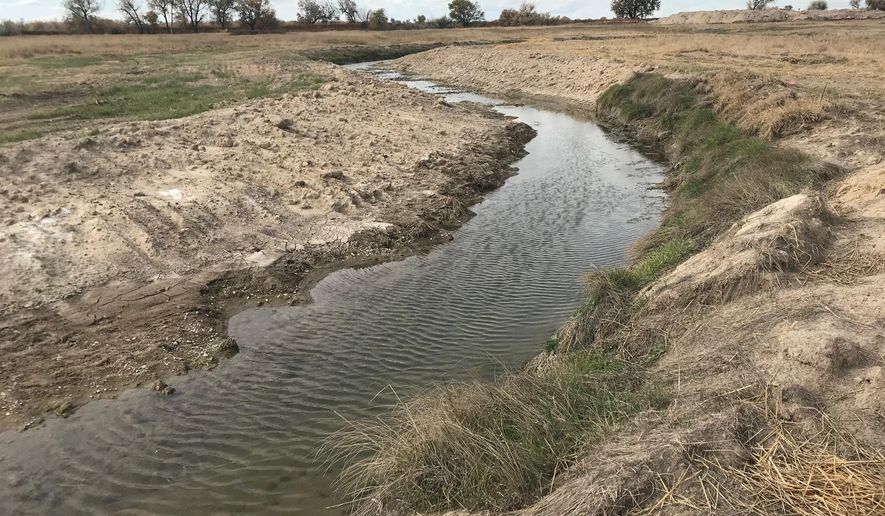
And now the group is tackling a more unique and ambitious goal - building a real trout stream, with bends and riffles, where none had existed.
While Nebraska has a lot of streams, most are shallow and get too hot and muddy to sustain cold-water-loving trout.
In this end of the Panhandle, trout fishing underwent a boom a few decades ago that locals are trying to bring back.
A little history:
More than a century ago, Dry Spotted Tail Creek used to run out of water before meeting up with the North Platte, as did several streams on the north side of the river. But after irrigation came to the valley, ditches called drains were dug to drain off the excess irrigation water and allow cultivation along the river. One of the drains, one that was straight and deep, was dug on the lower couple of miles of Dry Spotted Tail Creek.
The cold water in the drains was ideal habitat for trout, and by the late 1930s and early 1940s, the Nebraska Game and Parks Commission was stocking fish in them.
Then something mysterious happened beginning in 1945, when the North Platte was dammed and massive Lake McConaughy began filling. Some trout were stocked in that deep reservoir, and eventually either those trout, or the trout that were stocked in the creek/drains above the dam, started migrating to and from Lake McConaughy. It was sort of like the salmon and steelhead trout runs that are legendary in places like British Columbia and Alaska.
In the Panhandle, locals began catching migrating trout that weighed up to 10 pounds, and word spread about a pretty unique fishery in the streams and irrigation drains that connected to the North Platte.
“Those big fish in these small cricks, it was a lot of fun,” Smith said.
Bruce Rolls, a retired teacher and sporting goods store owner from Scottsbluff, said he could count up to 50 rainbow trout a day back in the 1960s trying to jump over the low concrete check dams (used to regulate flows down the irrigation ditches) on their runs upriver.
But the migrating Lake McConaughy trout started to disappear in the 1970s. One factor was the stocking of a new and voraciously hungry fish, the striped bass, in the lake. By the mid-1980s, the trout runs were over.
Building a real trout stream will not only allow fishing for trout stocked in the new Dry Spotted Tail Creek but might also provide a pathway for migrating trout, Rolls said, restoring the glory days of trout fishing in the Panhandle.
Restoring that migration has been the focus of a recent project on another irrigation drain called 9-Mile Creek. Trout eggs are being hatched on that stream in hopes that the fish will “imprint” on the stream and begin migrating down to Lake McConaughy and back up their home stream.
Smith said there’s hope that some local FFA groups might start a similar project on the new Dry Spotted Tail Creek.
Another benefit of the new trout stream is that it will help raise the nearby water table, creating marshes and shallow ponds for ducks and other waterfowl where prairie dog towns now exist.
“Building” a trout stream is no easy matter, according to Mark Porath, the aquatic habitat program manager at the Game and Parks Commission. While the state has experience in rehabilitation of existing streams, he said, building one from scratch is new.
Contractors with experience in improving trout streams were hired to dig the new stream channel, using a specialized trenching machine. They studied the soil, gradient and curves of upper portions of the Dry Spotted Tail Creek to duplicate it.
The new waterway, which is about three-fourths of a mile long, roughly follows a dry channel of the old creek. Riffles, shallow areas that cause broken water, were installed to mimic spawning areas and to regulate flows. Native grasses were planted along the banks. Willow trees, to provide shade, will be planted later.
A small amount of water is now flowing down the new stream section, but next year, a permanent structure will be built to divert most of the flow into the new stream. The diversion is designed so that in case of a flood, excess flows will continue down the old channel, preventing damage to the new section.
The $900,000 project is being funded with the help of a $275,000 grant from the Nebraska Environmental Trust, which distributes funds from the Nebraska State Lottery to such projects.
The Platte River Basin group partners with several other organizations, including Pheasants Forever, Ducks Unlimited, Trout Unlimited and the Nature Conservancy, as well as the Game and Parks Commission, in its pursuit of preserving and protecting the region’s wildlife and wild areas. The group has completed 13 habitat projects in all.
Rolls, who was one of the group’s original board members along with Scottsbluff banker Hod Kosman, said members were told a long time ago that if they wanted to see improvements in park and wildlife areas in the Panhandle, they would have to lead that effort themselves.
“So we took the challenge,” Rolls said.
___
Information from: Omaha World-Herald, http://www.omaha.com

Please read our comment policy before commenting.