


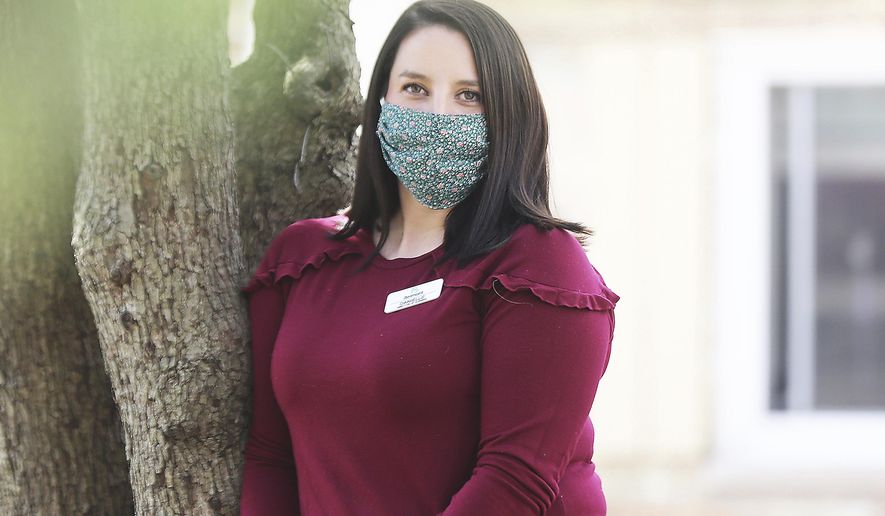

MADISON, Wis. (AP) - Danielle Sigler has a bag packed. She’s not going on vacation or skipping town to avoid the long arm of the law.
She’s preparing for the day, which she knows is likely to come, when a patient at the skilled nursing facility where she works tests positive for the COVID-19 coronavirus and she will remain there, caring for that person, until the chances of her catching and then transmitting the virus herself are much reduced.
“I would stay here,” she told the Wisconsin State Journal. “I have a bag packed and I have a cot and I have a sleeping bag, or I would go in a hotel room, but then you’re risking those people.”
People were interested in these podcasts
Sigler, 34, of Mount Horeb, has been director of nursing at the Belmont Health and Rehabilitation Center on Madison’s Far East Side for about a year and has been a nurse for eight years.
Some 30 of Belmont’s 83 beds are set aside for rehab, and Sigler said the facility is somewhat unusual among nursing homes in that it takes a significant number of patients with serious mental health problems in addition to other health issues. The facility also takes many homeless patients.
She said no one would require her to quarantine at the nursing home to care for those infected with coronavirus. That’s a decision a group of Belmont employees has made on its own to keep the facility’s residents - and their community - safer during the pandemic.
She’s been honest with her children - a son, 9, and a daughter, 11 - about the possibility, she said, and they understand.
“I said there may come a day when I can’t come home and I can’t see you guys for a while to protect you,” she said.
As nursing homes across the country have experienced outbreaks, Belmont has been taking extensive precautions since about mid-March to reduce the likelihood of infection there.
Staff are wearing masks and undergoing health screens, including taking their temperatures, before and after shifts. Residents are having their temperatures taken and their heart rates and oxygenation levels regularly checked for any sign of COVID-19.
Those working with new admissions or re-admissions, or with any patient who opts to go out into the community and then return, wear the full complement of personal protective equipment - gown, gloves, mask, goggles, face shields - for the first 14 days those patients are in the facility.
Not everyone is being tested for coronavirus before they arrive, Sigler said, but even if their tests are negative, the enhanced precautions apply, because the tests can have significant error rates.
Arguably the hardest adjustment nursing home residents have had to accept, however, is the ban on visitors.
“It’s difficult,” said Sigler. “Social isolation and depression is obviously a very real thing for all of us but more so for the residents.”
FaceTime and Skype are being used to stay in touch, and “I think the majority of the residents understand the severity of things,” Sigler said. “Even our elderly people that might have dementia. They are hearing it all day.”
In the absence of their loved ones, are residents relying more on staff for emotional support? Not necessarily.
“It’s natural for us to meet those needs,” Sigler said, “so it’s not a new thing for us. We’re just more aware of extending our conversation longer than maybe what it was before.”
She said a “huge frustration” is not having enough personal protective equipment, and while the facility hasn’t run out, it’s expecting a future in which it will need to take virus-positive patients to reduce stress on hospitals.
Still, she’s looking for at least some silver lining to the pandemic.
“I hope at the end of the day - unfortunately, maybe it’s taken a pandemic for this to happen - is for people to realize: Don’t forget about your skilled nursing facilities.”

Please read our comment policy before commenting.