


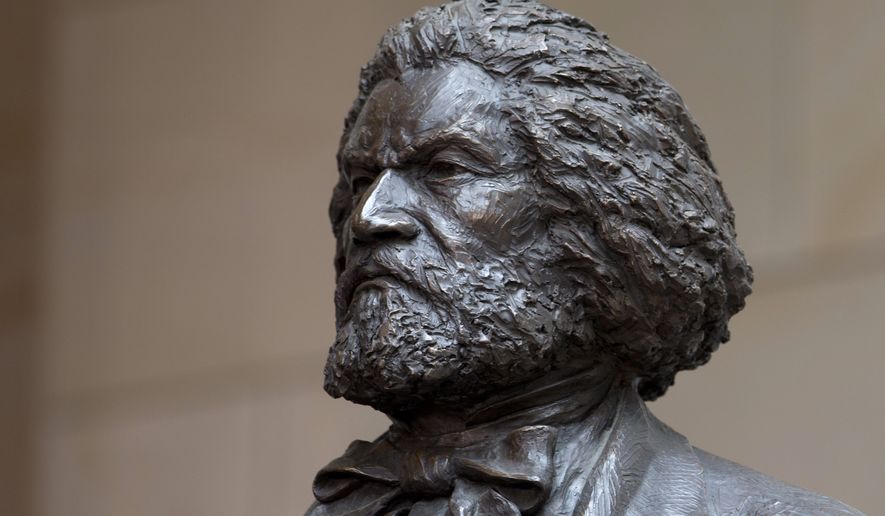

On July 4, 1852, a famous abolitionist was invited to address an audience of several hundred like-minded Americans in Corinthian Hall in Rochester, New York. The abolitionists in attendance may have expected the orator to deliver at least some standard patriotic fare to mark the sacred holiday.
And Frederick Douglass, at 34 years old already well known for his speeches at antislavery gatherings as well as his 1845 autobiography, did just that. He praised the Founding Fathers and extolled the virtues of the American Revolution.
People were interested in these podcasts
Then Douglass pivoted, unleashing a rhetorical tour de force of condemnation and “scathing irony” for America’s failure to end slavery. He chastised the rank hypocrisy of the Christian churches. He described the horrors of the internal slave trade and slave renditions performed without due process under the Fugitive Slave Act of 1850. And he told his audience that he, as a Black man who had escaped slavery 14 years before, could not celebrate the Fourth of July.
“The existence of slavery in this country brands your republicanism as a sham, your humanity as a base pretense, and your Christianity as a lie. It destroys your moral power abroad; it corrupts your politicians at home,” Douglass said.
But then Douglass pivoted again.
SEE ALSO: History As It Happens: Slavery and the Constitution
“Allow me to say, in conclusion, notwithstanding the dark picture I have this day presented of the state of the nation, I do not despair of this country. There are forces in operation, which must inevitably work the downfall of slavery.”
In this episode of History As It Happens, historian James Oakes discusses one of the most enduring and powerful speeches ever delivered on the Fourth of July. It was quintessential Douglass, combining condemnation with praise and uplift. It revealed a man who viewed himself as a patriotic American who simply wanted his country to live up to its principles.
“Right now, at this particular moment in our history, too many Americans who think of themselves as progressives have lost the faith in the possibilities of the United States that Frederick Douglass enunciates so beautifully in this speech,” said Mr. Oakes, the author of “The Radical and the Republican: Frederick Douglass, Abraham Lincoln and the Triumph of Antislavery Politics.”
“The fact that America does not and has, in a sense, never fully lived up to the ideals espoused in the Declaration of Independence was not a reason for Douglass to denounce the United States and its ideals.”
Listen to James Oakes discuss the 1852 speech and Douglass’ relationship to Abraham Lincoln and the Republican Party by subscribing to History As It Happens.

