



With its invasion of Ukraine, Russia ended a generation of post-Cold War peace in Eastern Europe, a peace that in retrospect now looks to have been tenuous after three decades of attempted democratization and neoliberal economic reforms in what was once the Soviet Union’s backyard.
The war has thrown into relief the failure of those reforms in Russia, whose brief experiment in democratic governance was crushed by events in the early 1990s well before a certain ex-KGB lieutenant colonel rose to power.
The important debate about whether NATO enlargement to the former Eastern Bloc was a legitimate Russian security concern – or even provoked Kremlin revanchists – should not distract attention from decisions made by that nation’s leaders in the critical decade after the Cold War ended. Those fateful steps would turn Russia into a closed, autocratic society once more, contributing to the ruin of its once-promising relationship with the West when in the early 1990s President Clinton and Russian President Boris Yeltsin established a surprising rapport.
In this episode of History As It Happens, Veronica Anghel of the Johns Hopkins School of Advanced International Studies discusses the reasons why democracy was stillborn in Russia, the challenges of transitioning from Communist autocracy to democracy throughout Eastern Europe, and what the war in Ukraine means for “strongman politics.”
“The premises for democratization and free market economics were all wrong,” said Ms. Anghel, an expert on Eastern European political and security issues.
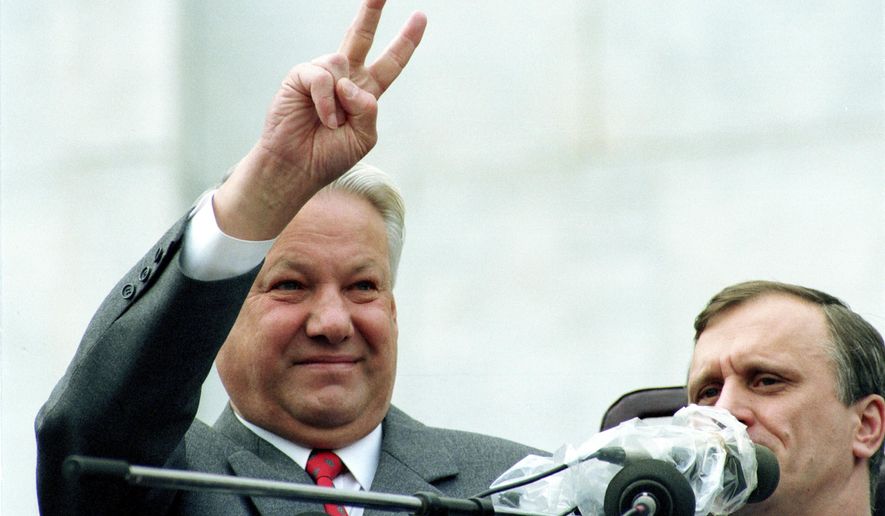
“Yeltsin had his greatest moment as he stood triumphantly atop a tank outside the Russian parliament in defense of [former Russian President Mikhail] Gorbachev and democracy against a coup from Communist hardliners, but by ‘93 the struggles between [Yeltsin] and parliament made him use the military to suppress the members of the Supreme Soviet,” said Ms. Anghel, referring to a key turning point in Russia’s anti-democratic development that took place long before Vladimir Putin’s rise to power.
Listen to the full interview with Ms. Anghel by subscribing to History As It Happens podcast.

