



OPINION:
Shopping is an obsession for some, a chore for most and a necessity for all. The soaring theft of merchandise is adding to the cost — and the danger — of everyday trips to the store.
It’s time for authorities to step up and reverse the trend decimating urban retail centers by flexing the long arm of the law to halt the “five-finger discount.”
Proceeds from organized retail crime are already approaching $100 billion annually, according to a 2021 National Retail Security Survey.
People were interested in these podcasts
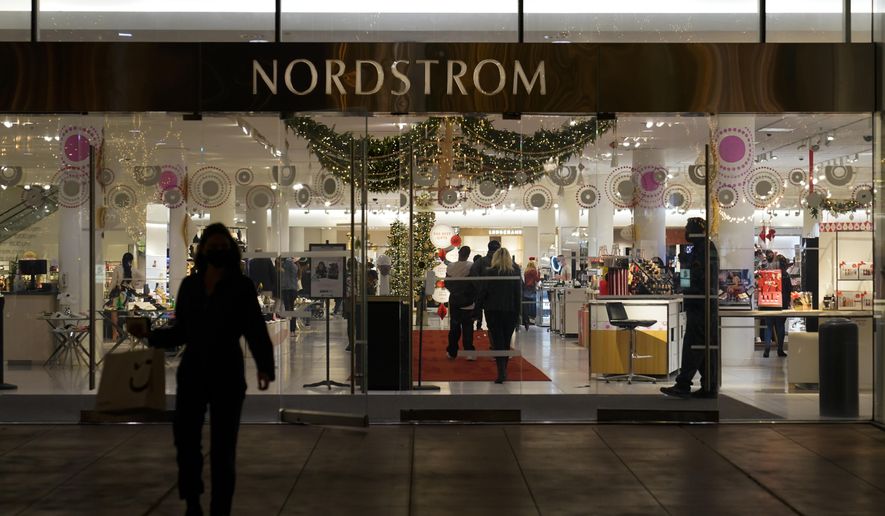
In a recent case, masked mobs ransacked a Nordstrom store in Los Angeles for fashion items worth $100,000 after tagging another retailer for $300,000 in goods. In 2023, theft is no longer petty.
California is feeling the pinch as the list of popular store chains fleeing big cities such as San Francisco includes Whole Foods, Old Navy and Walgreens. Since 2019, nearly half of the stores in the city’s shopping district have closed, the San Francisco Standard reports.
Proposition 47, which in 2014 made theft of property valued below $950 a misdemeanor, has turned the Golden State into the shoplifter’s golden goose. Sadly, 22 states have embraced the bandit-friendly fad, rewarding the boosting of less than $1,000 in merchandise with a slap on the wrist.
Fifteen other states are equally forgiving when the haul is held to $1,500. Who says crime doesn’t pay?
Left to fend for themselves, retailers have little choice but to shutter vulnerable stores. Walmart announced last month it plans to close 22 stores in 14 states and the District of Columbia. Target cites “inventory shrink” expected to reach $600 million by the end of the year for its decision to empty four locations in three cities.
“Our team continues to face an unacceptable amount of retail theft and organized retail crime,” Target CEO Brian Cornell explained on a call with investors on Wednesday. “During the first five months of this year,” he added, “our store saw a 120% increase in theft incidents involving violence or threats of violence.”
As if that were not bad enough, the loss of commerce has cost cities and states an estimated $15 billion in sales tax revenue. In California’s Bay Area, a quarter million residents fled between 2020 and 2022, taking their talents and capital with them.
Texas and Florida in particular have benefited from the population displacement. No accolades are in order, though, because all Americans suffer when lawlessness erodes the commonwealth.
An attempt to repeal Proposition 47 failed in the state legislature this spring, preserving what forlorn Californians call the shoplifter’s “get out of jail free card.” Federal action deserves a better outcome.
The Combating Organized Retail Crime Act of 2023, introduced in Congress by Sen. Charles Grassley, Iowa Republican, and Sen. Catherine Cortez Masto, Nevada Democrat, deserves prompt attention when lawmakers return to Washington in September.
This important bill targets “large-scale retail theft and fraud by organized groups of professional shoplifters.”
The legislation would establish an Organized Retail Crime Coordination Center within the Department of Homeland Security and provide new tools for tracking down and prosecuting retail criminals. It also would aid in the recovery of ill-gotten profits harvested from reselling stolen goods online.
The disturbing escalation of masked-mob larceny requires a robust action to cut off the five-finger discount.

Please read our comment policy before commenting.