


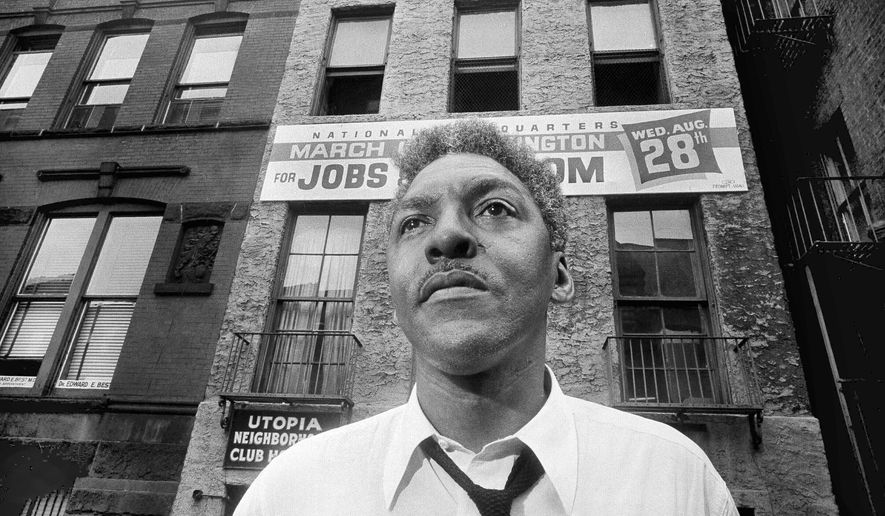

Bayard Rustin was born a Quaker in Pennsylvania and became an advocate of non-violent resistance in the civil rights movement. He was openly gay at a time when most people in his position would have kept their homosexuality secret. He was a brilliant organizer of the March on Washington.
Rustin was also a socialist who called for a sweeping economic rights program designed to pull all poor Americans out of poverty, rather than narrowly focusing on race. But you wouldn’t learn the socialist aspects of his activism from watching the new Netflix biopic “Rustin,” which was executive-produced by the Obamas. The film leans heavily into Rustin’s personal life and organizing skills rather than the ideas that animated the movement’s strategies and tactics.
People were interested in these podcasts
In this episode, historian William P. Jones discusses the Rustin who doesn’t appear on screen, a man dedicated to economic justice who also refused to publicly condemn the Vietnam War.
“If there is one thing we should know about Bayard Rustin, it is that he was a socialist. He thought that economic justice and racial equality went hand in hand. And you actually don’t learn that in the movie,” said Mr. Jones, the author of “The March on Washington: Jobs, Freedom, and the Forgotten History of Civil Rights.”
History As It Happens is available at washingtontimes.com or wherever you find your podcasts.

