



“Only American power can keep the natural forces of history at bay,” historian Robert Kagan writes in an essay at Foreign Affairs. In Mr. Kagan’s view, the history of the past century proves that the absence of U.S. leadership in the world “leads to the spread of dictatorship and continual great-power conflict. That is where the world was heading in 1917 and 1941.” And, as he would tell it, that is where the world found itself because the U.S. failed to adequately respond to Russian aggression after Moscow’s annexation of Crimea in 2014.
The years of the interwar period – and the indispensable role of U.S. power – are the focus of Mr. Kagan’s new book, “The Ghost at the Feast.” Its publication is merely coincidental to the current debate over whether the U.S. has a vital national interest in helping Ukraine defend itself against Russia, but it is impossible to avoid the connections.
People were interested in these podcasts
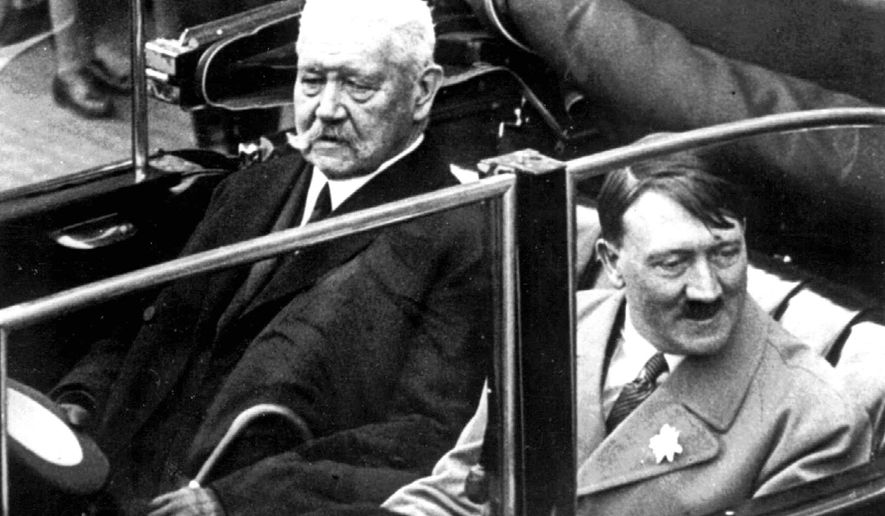
In this episode of History As It Happens, Mr. Kagan argues U.S. decisions made and not made about involvement with Europe after World War I directly contributed to Europe’s instability in the 1920s and the eventual collapse of world order in the early 1930s. Those “hinge” years saw the rise of Nazi Germany from the ruins of Weimar democracy, the fatal weakness of the Western powers and ultimately another world conflict far more catastrophic than the first.
“It’s pretty standard to say the United States’ absence played a huge role in not preventing the rise of these dangerous regimes. But I would go even further and say there were significant policies that the United States did undertake and refused to undertake which actually helped along the process of the disintegration of German politics and its radicalization,” said Mr. Kagan, a senior fellow at the Brookings Institution.
At the heart of Mr. Kagan’s critique of American interwar isolation are questions about the nature of national security and what motivates nation-states to pursue their perceived interests. In the runup to U.S. involvement in both world wars, presidents had to convince American citizens they indeed had an interest in preserving a “liberal world order” although there was no threat of invasion of the U.S. itself.
That worldview has underpinned U.S. foreign policy since 1945, as when President Clinton in 1999, during the Kosovo intervention, said, “It’s easy … to say that we really have no interests in who lives in this or that valley in Bosnia, or who owns a strip of brushland in the Horn of Africa, or some piece of parched earth by the Jordan River. But the true measure of our interests lies not in how small or distant these places are, or in whether we have trouble pronouncing their names. The question we must ask is, what are the consequences to our security of letting conflicts fester and spread.”
Did the United States bear the primary responsibility for the collapse of world order in the 1930s? What could have been done differently to preserve the fragile peace? Listen to Robert Kagan defend his arguments by downloading this episode of History As It Happens.

