


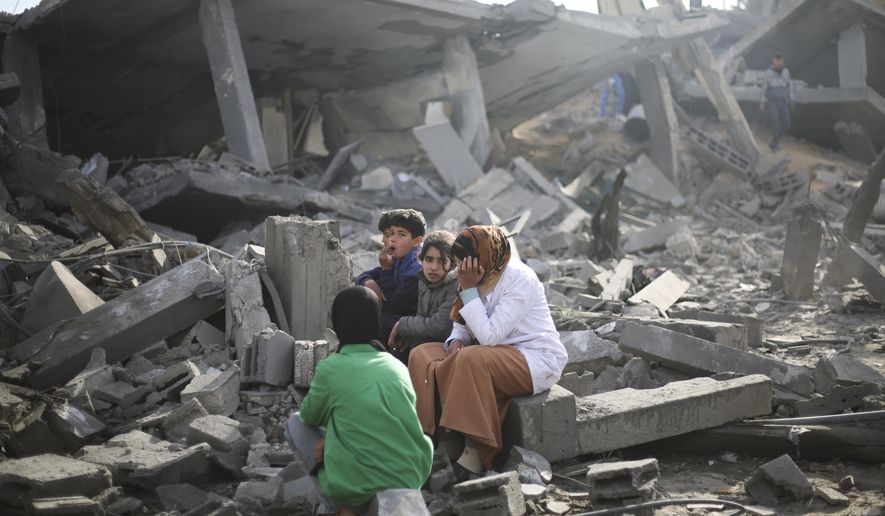

Israel has been at war with Hamas for more than four months with the Israeli Defense Forces now preparing to assault Rafah, the packed refuge of more than one million Palestinians in Gaza near the Egyptian border. In Yemen, the Houthi militia says its missile attacks against Red Sea shipping are a form of protest against Israel’s campaign. Three U.S. service members were killed in a drone attack in Jordan, believed to be orchestrated by Iran. Israel has traded missile strikes with Hezbollah in Lebanon. And U.S. forces have been attacked by Iranian-based militias in Iraq.
Everywhere one looks across the greater Middle East, relatively small conflicts seem to have the potential to explode into a larger war. Combined with Russia’s ongoing assault on Ukraine’s independence and China’s increasingly aggressive posture in Southeast Asia, the Middle East’s chaos could pull the U.S. and its allies into a broader conflict they are not prepared to fight, according to historian Hal Brands, who compares today’s constellation of rival powers to the set of circumstances that dragged the world into war in the 1930s.
People were interested in these podcasts
In this episode of History As It Happens, Trita Parsi of the Quincy Institute for Responsible Statecraft addresses the reasons why the U.S. has failed to successfully broker a ceasefire between Israel and Hamas and whether the U.S. faces a coherent alignment of hostile powers on a global scale.
“One is almost forced to take whatever happens in any part of the world today and almost squeeze it in a World War II analogy,” said Mr. Parsi, who is skeptical of claims that Iran and its proxies are interested in a full-scale war or are even capable of ending U.S. hegemony in their region. “In order to argue that it’s not about the U.S. choosing a great power competition but that it’s upon us and we simply must react to it … you end up with historical analogies that are pushing the limits.”
The question hanging over the current situation is, however, whether the use of military force can produce desired outcomes. In Mr. Parsi’s view, the U.S., Israel and their foes could spark a wider war by accident, making the need for an immediate ceasefire in Gaza all the more urgent.
History As It Happens is available at washingtontimes.com or wherever you find your podcasts.

