


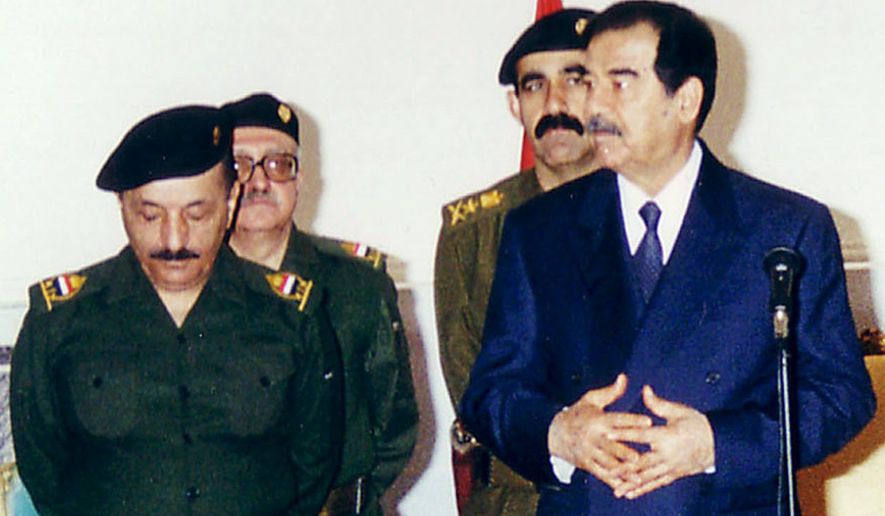

The immediate aftermath of the al Qaeda terrorist attacks on Sept. 11, 2001, may seem like the right place to start when telling the story of why the U.S. would invade Iraq to topple Saddam Hussein nearly 18 months later. Indeed, the 20th anniversary of the invasion (March 19, 2023) provoked many books and retrospectives that sought answers as to how the Bush administration blundered into Iraq searching for weapons of mass destruction that did not exist.
The road to war didn’t begin in 2001. In “The Achilles Trap,” Pulitzer Prize-winning journalist Steve Coll begins his investigation in the early 1980s, when the Reagan White House decided to help Saddam survive his war against Iran, which had taken a turn for the worse after some initial Iraqi successes. Starting in 1982, the CIA shared satellite-based intelligence to help the Iraqi army target Iranian military formations. After the Iraq-Iran War ended in 1988, the U.S. continued to seek good relations with Saddam, right up to the eve of Iraq’s invasion of Kuwait in August 1990.
People were interested in these podcasts
It was only after Iraq’s act of aggression against a defenseless neighbor that the U.S. adopted a hostile stance, but in Mr. Coll’s view, the U.S.-led campaign to expel Iraqi forces from Kuwait didn’t resolve the conflict, leading instead to a series of small “wars,” debilitating sanctions and a total breakdown in communication between the erstwhile partners. Thus, when George W. Bush reached the White House in January 2001, he inherited what was already a long war against Iraq and a congressionally approved policy of regime change.
“I was struck as I went back over the research how fully committed the Clinton administration was to regime change, even though it was more a declaratory policy than an operational one,” Mr. Coll said. “It makes you think of all this discourse about if Al Gore had been elected president [in 2000], whether the Iraq War would ever have happened. But when you look at the regime change and the debates within the Clinton administration, Al Gore was a hawk and fully committed to regime change. Would he have had a similar reaction after 9/11 that we ought to take care of this unfinished business? I am sure he would say no, but I am not so convinced.”
History As It Happens is available at washingtontimes.com or wherever you find your podcasts.
SEE ALSO: History As It Happens: Still bombing Baghdad

