



OPINION:
Based on a true story, “Sight” gives us a resonant story, some inspiring characters—and a glimpse of God behind it all. “The Garfield Movie” is a fun, new take on the orange tabby, but one with a few subtle nods to the comic. “Furiosa,” a prequel to the much-praised “Mad Max: Fury Road” has all the action fans want — but more than a little content issues.
Subscribe to have The Washington Times’ Higher Ground delivered to your inbox every Sunday.
Read on to get Plugged In on what’s beyond the movie titles and trailers for faith-filled and family-first reviews from Focus on the Family’s Plugged In.
Sight – In Theaters
“Sight,” the movie’s title, comes with a double meaning. Yes, it’s about Dr. Ming Wang’s work restoring sight to the blind. But it reminds us that the most crippling blindness isn’t that of the eyes but of the heart.
Yes, Kajal comes into the movie blind. But “Sight” suggests that, in some ways, she sees better than the driven, publicity-minded Dr. Wang. She sees the love of God. She sees the everyday miracles. She sees the needs of people around her in ways that Ming can’t — or won’t — take the time to see.
SEE ALSO: Ex-atheist on Chinese persecution horror, moment he realized God’s real
“Sight” does this without diminishing the important, near-miraculous work that Ming does (and that the real Dr. Wang continues to do). But it reminds us that sometimes when we keep our eyes focused on the Hollywood happy ending, we lose sight — truly — of the underlying, saving truth: God is with us. God loves us. And even when heartbreak happens, when tragedy visits, when we suffer unimaginable difficulties, God can redeem it all.
God loves His twists. He likes taking our expectations and flipping them on their heads, creating a beauty and power we’d never expect.
Be sure to listen in to The Plugged In Show, a weekly podcast with lighthearted reviews for parents and conversations about entertainment, pop culture and technology:
In the film, a young Ming Wang learns to play an instrument called the erhu, a sort of two-stringed fiddle. He learns from Lili’s blind father that one of his favorite erhu pieces, “Two Springs Reflect the Moon,” was written by a blind composer — one who had never seen a spring, or a reflection, or a moon. The composer, Ah Bing, had to imagine it all, and in so doing brought beauty and meaning to the image that a sighted composer could never have equaled.
“It’s because of this I have hope to hang on to,” the old man says. “Ah Bing imagined beauty even though he could not see.”
Those who go to see “Sight” will see some difficult, violent images. But they’ll also be witness to a powerful story. In a film titled “Sight,” the physical meaning of the title becomes almost an afterthought. Instead, we may be reminded of another great composition:
I once was lost, but now am found
Was blind, but now I see.
Read the rest of the review here. Watch the trailer here.
Garfield – In Theaters
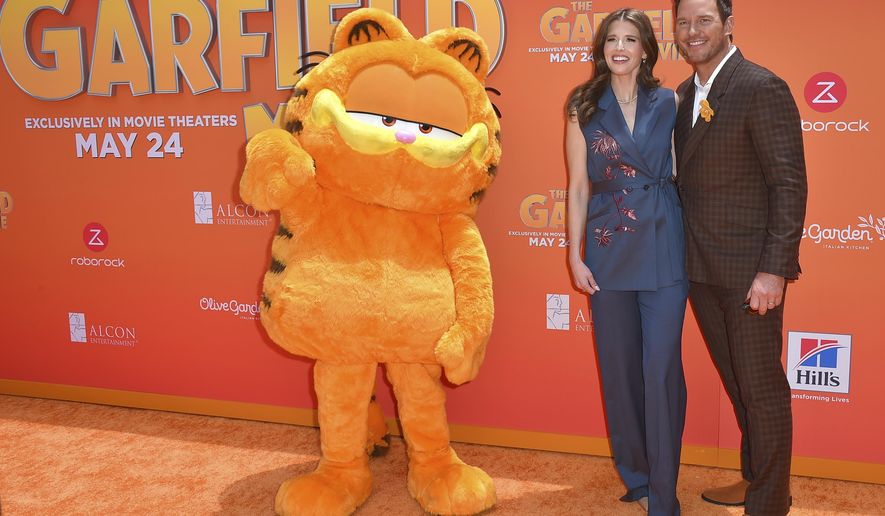
“The Garfield Movie” is light. It’s silly. It’s … just a little hard to follow for younger kiddos.
The film is short, given the amount of story we get. And fast-talking characters might make it difficult for some children to follow the story. But families won’t find too much obvious content here besides a single use of the British profanity “bloody.” And two blink-and-you’ll-miss-them moments perhaps imply same-gender relationships.
Garfield, Odie and Vic are frequently put into danger — but they always manage to scrape by. And while there are a few jokes about Garfield’s weight, the film doesn’t stray too far from anything you might read in Jim Davis’ “Garfield” comic strip.
It’s a fun, new take on the orange tabby, and one with a touching tale about a father and son reunited. And one — like virtually everything else these days — with some very subtle nods to the progressive social mores of our day.
Read the rest of the review here. Watch the trailer here.
Furiosa: A Mad Max Saga – In Theaters
“You can never balance the scales of suffering,” Dementor tells Furiosa. No matter: She’s sure going to try.
Listen, all Mad Max movies are plenty bleak. In each installment, creator and director George Miller reliably spoons us a broth of dust and blood, and he shows us a world gone — well, mad. That’s really the point: Some humans may have survived the apocalypse, but humanity is mostly dead.
But not entirely.
In most “Mad Max” films — as bloody and carnage-driven as they are — we see signs of virtue and hope and love. “Mad Max: Fury Road,” for all its excesses, came with some interesting spiritual wrinkles and a quest for redemption. Does that necessarily redeem all the blood and gore that splashes on the way? Maybe not. But at least we feel like the movie had a purpose beyond the ook. It, like Furiosa’s drive toward home in “Fury Road,” was taking us to a better place.
But in the prequel “Furiosa: A Mad Max Saga,” we’re literally and figuratively driving away from that comparative paradise and into the Wasteland. And the waste we encounter can feel pretty oppressive.
Listen, for “Mad Max” fans, all the ingredients are here. The action sequences are still great, if not spectacular. The world of “Mad Max” has never felt so convincingly grimy. Chris Hemsworth, playing Dementor, swaggers around something like a post-apocalyptic Jack Sparrow, managing to be both a bit ludicrous and reliably evil.
But without a redemptive carrot to chase in this movie, the story can feel sluggish, and the violence sinks into inescapable sadism. And when Dementor tells Furiosa that the two of them are cut from the same cloth, you buy it. She is as her world made her: cruel.Read the rest of the review here. Watch the trailer here.
–
Plugged In is a Focus on the Family publication designed to shine a light on the world of popular entertainment while giving families the essential tools they need to understand, navigate, and impact the culture in which they live. Through our reviews, articles and discussions, we hope to spark intellectual thought, spiritual growth and a desire to follow the command of Colossians 2:8: “See to it that no one takes you captive through hollow and deceptive philosophy, which depends on human tradition and the basic principles of this world rather than on Christ.”
Reviews written by Paul Asay and Emily Tsaio.

Please read our comment policy before commenting.