



Key Pakistani officials on Tuesday cited significant progress toward reviving the Islamabad memorandum of understanding after meeting with several top Iranian officials, even as public diplomacy between the U.S. and Iran stalls.
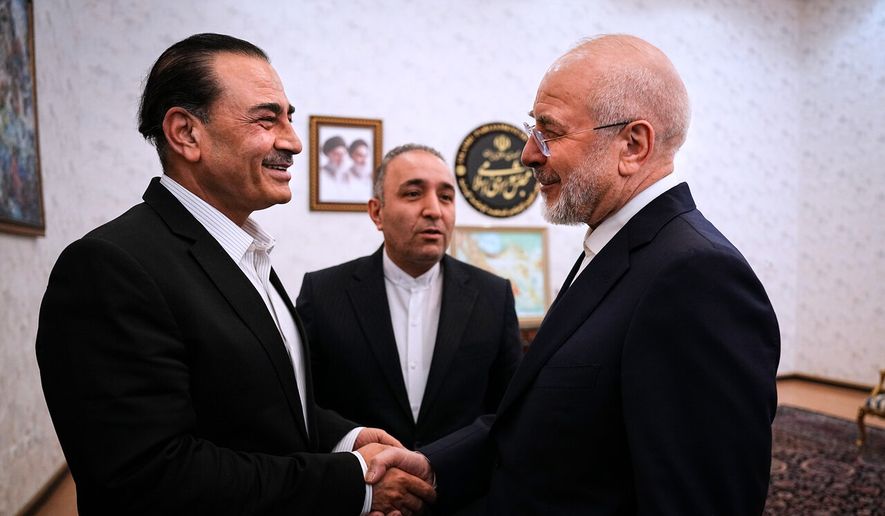
Pakistani army chief, Field Marshal Asim Munir, and Interior Minister Mohsin Naqvi traveled to Iran on Monday for a whirlwind visit that saw them meeting with Iranian President Masoud Pezeshkian, parliament Speaker Mohammad Bagher Ghalibaf and Foreign Minister Abbas Araghchi.
Notably, Mr. Munir also met with Mohsen Rezaei, a member of the Supreme National Security Council and a top adviser to Supreme Leader Mojtaba Khamenei, who ultimately has the final say on Iranian diplomatic policy.
People were interested in these podcasts
Mr. Naqvi said the meeting with Mr. Pezeshkian was particularly important and could be a step toward restoring regional stability.
“We remain hopeful that this momentum will help pave the way for further progress and lasting peace in the region,” he wrote on X.
Esmaeil Baghaei, spokesperson for Iran’s Foreign Ministry, said Tuesday that the meetings were focused on bilateral relations and had reached “one of their strongest stages.”
The trip by the Pakistani delegation is the second of its kind this month after Mr. Munir traveled to Tehran in early August to revive peace talks and push for a return to the Islamabad memorandum of understanding.
Mr. Munir and Mr. Araghchi have also held at least two phone calls in the lead-up to this week’s meetings.
Still, despite the diplomatic overtures from each side, it’s unlikely that the meeting will move the needle on U.S.-Iran relations as Washington advances its efforts to economically isolate Tehran, and the Islamic regime vows retaliation.
Treasury Secretary Scott Bessent announced an expansion of secondary sanctions on Monday, hoping to warn countries that trade with Iran to cut off all economic ties or face serious consequences.
“Our objective is to sever every economic lifeline that sustains this tyrannical regime until Tehran stands alone,” he said. “Iran now faces a very clear choice with only two paths before them: complete global isolation and a subsistence economy, or a path back to normalcy with an opportunity to rejoin the global economy.”
Contact the author


Please read our comment policy before commenting.