



A version of this story appeared in the daily Threat Status newsletter from The Washington Times. Click here to receive Threat Status delivered directly to your inbox each weekday.
The Army has selected five companies to build and operate nuclear microreactors on five military installations across the country, the service announced Wednesday.
It’s the latest development in a military-wide push to ensure bases have reliable power supplies that function independently of local power grids, which could become targets in a future conflict. The Army initiative is known as the Janus Program, named after the Roman god of transitions.
Officials expect to have more than 20 nuclear microreactors eventually at Army installations. The initial round of awards is worth a combined $2.2 billion, officials said.
People were interested in these podcasts
“Since launching the Janus Program, our mandate … has been clear: secure the power our warfighters need to train, deploy and win,” Army Secretary Dan Driscoll said in a statement.
“Awarding these contracts accelerates our ability to deliver safe, reliable baseload power directly to our installations,” Mr. Driscoll said. “We are building the energy resilience necessary to project combat power globally, without relying on potentially vulnerable external grids.”
The five companies selected, and the bases where they will construct and operate microreactors, are:
SEE ALSO: LISTEN: Why U.S. military bases want nuclear microreactors
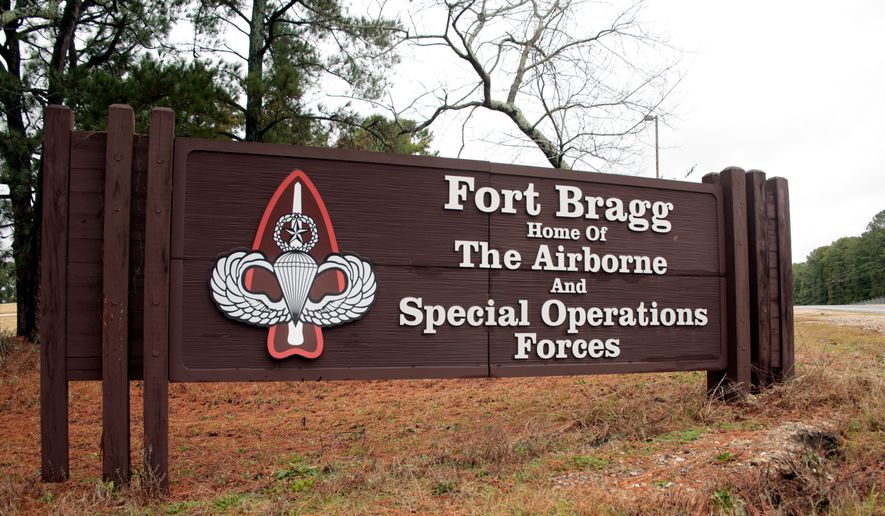
• Antares Nuclear Inc. — Fort Bragg, North Carolina.
• BWXT Advanced Technologies LLC — Fort Campbell, Kentucky.
• General Atomics Electromagnetic Systems — Fort Hood, Texas.
• Radiant Industries Inc. — Fort Benning, Georgia.
• Westinghouse Government Services — Fort Drum, New York.
In May 2025, President Trump announced plans for a “nuclear renaissance” that called for quadrupling the nation’s power output by 2050, including 300 gigawatts of net new capacity. One gigawatt of power can provide electricity to about 750,000 homes.
The president’s executive order on the subject specifically called for the operation of an Army-regulated nuclear reactor at a domestic military installation no later than September 2028.
For the military, reliance on diesel generators when deployed and local electric grids here at home — the same grids that serve the general public — is widely viewed as a significant national security threat.
Fueling logistics associated with those diesel generators limit U.S. forces’ operations abroad. Domestically, if local power grids are compromised, either by a natural disaster, enemy attack or cyber operation, military installations could lose power.
The nuclear microreactor push is accelerating across the military.
In a wide-ranging exclusive interview on the latest episode of the Threat Status podcast, Space Force Col. Eamon R. Murray said his installation, Colorado’s Buckley Space Force Base, is also in line to receive a nuclear microreactor, built by the California-based company Radiant Industries.
“This is a good news story. This is not a risky endeavor. This is a good thing for Buckley. This is a good thing for national defense. This is a good thing for the local community,” Col. Murray said.
Contact the author


Please read our comment policy before commenting.