


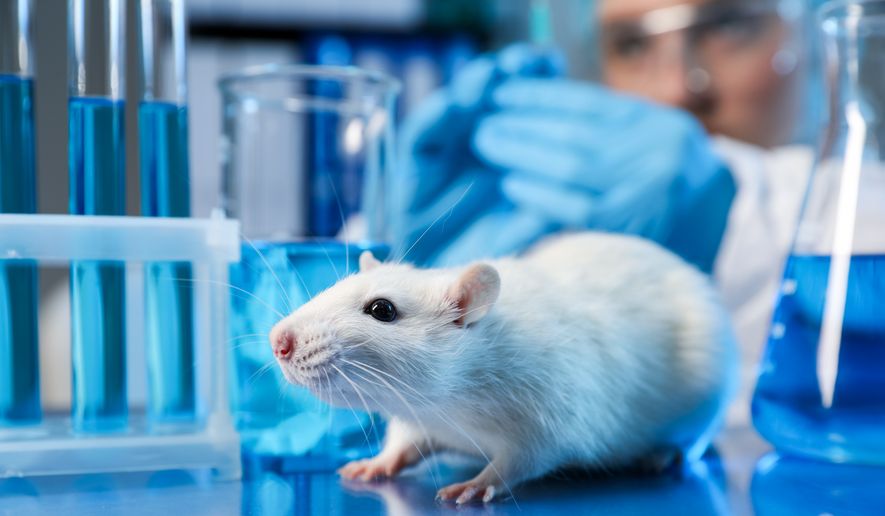

The Environmental Protection Agency announced two new methods of testing chemicals’ toxicity on Thursday, in what officials called a major step toward the goal of ending all testing on mammals by 2035.
One of the advancements updates the way the EPA tests surfactants, found in cleaning products, and whether they irritate the lungs.
The other advancement is to adopt a new formula-driven approach to evaluating pesticides, allowing the EPA to assess risks based on the known mixture of chemicals without having to test the final blend on animals.
People were interested in these podcasts
EPA Administrator Lee Zeldin said the changes keep the agency on track for its 2035 phaseout.
“EPA is leading the way on eliminating animal testing by embracing cutting-edge, gold standard science like never before,” he said in a statement. “With these new scientific advancements, we are fostering American innovation and raising the bar when it comes to the research methods used when evaluating new chemicals and pesticides.”
The EPA is responsible for testing the toxicity of chemicals in products. For most of its history, that meant animal testing to ensure safety for humans.
The first Trump administration, in 2019, committed to a phaseout of testing on mammals, but the Biden administration reneged on that goal.
Mr. Zeldin recommitted to it.
Researchers say achieving the phaseout requires both technological advances and the commitment to adopt them.
Alternatives to animal testing, known as New Approach Methodologies or NAMs, substitute computer modeling, cellular-level tests and the like to estimate toxicity. The key step is to validate the results as acceptable substitutes.
EPA said the alternatives can also be faster and cheaper than animal testing, and can allow researchers to look directly at chemical impacts on cells, giving a more accurate look at health risks.
Animal rights organizations have been pushing for an end to animal testing, arguing it’s unconscionable to ask taxpayers to fund what are sometimes cruel-sounding experiments.
They celebrated Mr. Zeldin’s announcement Thursday as proof the agency is back on track for the 2035 phaseout.
“EPA’s commitment to advancing these non-animal approaches will save hundreds of rabbits, rats and mice from being forced to inhale or ingest chemicals or pesticides, tests that cause immense suffering,” said Kathleen Conlee, a vice president at Humane World for Animals.
The whiplash has been striking, going from the first Trump administration to the Biden administration and now back again.
Then-EPA chief Andrew Wheeler in 2019 committed to a 30% reduction in mammal testing by 2025, and a complete end by 2035.
By 2023, the Biden administration had erased those goals from the EPA’s files, saying it wouldn’t be bound by any deadlines.
At that time, The Washington Times reported on a revival of animal testing at the EPA’s lab in North Carolina, where rabbits had been promised a retirement only to end up back under study or euthanized.
One of those was Jasper, whose caretaker called him “a very good rabbit,” even as he was euthanized at 9 years old.
Mr. Zeldin in January announced that his agency was “back on track” for the 2035 phaseout.
In addition to the EPA, the Food and Drug Administration has announced its own animal testing phaseout and the National Institutes of Health has demanded that its researchers and grant recipients seek out NAMs.
Contact the author


Please read our comment policy before commenting.