



1. What happened in the latest attacks?
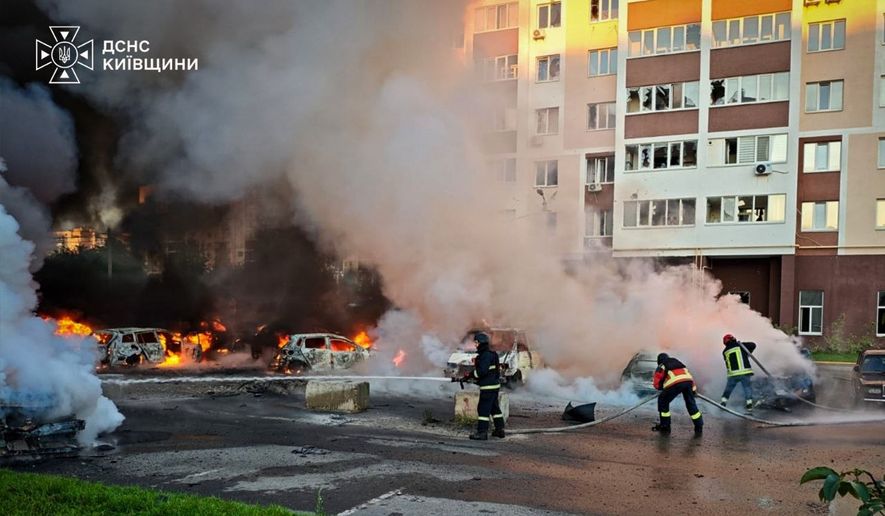
Russian forces carried out a second straight day of aerial attacks on Ukraine’s Kyiv region on Friday, hitting more than a dozen apartment buildings and storage depots. The strikes damaged 14 warehouses, 16 private houses, three apartment buildings and 16 vehicles, killing one person and wounding two others. A separate Russian glide bomb attack on the Sumy region killed one person and wounded seven others.
2. Why does this matter?
People were interested in these podcasts
The attacks are part of what Ukrainian officials describe as an annual Russian campaign to “weaponize winter” by targeting the power grid, threatening extended outages as cold weather approaches. The strikes are also curbing Ukraine’s economy, prompting the Ministry of Economy to lower its 2026 GDP growth forecast from 1.3% to 0.8% due to disrupted exports and damaged infrastructure.
3. Who is involved?
Key officials include Tymur Tkachenko, head of the Kyiv regional military administration, and Oleksandr Prokudin, head of the Kherson regional military administration, both of whom reported on the damage and advised residents on safety measures. Andrii Kovalenko of Ukraine’s Center for Countering Disinformation said Russia’s goal is to “exhaust air defenses and the population,” while Russia’s Defense Ministry said one strike hit a warehouse storing Ukraine’s Flamingo cruise missiles, an assertion Ukrainian officials have not confirmed.
4. What comes next?
Officials in the Kherson region, about 70% of which is under Russian control, are urging tens of thousands of residents to relocate to safer areas, warning that power and heat outages this winter could last much longer than in previous years. Authorities said they will provide evacuation assistance, transportation, resettlement and social support for those who choose to leave.
5. What is the broader context of this conflict?
More than four years into Russia’s full-scale invasion, both sides continue dueling aerial campaigns: Russia fired 164 drones at Ukraine overnight, while Ukraine struck an oil refinery in Russia’s Yaroslavl region as part of its ongoing campaign against the Russian oil sector, and Russia said it shot down 512 Ukrainian drones overnight. Attacks on Kherson’s infrastructure have intensified sharply, with 170 glide bombs dropped since July 1 and drone attacks rising to 6,500 in the past week alone.
For more on this report, read “Russian drones batter Ukraine’s Kyiv region, hitting apartments and warehouses for a second day” from The Associated Press, published on The Washington Times.
This article was constructed with the assistance of artificial intelligence and published by a member of The Washington Times' AI News Desk team. The contents of this report are based solely on The Washington Times' original reporting, wire services, and/or other sources cited within the report. For more information, please read our AI policy or contact Steve Fink, Director of Artificial Intelligence, at sfink@washingtontimes.com
The Washington Times AI Ethics Newsroom Committee can be reached at aispotlight@washingtontimes.com.

Please read our comment policy before commenting.