




The popcorn machine is usually older than the projector. The owner often has a day job. And on a bad weekend, a thunderstorm can wipe out a third of the month’s revenue in a single evening. That is the reality of running an American drive-in in 2026.
Roughly 280 of them are still open, scattered mostly across New York, Pennsylvania and Ohio, and almost all of them are family operations. They survive on popcorn margins and stubbornness. And while the headlines about their extinction have been running for forty years, the truth about what is actually killing them has changed completely.
The Collapse Already Happened
People were interested in these podcasts
At the peak in 1958, the United States had 4,063 drive-in theaters, according to figures compiled by the United Drive-In Theatre Owners Association. Today the count sits near 283, down from about 305 in 2019 and 318 in 2021, when the pandemic briefly made outdoor cinema the safest ticket in town.
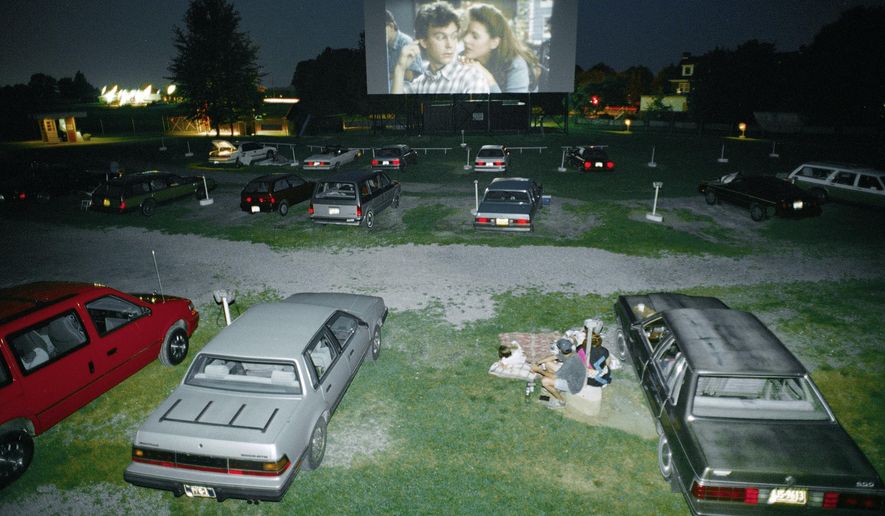
That is a 93% collapse. But almost all of it happened between the 1970s and the 1990s, when land values rose, multiplexes multiplied, and home video arrived. What remains is a floor, not a slope. The number has been broadly stable since the mid-2010s, and a handful of new sites have opened from scratch.
Which raises a harder question than the usual nostalgia piece asks. If streaming already did its worst, why are these places still so fragile?
Popcorn Is the Business
The answer is that a drive-in is not really in the movie business. It is in the food business, with a screen attached.
A large share of every ticket flows straight back to the film distributors. What stays on site is the concession stand. Donna Saunders, who co-owns Ohio’s Field of Dreams and Van-Del drive-ins, has put it bluntly: without customers buying food, drive-ins would go out of business. She describes them as one of America’s original dinner-and-a-movie concepts, often with a wider menu than the multiplex down the road.
That model works only at volume, and volume depends on weather, on school calendars, and on a season that in most of the country runs a few months. A drive-in cannot fill a rainy Tuesday in October the way an indoor cinema can.
The pricing tells the same story. A double feature at Maryland’s Bengies runs about $12.50 a person, against roughly $26 for a single IMAX ticket at a nearby AMC. Drive-ins are the cheap option, which is precisely why the margin is so thin.
The Real Threats Are Land, Machines, and Time
Three pressures now decide whether a screen goes dark, and none of them is Netflix.
The land. A drive-in occupies ten to fifteen acres, often on the edge of a town that has since grown toward it. That parcel is frequently worth more as housing or retail than it will ever earn showing movies. Every owner eventually fields the call.
The equipment. When Hollywood abandoned 35mm film, every theater had to buy a DCI-compliant digital projector, an expense that industry estimates place between $50,000 and $100,000. For a single-screen family site, that is several seasons of profit spent at once, and the bill returns each time the technology moves.
The succession. As John Vincent, president of the drive-in owners’ association, has described it, this is a labor of love: mostly independently owned, and for many operators a second job. The generation that inherited these theaters from their parents is now reaching retirement, and the question is whether anyone in the family wants the 2 a.m. equipment repairs.
Not the Final Reel Yet
There is a counter-example worth knowing, and it is the oldest one there is.
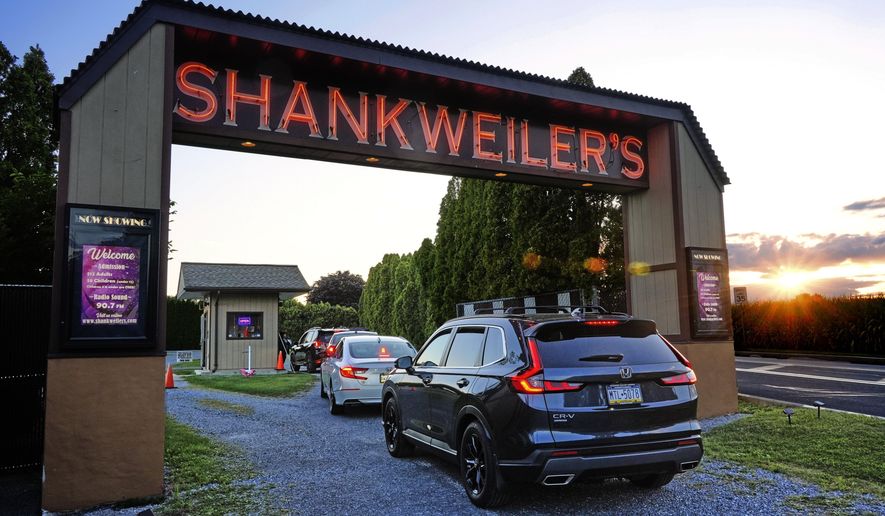
Shankweiler’s Drive-In in Orefield, Pennsylvania, opened on April 15, 1934. It’s the second drive-in ever built in America and now the oldest continuously operating one in the world. The venue’s first screen was a bedsheet strung between two poles. It has survived a hurricane, multiple owners, and the entire arc of the industry’s rise and fall without missing a season.
It also went on the market in 2015, and again in 2018, asking $1.2 million. It sat there. That is the succession problem in one listing.
In November 2022 it sold for $1.05 million to two people who ran a mobile cinema in nearby Allentown. They reopened it and now run it year-round, which the theater had never done in nine decades.
So the honest answer to whether the final show is approaching is no, not yet. The count has held for a decade. But it holds one theater at a time, on the willingness of individual families to keep saying no to the developer, and yes to another season. That is a thinner form of survival than a stable number suggests. And it is why the ones still standing are worth visiting while they are.
This article was constructed with the assistance of artificial intelligence and published by a member of The Washington Times' AI News Desk team. The contents of this report are based solely on The Washington Times' original reporting, wire services, and/or other sources cited within the report. For more information, please read our AI policy or contact Steve Fink, Director of Artificial Intelligence, at sfink@washingtontimes.com
The Washington Times AI Ethics Newsroom Committee can be reached at aispotlight@washingtontimes.com.

Please read our comment policy before commenting.