



Biometric tracking is already woven into everyday technology, from facial recognition on smartphones to wearable fitness monitors that log heart rate and sleep patterns. But the same sensing tools designed for convenience could also be turned against people, allowing bad actors to secretly monitor someone’s vital signs without their knowledge or consent.
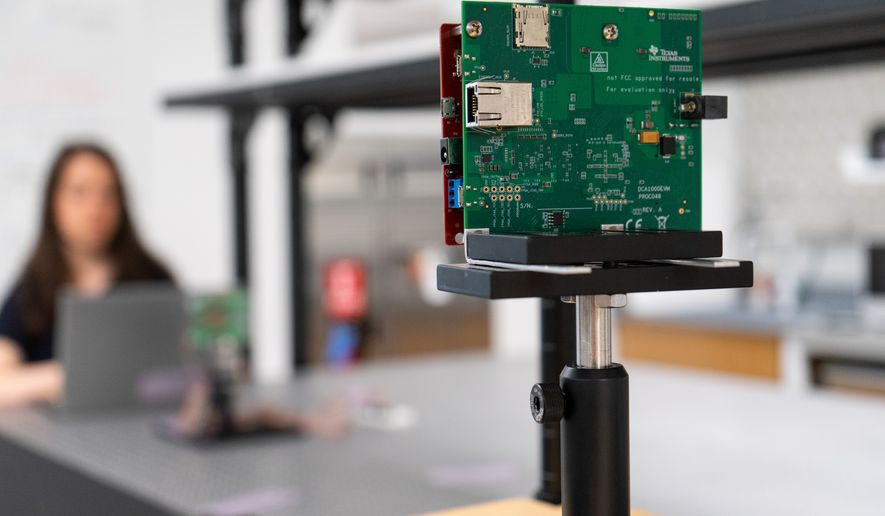
Researchers at Rice University have built a countermeasure. In a study published this month in the journal Computer Communications, a team led by Mr. Edward Knightly, a professor of electrical and computer engineering at Rice, introduced MetaHeart, a device that can fool radar-based heart rate trackers by feeding them a fabricated heartbeat signal.
The concern at the center of the research is that commercially available millimeter-wave radars, already used in products like self-driving cars and mobile devices, can in controlled settings pick up tiny vibrations on the surface of a person’s chest to determine their heart rate from a distance. That data can reveal whether someone is present at their desk, and, as prior research suggests, it can also be used to infer stress levels, fatigue or emotional state.
People were interested in these podcasts
To illustrate the threat, the researchers built their study around a theoretical scenario with two characters: Trudy, a malicious intruder armed with a radar, and Alice, the unwitting target being monitored. In their model, Trudy might be an employer who embeds a radar sensor in a company-issued laptop or monitor to track workers’ heart rate patterns throughout the day. The study notes that such monitoring could occur with or without employee consent.
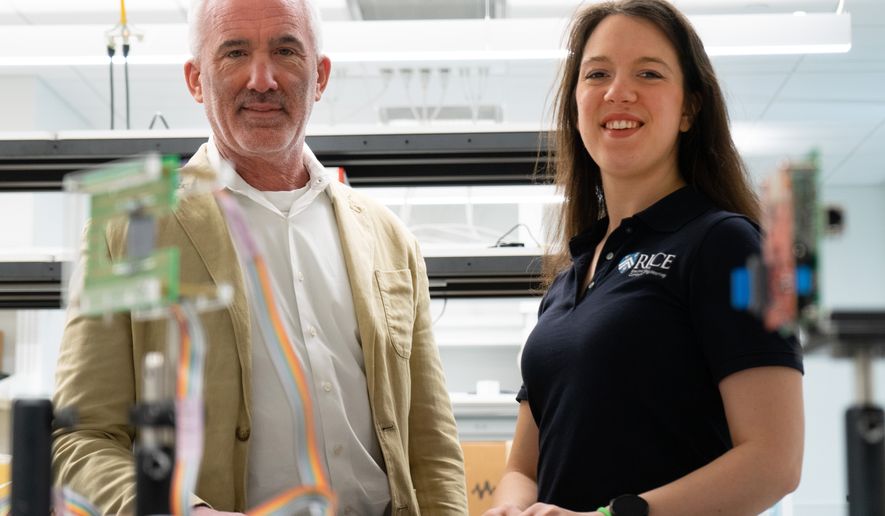
“We used this scenario to stage a technologically possible use case for a radar-based heart rate monitoring system,” said Dora Zivanovic, a graduate student in Mr. Knightly’s lab, in a university release.
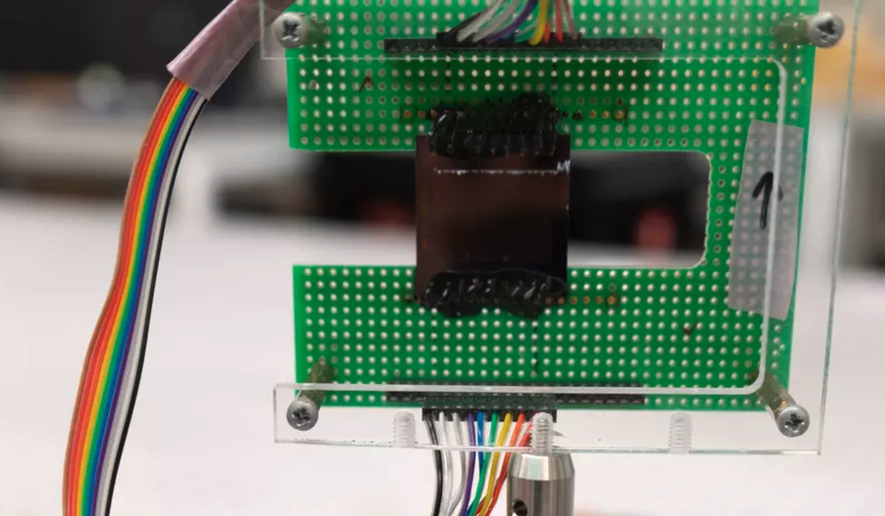
MetaHeart works by using a programmable metasurface, a flat, electronically controlled panel that can manipulate the radar waves bouncing off of it. When the device is placed between a person and the radar, it reflects back a fake heartbeat signal, replacing the real one with whatever pattern the user chooses.
“We fool the radar on the level of the electromagnetic signal itself,” Ms. Zivanovic said. “You can program the device with any heartbeat pattern you like.”
The team tested MetaHeart in two situations. In the first, Alice was not physically present, and MetaHeart generated “ghost” heartbeats to make it appear she was still at her desk. In the second, Alice was present, but MetaHeart masked her true heart rate, replacing it with a decoy signal so Trudy could not determine her actual physical or emotional state.
In lab tests using a 77-gigahertz radar, the device spoofed heartbeat readings with an accuracy above 98%. When Alice was present and positioned at least about 12 inches from MetaHeart, the system achieved 100% accuracy with minimal error. The researchers also found that the device could maintain effective spoofing at lateral offsets of more than about 4 inches, though performance varied depending on alignment with the radar.
The potential applications extend beyond the workplace. The study notes that the same radar-based heart rate sensing could be used to detect whether someone is home during a break-in or even to read poker players’ stress levels in a casino. In settings where radar can detect a heartbeat under similar conditions, MetaHeart could serve as a privacy shield.
“Sensing technologies are becoming higher resolution and more pervasive, and concerns around what that means for privacy should be taken seriously,” said Mr. Knightly, the senior researcher on the study. “It is important to explore potential vulnerabilities and think about how we might address them.”
The current prototype does have limitations. The evaluation was conducted at close range in a controlled indoor setting, and the researchers note that future work would need to test the system at longer distances and through barriers like glass. They also plan to scale up the metasurface to handle scenarios with multiple people being monitored at once.
The research was supported by the Army Research Office, Intel, Cisco and the National Science Foundation, and it used facilities operated for the Department of Energy at Los Alamos National Laboratory and Sandia National Laboratories.
This article was constructed with the assistance of artificial intelligence and published by a member of The Washington Times' AI News Desk team. The contents of this report are based solely on The Washington Times' original reporting, wire services, and/or other sources cited within the report. For more information, please read our AI policy or contact Steve Fink, Director of Artificial Intelligence, at sfink@washingtontimes.com
The Washington Times AI Ethics Newsroom Committee can be reached at aispotlight@washingtontimes.com.

Please read our comment policy before commenting.