



OPINION:
The world today is increasingly volatile, as fires rage across hotspots involving the United States, Iran, Israel, Lebanon, Russia, Ukraine and elsewhere. Meanwhile, a war without smoke has been waged for decades in Taiwan, beneath a veneer of tranquility.
In light of the Chinese Communist Party’s (CCP) intense maneuverings to infiltrate, threaten and annex Taiwan, it is necessary to explain why the island nation is even more important than the aforementioned.
Taiwan is not merely a question of geopolitics or of cross-strait relations. Taiwan’s survival concerns the security and stability of the liberal international order itself. It is key to the strategic ambitions of the CCP, whose evil is historically unrivaled. Indeed, the Taiwan question concerns the very future of human civilization.
People were interested in these podcasts
First, Taiwan sustains the Republic of China (ROC), which was founded in 1912, among the first republics in Asia. Despite the trials and tribulations of the Sino-Japanese War, World War II, the Chinese Civil War and relocation to Taiwan, there was never a discontinuity in the constitutional system, state institutions or the legal basis of the ROC. With the achievement of a full transition to democracy, direct elections, peaceful changes of ruling parties and an independent judiciary, the ROC’s legitimacy derives from historical inheritance and the authority of the people.
By stark contrast, the CCP was established as an offspring of the Communist Party of the Soviet Union (CPSU) with the direct support of the Communist International (Comintern), thereby installed as a genocidal Marxist-Leninist regime. Throughout the Chinese Civil War, the CCP relied upon violence to establish a one-party dictatorship. The regime has no connection to Chinese history or traditional culture. It is illegitimate.
Second, Taiwan demonstrates that ethnically Chinese people are completely capable of achieving democracy. The CCP has long claimed that “Chinese people are not suited to democracy” and that “democracy would lead to chaos.” Yet Taiwan’s development shatters such arguments.
Taiwan and Mainland China share a common cultural heritage, language and ancestral origins. Yet through decades of reform, Taiwan has achieved the full transition from an authoritarian system to constitutional democracy. Taiwan demonstrates the universality of democracy — that freedom, human rights and the rule of law can take root and grow in an ethnically Chinese society without any contradiction to Chinese culture.
For 1.4 billion Chinese people, Taiwan is not merely an island, it is a mirror. It is a beacon, which tells them dictatorship is not their only fate. Chinese society too can establish a free and modern country with the rule of law, which respects human rights. The continuing survival of Taiwan’s democracy is of enormous significance for China’s future liberalization and democratization, as an inspiration and role model.
At the same time, Taiwanese society provides much assistance for those pursuing freedom and democracy for China. Those keeping watch across the Taiwan Strait embody the sense of responsibility and sympathy that are implanted by free societies. We are abounding with gratitude for them.
Third, Taiwan has irreplaceable geopolitical value. Situated at the center of the First Island Chain, connecting Northeast and Southeast Asia, Taiwan is a primary strategic hub for the Western Pacific. The Taiwan Strait is not only one of the busiest aviation corridors in the world, it is vital to the energy and trade security of Japan, South Korea and the entire region. Were Taiwan to be conquered by an expansionist totalitarian regime, the First Island Chain would be breached. The security of the Indo-Pacific and of the liberal international order itself would fall under attack.
Taiwan leads the world in semiconductors, computing, artificial intelligence, shipping and many other sectors. TSMC, NVIDIA and Jensen Huang, etc., are making especially significant contributions. Taiwan is not only a major force for global technological innovation, it has become a role model for the successful implementation of a free market, the rule of law and an open society. Taiwan exemplifies the creativity and competition which freedom unleashes.
Fourth, Taiwan is an eternal beacon. I have visited Taiwan and am deeply impressed by how liberty and order are already commonplace across Taiwanese society. People can openly express differing political views without fear or repression. Many Mainland Chinese yearn deeply for the day when they too might enjoy such freedoms and normality.
As a long-time student of Chinese history, I have often reflected that nearly all of the lands which historically comprised the Qing Empire have been conquered, subjugated or ruled by communist regimes. Taiwan is the last holdout. It thus preserves great value for the consideration of a different direction of development for China.
Today, as Hong Kong’s freedoms vanish rapidly and Mainland China’s civil society continues to wither, Taiwan’s existence appears more precious than ever. Taiwan must not become the next Hong Kong. Protecting Taiwan’s freedom and security is the shared responsibility of all those who cherish democracy, human rights and the rule of law.
Lastly, to defend Taiwan is to keep aflame the hopes of Chinese democracy and to maintain the peace, prosperity and stability of the world.
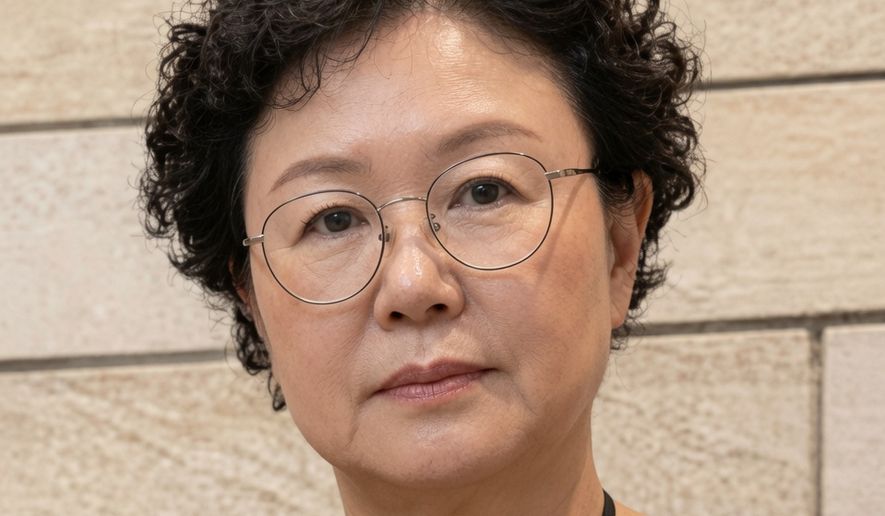
• Anna Ruiqin Wang is the founder and proprietor of Shining Light Media and the website, www.ipkmedia.com. She was a professor of CCP history at Qinghai Nationalities University and became a Member of the Political Consultative Conference of Qinghai Province. Since immigrating to the United States in 2018, she has dedicated herself to promoting freedom, human rights, religious liberty and democratic values.

Please read our comment policy before commenting.