


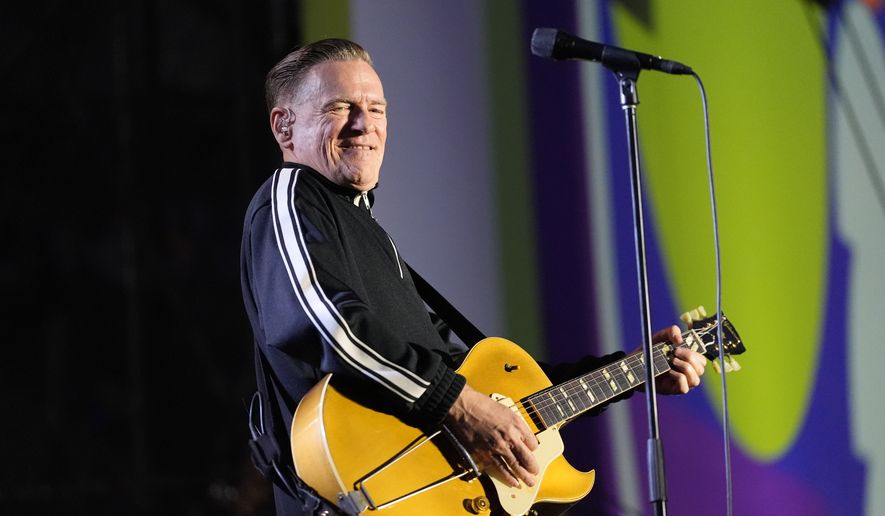

Canadian rocker Bryan Adams released a protest song aimed at President Trump’s calls to annex Canada, timed to coincide with Canada Day on Thursday.
The single, titled “51st State,” dropped on YouTube and other platforms. According to the Hollywood Reporter, the song emphasizes Canadian identity and rejects the notion of Canada becoming the 51st U.S. state, arriving amid an escalating cross-border tariff dispute between the two countries.
“Let me give it to you straight/ When you’re talking about my home/ You better show some respect/ Cuz up here we take care of our own/ So let me give you some advice mister/ You might have too much on your plate/ Go’n load us up with tariffs/ But we’ll never be the 51st State,” the lyrics state.
People were interested in these podcasts
Mr. Adams, best known for hits including “Summer of ’69” and “(Everything I Do) I Do It for You,” is not the first Canadian entertainer to publicly rebuke Mr. Trump’s annexation rhetoric. Comedian Mike Myers wore a “Never 51” hockey jersey in a Liberal Party ad alongside Canadian Prime Minister Mark Carney, and separately donned a “Canada Is Not for Sale” T-shirt during a “Saturday Night Live” appearance.
Speaking to the New York Times about the SNL moment, Mr. Myers said the gesture wasn’t about drawing attention to himself.
“What happened came from my ankles and from my brain and from my heart, and it was not about me — it was about my country,” he said. “I wanted to send a message home to say that I’m with you, you know.”
Mr. Myers added that Mr. Trump’s rhetoric, along with Elon Musk’s remark that Canada was “not a real country,” had stung many north of the border.
“What’s happened has really hurt our feelings,” he said. “We love America. We love you guys. We don’t understand what this madness is.”
Mr. Trump has periodically floated Canadian statehood since shortly after his 2024 election win, arguing on social media that the U.S. subsidizes its northern neighbor and that Canadians would benefit economically from joining the union. In February 2025, Mr. Trump imposed tariffs on Canadian goods, and Canada responded with its own retaliatory tariffs — the opening moves in a trade dispute that has continued to escalate in the time since.
This article was constructed with the assistance of artificial intelligence and published by a member of The Washington Times' AI News Desk team. The contents of this report are based solely on The Washington Times' original reporting, wire services, and/or other sources cited within the report. For more information, please read our AI policy or contact Steve Fink, Director of Artificial Intelligence, at sfink@washingtontimes.com
The Washington Times AI Ethics Newsroom Committee can be reached at aispotlight@washingtontimes.com.

Please read our comment policy before commenting.