



Americans created airplanes, computer chips, the internet and automobile assembly lines across 250 years of industry — but they’ve also invented unheralded gems such as refrigerators, barcodes, washing machines and Doppler radar.
Historians say Saturday’s anniversary of the country’s founding offers a chance to recall these unsung inventions, which have improved modern life as much as light bulbs and indoor plumbing.
Some scholars point to the Founding Fathers’ singular spirit in revolting against Britain as the secret to Americans’ creativity streak.
People were interested in these podcasts
“It comes down to the practical mind of Americans and an institutional arrangement that encourages individual advancement as beneficial to the larger society,” said U.S. historian Donald Critchlow, who directs Arizona State University’s Center for American Institutions. “Socialist or communist societies, by their nature, do not much reward individual incentive.”
Joseph Ellis, a Pulitzer Prize-winning constitutional historian, said a key factor was President George Washington signing the Patent Act of 1790, which allowed inventors to profit from their creations.
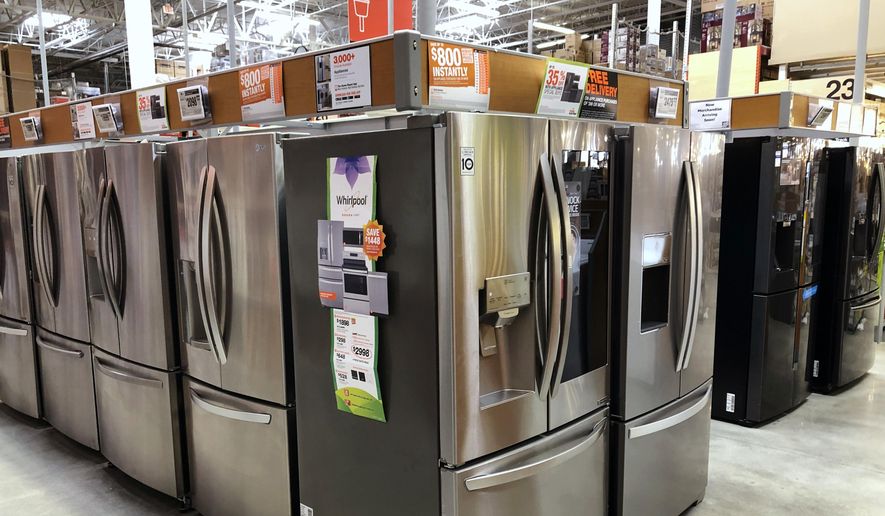
The U.S. patent system has allowed Americans to perfect and market gadgets based on ideas from other nations, such as refrigeration, automobiles and atomic energy.
“I don’t think there’s any other country in the world that generates this much innovative stuff,” Mr. Ellis said in a phone call.
The U.S. Patent and Trademark Office estimates that it has granted well over 12 million patents since 1790. It issued the first patent that year to Samuel Hopkins for his method of making potash, a group of potassium-bearing minerals and salts.
David Reynolds, who has researched inventions in the railroad era, said innovations multiplied again after the U.S. began numbering patents in 1836.
“The inventions of the 19th century were endless,” said Mr. Reynolds, a history professor at the City University of New York. “It really gained momentum starting in the 1830s and 1840s, as Americans migrated west with the steam engine.”
He emphasized that Benjamin Franklin, America’s prototypical inventor, promoted the Enlightenment idea of people reasoning about nature to progress as a society.
Analysts and experts interviewed by The Washington Times said unsung American inventions have given the world faster shoemaking, more accurate forecasts and speedier shopping.
DOCUMENT: J.E. Matzeliger Lasting Machine Patent
Maksim Sonin, an energy executive and member of Stanford University’s Center for Fuels of the Future, said U.S. innovations have continued to outshine other nations in the 20th and 21st centuries.
“I work with inventors from universities and labs all over the world and can confidently say that the U.S. innovation ecosystem is second to none,” Mr. Sonin said. “Inventors may be hesitant to launch a startup elsewhere, but when they see how many different ideas materialize in the U.S., they pursue innovations here.”
Refrigerators
One of America’s earliest forgotten inventors was Thomas Moore, a Maryland engineer who lived from 1760 to 1822 and invented the icebox in 1802.
A biography at the Maryland State Archives notes that the longtime Brookeville resident was “a farmer, inventor, entrepreneur, surveyor and engineer who worked on several significant public works projects and contributed to the development of better agricultural methods in the years of the early Republic.”
Moore worked closely with Presidents Thomas Jefferson and James Madison on several projects. His jobs included laying out the first federally funded national highway from Maryland to Ohio in 1806 and working as Virginia’s chief engineer from 1818 until his death.
“He seems to have been an interesting person, constantly writing and tinkering,” said Owen Lourie, a senior research archivist at the Maryland State Archives.
In 1802, Moore received a patent for a fur-lined wooden box with a tin chamber inside that he created to cool food for transportation. He dubbed the invention a “refrigerator” and sent a letter inviting Jefferson to see it.
New York University marketing instructor Angelica Gianchandani said Moore’s creation solved a problem that had plagued societies since the ancient Greeks and Romans first cooled food with ice blocks and cold cellars. She noted that his fundamental design idea of an insulated box made food more available and has not changed substantially in modern-day refrigerators.
“Moore’s story is fundamentally American,” Ms. Gianchandani said. “He was able to transform a good idea into what is now a household necessity thanks to his unique blend of engineering talent, business acumen, and through the power of American intellectual property protections.”
National parks
Americans were also the first to create a system of conserving public lands — a legacy that historians say has cemented the nation’s reputation as one of the most beautiful places to visit.
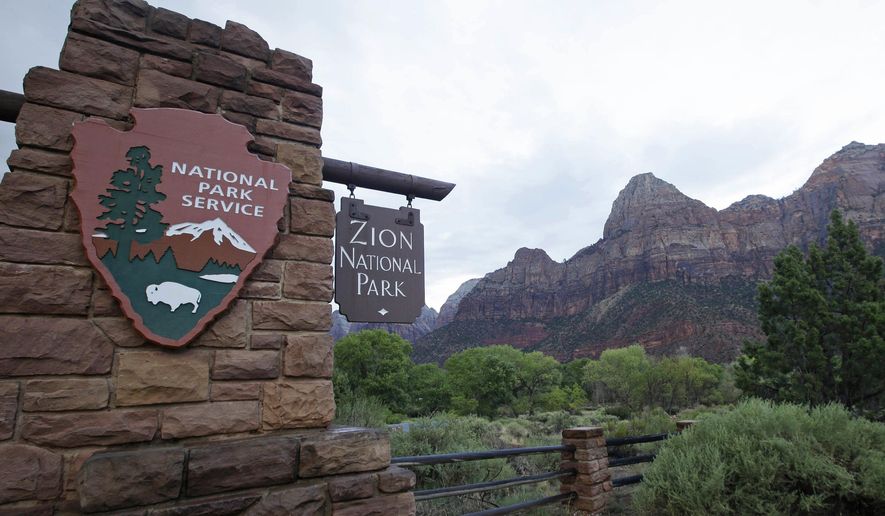
President Ulysses S. Grant made Yellowstone the world’s first national park in 1872, setting the land aside as a “public park or pleasuring-ground” to protect its geological beauty and natural wonders from privatization.
Frank Scaturro, president of the Grant Monument Association, said the creation of Yellowstone National Park set an important precedent despite occurring with “almost no fanfare” at the time.
“Enjoying natural beauty for recreation is a distinctly American way of enriching our lives,” Mr. Scaturro said.
“In Europe and other parts of the world, the top attractions tend to be architecture and art,” he added. “In the United States, we have the unsurpassed natural beauty of ‘God’s cathedral.’”
Building on Grant’s precedent, President Theodore Roosevelt created five national parks, starting with Oregon’s Crater Lake in 1902 and ending with Oklahoma’s Platt in 1906. The latter is now part of the Chickasaw National Recreation Area.
In 1916, President Woodrow Wilson created the National Park Service. It has since grown to manage more than 400 national parks and monuments on more than 85 million acres.
The park service praised its lands in a statement “as one of the great American inventions, as an example of our nation’s optimism and commitment to preserving the places that inspire us.”
“The United States pioneered a bold idea that our most extraordinary landscapes, stories and treasures should be protected for everyone to experience and enjoy,” the emailed statement said.
The park service said its lands provide a “once-in-a-generation opportunity” for Americans to celebrate the nation’s 250th birthday this year.
“Our parks bring people together, spark lifelong memories, support local economies and reflect the very best of who we are as a nation,” the statement added.
According to the National Park Service, more than 100 nations now operate roughly 1,200 national parks or preserves, reflecting America’s influence.
Faster shoemaking
A 19th-century innovation that gave Americans more social mobility came in the footwear industry.
Jan Matzeliger, an immigrant from modern-day Suriname in South America who settled in Massachusetts, noticed a critical inefficiency while working at the Harney Brothers Shoe Factory in the 1870s.
Machines cut and stitched shoe leather, but craftsmen performed the final stage of “lasting” the uppers to fit over a foot mold and pin it to each shoe by hand. A skilled worker could complete about 50 pairs a day, fueling production bottlenecks.
Matzeliger worked evenings in the factory to build a prototype machine from bits of scrap metal, elastic, wire and cigar boxes. He patented his automatic Shoe-Lasting Machine in 1883.
The National Inventors Hall of Fame, a nonprofit co-founded by the U.S. Patent and Trademark Office, inducted Matzeliger in 2006. It notes that he eventually tweaked his machine to produce 700 pairs a day, dramatically speeding production.
“As a result, shoe prices dropped by nearly half, making quality shoes affordable to a great number of people for the first time,” a biography posted on the Inventors Hall of Fame website notes.
Matzeliger helped form a company to make the machines in 1889. He died of tuberculosis a month before his 37th birthday.
Conrad Shiu, the Massachusetts-based founder of Shoe Zero, a footwear manufacturing company, said it’s impossible to underestimate what Matzeliger did for his industry.
“Shaping leather to the curve of a human foot, the step we call lasting, was always the slowest part of building a shoe,” Mr. Shiu said in an email. “What Matzeliger did was put it into a machine. It is the moment shoemaking stopped being a craft you did by hand and became an industry you could actually scale.”
Clothes washer
Not all American inventions originated on these shores. The automated washing machine is an early example of an idea that stagnated for centuries before American inventors started tinkering with it.
German inventor Jacob Christian Schaffer created the first rudimentary clothes-washing device in 1767 to make women’s housework easier.
Schaffer’s hand-cranked machine made light loads more bearable, but required significant physical labor for heavier wet clothes. That left it impractical for home use.
In 1797, New Hampshire inventor Nathaniel Briggs received the first patent for a wooden-plank clothes washer, bringing the idea to the United States.
William Blackstone of Indiana created the first manual, at-home washing machine with a rotating drum in 1874 as a surprise birthday gift for his wife. His machine used a manual crank to swish around dirty clothing in a wooden drum of hot, soapy water.
In 1910, Alva J. Fisher patented the first mass-produced electric washing machine, which he invented by attaching a small motor to the drum. He dubbed his creation “Thor” and sold it through the Hurley Electric Company in Chicago.
Bendix Home Appliances introduced the automatic washing machine in 1937, motorizing the entire laundry cycle for the first time.
A March 2024 paper published by the nonprofit National Bureau of Economic Research estimated that the automatic washing machine helped reduce housework from 58 hours per week in 1900 to just 18 hours by 1975.
The paper noted that 98% of homes in 1900 relied on a 12-cent scrub board to clean laundry before wringing it out, hanging it on a clothesline and ironing it with slow-heated flatirons.
“The process involved transporting water to the stove where it was heated using wood or coal,” economists Effrosyni Adamopoulou, Jeremy Greenwood and Nezih Guner wrote in the paper. “Clothes were then cleaned using either a washboard or a mechanical washing machine. Subsequent rinsing was necessary.”
Sean Higgins, an analyst at the libertarian Competitive Enterprise Institute, said American washing machines freed women worldwide to attend school and pursue other interests.
“It liberated women in a genuine sense,” Mr. Higgins said. “For centuries, women washed clothes by going down to the river and beating them against rocks.”
More accurate forecasts
Another Germanic idea that Americans fiddled with led to the invention of Doppler radar.
In 1842, Austrian physicist Christian Doppler discovered that the frequency and length of sound waves changed depending on whether an observer moved toward or away from them. Examples of the so-called Doppler effect include changes in the pitch of a siren as it nears and passes an observer.
Dozens of nations applied Doppler’s principle to World War II radar systems they developed to track aircraft radio signals. The breakthrough in weather monitoring came when American meteorologists discovered they could use it to track storms.
“Analysts noted in periods of heavy weather, the radar would return strange signals,” explains a page at the National Weather Service website. “Investigation into this phenomenon resulted in the discovery that these echoes were returns from the precipitation, unmasking a further use for the technology.”
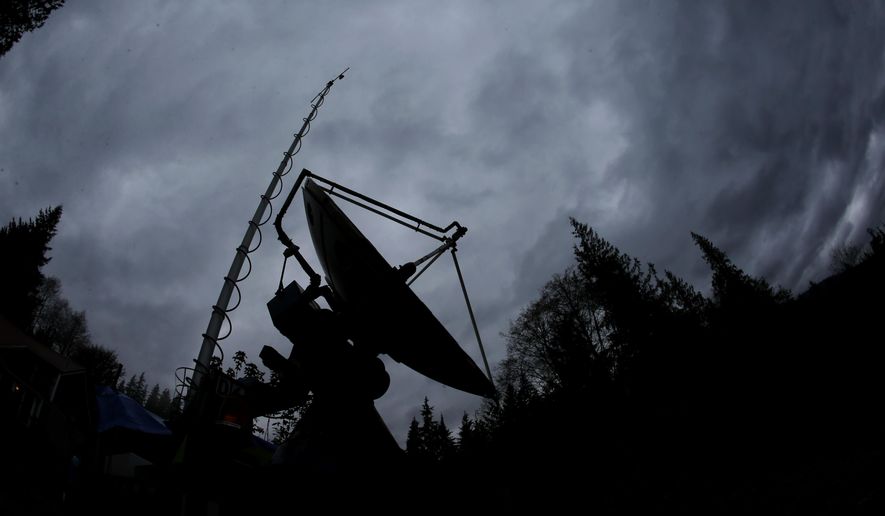
The U.S. Navy donated 25 surplus radars to the weather service in 1942, the world’s first weather radar system. The National Weather Service later used Doppler radar to launch a national warning system in 1959 and track tornadoes in the 1970s.
“What Americans did wasn’t just apply Doppler’s physics,” said Asif Alam, a radio frequency and antenna systems engineer based in Miami. “They solved the hard problem: translating a wave-shift principle into deployable infrastructure that works in rain, wind and atmospheric chaos, at continental scale, in real time.”
In 1988, U.S. officials launched the Next-Generation Radar network. Known as NEXRAD, the system of 159 high-resolution Doppler radars has become the primary tool meteorologists use to detect hail, tornadoes and severe thunderstorms.
“Doppler radar as we know it today is a fantastic example of American research and public efforts translating into real-world benefit,” said Kirk Sigmon, chief innovation attorney at KellDann Law, a Washington-based technology law firm. “Even today, it improves our understanding of weather patterns and makes Americans safer.”
Speedier shopping
Another convenience Americans may take for granted is the ability to find the goods they want in a store and get through the checkout line in minutes rather than hours.
Historians say they owe this pleasure to two college students who invented the barcode, sparking a 20th-century revolution in inventory and supply chain management.
Drexel University students Bernard Silver and Norman Joseph Woodland created the first bull’s-eye barcode pattern in 1948, taking Morse code as their inspiration. They obtained a patent for the idea in 1952.
“Before the barcode, retail and warehousing relied on manual clipboards, massive human error and grueling checkout lines,” said Obaid Chawla of WareGo, a New York inventory software company. “The barcode didn’t just speed up grocery shopping; it birthed the modern global supply chain.”
The barcode made its commercial debut in June 1974, when a Marsh Supermarket in Troy, Ohio, used it for the first time to scan the newly developed Universal Product Code on a pack of Wrigley’s chewing gum.
Barcodes have since become commonplace in stores across the globe. They are also used in QR codes, which shoppers scan on their smartphones to make digital purchases.
“More than 10 billion scans happen globally per day,” said Matthew Guiste, a retail technology strategist at Zebra Technologies, a leading manufacturer of barcode scanners. “It has become a foundational technology for intelligent operations in today’s digital economy.”
Elliot Sterling, content strategist at Opus Virtual Offices, a remote workplace services company, estimated that error rates in manual inventory systems ran up to 43% before the barcode arrived.
“It replaced a broken process,” Mr. Sterling said. “Prices dropped as inefficiency costs left the system and restocking became predictable rather than reactive.”
Rock music
“The blues had a baby, and they called it rock ‘n’ roll,” the blues musician Muddy Waters once said.
That quote on the Rock and Roll Hall of Fame website sums up one of America’s greatest — and loudest — contributions to global culture.
The Hall of Fame credits pioneering Black blues and jazz musicians for cooking up rock music in a “gumbo” of gospel songs, call-and-response tunes and R&B rhythms. These pioneers included guitarist Chuck Berry, pianist Fats Domino and saxophonist Louis Jordan, often described as the “grandfather of rock ’n’ roll.”
“Rocket 88,” an Ike Turner composition recorded in 1951 by Jackie Brenston and His Delta Cats, is widely regarded as the first rock ’n’ roll song.
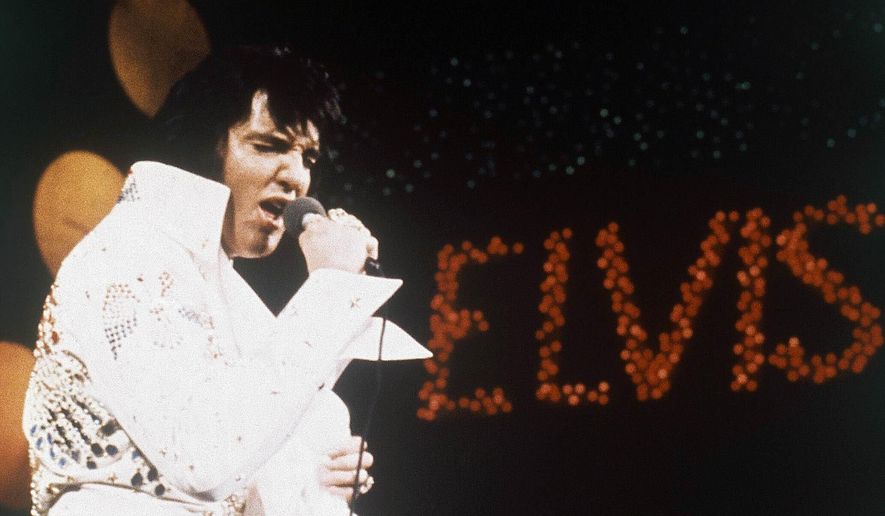
Meanwhile, Elvis Presley brought Black-influenced sounds and gyrations into the commercial mainstream with 1950s hits such as “Hound Dog” and “Jailhouse Rock.” He and his musical crew coined a rockabilly sound that drew massive audiences, influencing a variety of musicians including the Beatles and Billie Eilish.
Business consultant Jared Navarre, former frontman of the Alaskan indie rock band Static Cycle, said rock music has become the voice of frustrated and forgotten people worldwide.
“Some of the most influential thinkers in human history penned lyrics they’d shout from stages — lyrics that forged political movements, shaped social norms, influenced the clothes we wear and changed how we think,” said Mr. Navarre, the creator of Zillion, a narrative hard rock platform.
Music insiders insist there’s no better way to tell the story of America’s 250th birthday as a land of innovation than through listening to rock’s greatest songs, including the 1960s Vietnam War protest music of Bob Dylan.
And they say there’s nothing more American than playing it loud and proud.
“The Beatles, Dylan, [Jimi] Hendrix, [Led] Zeppelin, [Bruce] Springsteen, Nirvana and so many others weren’t just making songs,” Mr. Navarre said in an email. “They were shaping how entire generations understood themselves.”
Correction: A previous version of the story incorrectly listed the location of Oklahoma’s Platt.
Contact the author


Please read our comment policy before commenting.