


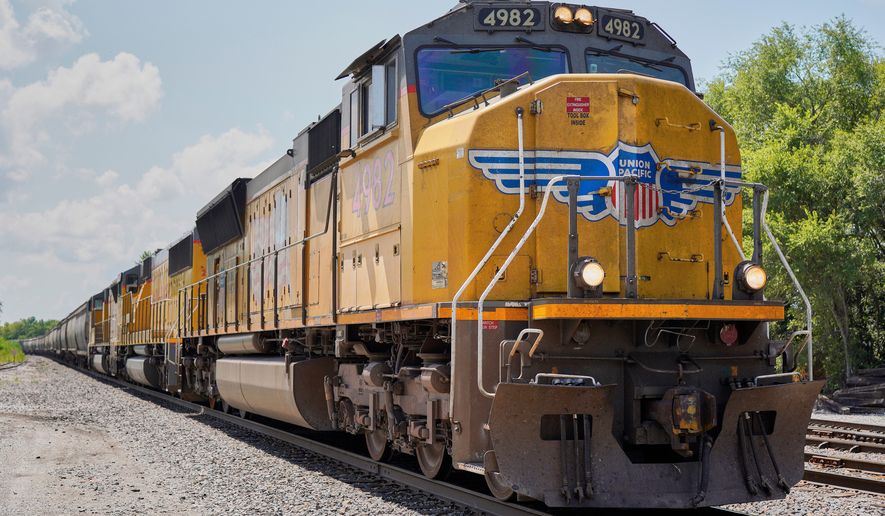

OMAHA, Neb. — Union Pacific struck a deal with Canadian National to secure that rival’s support for its proposed $85 billion acquisition of Norfolk Southern railroad.
The deal to create the nation’s first transcontinental railroad has been divisive within the industry because it would concentrate so much market power in the hands of one company that would control more than 40% of all rail traffic and reduce the number of major freight railroads in the United States down to five. BNSF, CPKC and CSX railroads all strongly oppose the merger, but now Canadian National said it will support it after winning concessions from Union Pacific.
The U.S. Surface Transportation Board is just beginning to review the proposed $85 billion merger, but it has demanded more information from the railroads by the end of the month before it will move forward. Shippers have also lined up on both sides of the deal with some excited about the promises of faster cross-country deliveries while other companies mainly in the chemical and agriculture industries worry about the possibility of higher rates and service problems.
People were interested in these podcasts
UP CEO Jim Vena said he believes these agreements with Canadian National will address many of the competitive concerns with the merger because CN will gain permission to be able to serve any customers that will see significantly reduced shipping options after the merger. And CN will take over Norfolk Southern’s ownership of smaller railroads in St. Louis and Kansas City to ensure the merged railroad will never control the majority of those operations.
“This is truly more compelling today than we ever looked at it before,” Vena said Thursday as he discussed Union Pacific’s second-quarter earnings. “We think we have a strong case.”
Both CN and UP will gain access to each other’s tracks
Canadian National will also gain access to tracks between St. Louis and Kansas City where there was the most overlap between UP and NS, and CN will be able to use a key rail yard in Kansas City that will help that railroad compete better for business to and from Mexico. Union Pacific will get the ability to move more traffic around the congested tracks in Chicago.
“As the rail industry considers significant structural change, it is essential that customers continue to benefit from meaningful competition and choice,” CN President and CEO Tracy Robinson said.
Critics say the merger will hurt rail competition
But BNSF spokesperson Zak Andersen said these agreements show what can already be accomplished through cooperative agreements between railroads without all the disruptions of a merger that would leave many customers with fewer competitive shipping options.
“UP is required to demonstrate that the benefits it claims can only be achieved through a merger. Its own agreement with CN shows the opposite. The benefits UP highlights can be pursued today without a merger, and significant portions of the arrangement are not even contingent on merger approval,” Andersen said.
Rail shipping demand is up
Norfolk Southern CEO Mark George said that demand for rail shipping is up right now across much of the economy. That started after the Iran war began but became more widespread through the spring. But he said that if gas prices remain high long enough, it could hurt the consumer and the growth in shipping volume that both NS and UP reported Thursday could reverse.
The Surface Transportation Board will review the merger under a tough new standard it adopted in 2001 after a series of disastrous rail mergers in the 1990s that led to shipment delays of weeks or even months. These untested rules require any merger of the six largest railroads to be in the public interest and show that it will enhance competition. When the Surface Transportation Board approved the first major rail merger in more than two decades three years ago, it used a less stringent standard allowing Canadian Pacific’s $31 billion acquisition of Kansas City Southern.
Union Pacific CEO predicts approval
Vena remains optimistic the deal will get approved.
“The merger is going to close. It’s just too compelling for the country, but it would be a mistake for this deal not to close,” Vena said.
But critics have said the merger seems designed more to benefit Wall Street investors than the companies that rely on the railroads to ship their products and deliver the raw materials they need.

Please read our comment policy before commenting.