



Most states are mistakenly too generous in handing out federally funded food stamps and are now at risk of having to fund the benefits from their own budgets.
The Department of Agriculture calculated that 41 states and the District of Columbia had food stamp payment error rates above 6% last year, exceeding the penalty threshold set by the One Big Beautiful Bill Act.
States with higher error rates will lose federal funding for the Supplemental Nutrition Assistance Program as early as the end of 2027, leaving them on the hook for funding up to 15% of their food stamps or forcing them to slash benefits.
People were interested in these podcasts
The new threshold is aimed at ending billions of dollars in wasteful spending and fraud in the $110 billion food stamp program.
Error rates, mostly overpayments, have significantly increased in recent years, from an average of 6.3% in 2017 to 10.62% in 2025.
The error rate last year represented more than $10.1 billion in improper food stamp payments, according to the USDA.
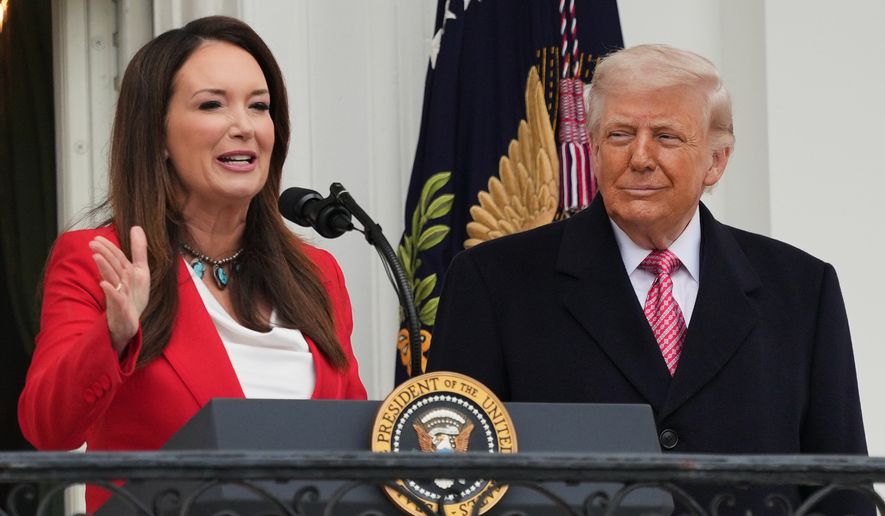
Agriculture Secretary Brooke Rollins called the data “further proof that state accountability is severely lacking in SNAP.”
The federal government funds 100% of SNAP benefit costs, and the penalties are intended to give states a strong incentive to curb errors.
Advocacy groups warn that states need more time to implement reforms to avoid billions of dollars in new costs. Some say the threat of looming penalties has led to a significant drop in SNAP participation among the needy.
“This is a textbook case of bad incentives,” said Dory Thrasher, senior policy analyst at the Food Research and Action Center.
Mistakes in distributing food stamps were widespread in both red and blue states.
The USDA’s analysis counted both underpayments and overpayments, but the vast majority of errors involved states issuing benefits to ineligible recipients.
Florida’s error rate in 2025 was nearly 13%, the USDA found, and nearly all of the mistakes were overpayments.
If not corrected, the high error rate will cost the state nearly $1 billion in lost federal food stamp funding beginning as early as October 2027. The Florida Legislature this year approved $4 million for a new artificial intelligence-driven system to help determine eligibility and detect errors in the SNAP system.
Alaska’s error rate was more than 23%, followed by New Mexico at nearly 17%.
Delaware placed third with an error rate of 16%, followed by Georgia, which had an error rate of more than 15%. In every state, the mistakes were nearly all overpayments, and just a small fraction involved underpayments.
Only a handful of states fell below the 6% penalty threshold: Wyoming, Wisconsin, Utah, Vermont, Kentucky, Iowa, Idaho, Nebraska and South Dakota, which had the lowest error rate — less than 2.5% — of all states and the District.
According to the USDA, fraud is not the main cause of SNAP payment errors.
In many cases, state agencies incorrectly calculate a household’s expenses, which impacts the amount of food stamps a family receives. In other cases, recipients fail to inform the states of changes in their income that may reduce the benefits they receive.
At a symposium sponsored by the National Governors Association, the nonprofit government advocacy group U.S. Digital Response analyzed the causes of error rates in three states. The organization found that most payment errors stemmed from hard-to-use systems, overuse of bureaucratic jargon and acronyms that left SNAP recipients confused about what they were required to report, poorly communicated policy changes and caseworker overload.
States that have worked to improve the accuracy of their SNAP payment systems have reduced errors. New Jersey experienced a big decline, dropping from a 14.3% error rate in 2024 to less than 7% last year, after implementing new quality control protocols.
The left-leaning Center on Budget and Policy Priorities estimated this week that food stamp participation has significantly decreased since the Republican reconciliation law was enacted last year. The law imposed stricter work requirements and other changes, including a ban on food stamps for certain categories of legal immigrants living in the U.S.
The center estimated more than 4.5 million people stopped receiving SNAP benefits between July 2025 and April 2026. Steep drops were seen in Arizona, where SNAP participation fell by 48%, and in Louisiana, where it fell by 21%. Florida experienced a 19% drop in SNAP participation.
The organization said the new limitations and requirements for food stamps are both harsh and ineffective.
“It’s very unlikely that reduced need is driving the decline in SNAP participation,” the center concluded, noting the nation’s relatively flat unemployment rate.
Now, states are racing to curb food stamp payment errors or face massive budget shortfalls because of the loss of federal SNAP dollars.
The new law will penalize states based on the percentage of food stamp payment errors.
States will have to pick up 5% of the cost of food stamps for error rates of 6% to 8% and will have to cover 10% for error rates of 8% to 10%.
Error rates above 10%, found in 20 states and the District of Columbia last year, will result in a 15% penalty. States with the highest error rates may be eligible for a grace period that could delay penalties until 2030.
Although most of the errors in SNAP payments are not tied to outright fraud, a separate analysis found some eye-popping examples of food stamp abuse earlier this year.
Researchers at the Foundation for Government Accountability found that more than 14,000 luxury vehicles were linked to SNAP recipients in a single, unidentified state — a list that included Bentleys and Lamborghinis but was dominated by more common premium brands such as Lexus, Tesla and BMW.
Recipients included a professional football player and a “celebrity barber,” though a footnote in the report noted these specific cases were also under investigation for possible identity fraud.
Contact the author


Please read our comment policy before commenting.