


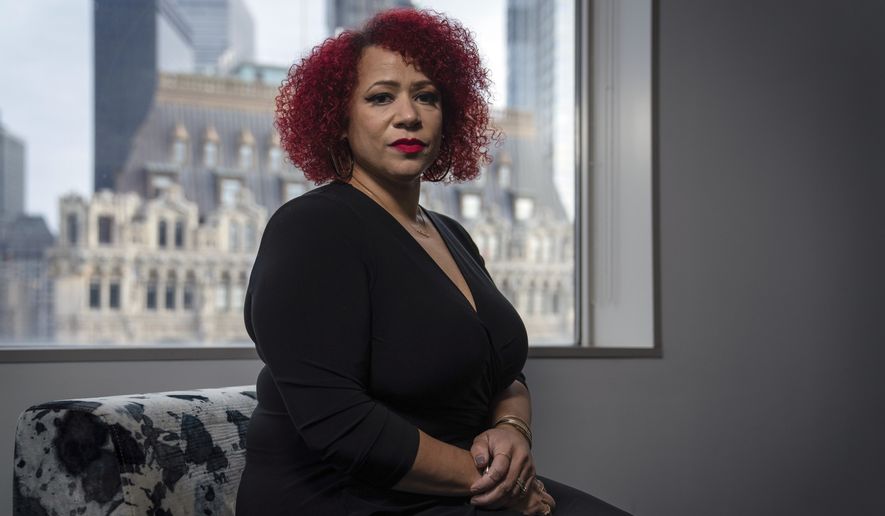

Nikole Hannah-Jones, creator of The New York Times’ “1619 Project,” said paying reparations for slavery would amount to admitting that “the entire existence of the United States” is a crime.
“Paying reparations is an admission of the crime,” Ms. Hannah-Jones said. “But it’s not an admission of the crime of a handful of bad apples or a few years of bad policy. It is the crime of the entire existence of the United States.”
The remarks came during a conversation with The Meteor, a left-wing media outlet, recorded at Vital Voices Global Headquarters in Washington. The interview, conducted by Brittany Packnett Cunningham, centered on reparations and the legacy of slavery as the nation approaches its 250th anniversary.
People were interested in these podcasts
Ms. Hannah-Jones argued that America’s history of slavery is too deeply embedded to be erased short of removing “all the monuments on the Mall in Washington.”
“You could never knock down all the statues to enslavers, or you have to remove all the monuments on the Mall in Washington,” she said. “Slavery predates the founding of our country by 150 years.”
She pointed to backlash over Juneteenth, critical race theory and restrictions on how history is taught in schools as evidence that many Americans still refuse to confront the legacy of slavery.
Ms. Hannah-Jones, a journalism professor at Howard University, won a Pulitzer Prize for her lead essay in the “1619 Project,” which reframed the nation’s founding around the arrival of enslaved Africans in 1619. The project was praised by many for elevating a long-underexamined chapter of American history, while a number of historians — including some who identify as liberal — publicly disputed specific factual claims, particularly around the role slavery played in motivating the American Revolution.
This article was constructed with the assistance of artificial intelligence and published by a member of The Washington Times' AI News Desk team. The contents of this report are based solely on The Washington Times' original reporting, wire services, and/or other sources cited within the report. For more information, please read our AI policy or contact Steve Fink, Director of Artificial Intelligence, at sfink@washingtontimes.com
The Washington Times AI Ethics Newsroom Committee can be reached at aispotlight@washingtontimes.com.

Please read our comment policy before commenting.