


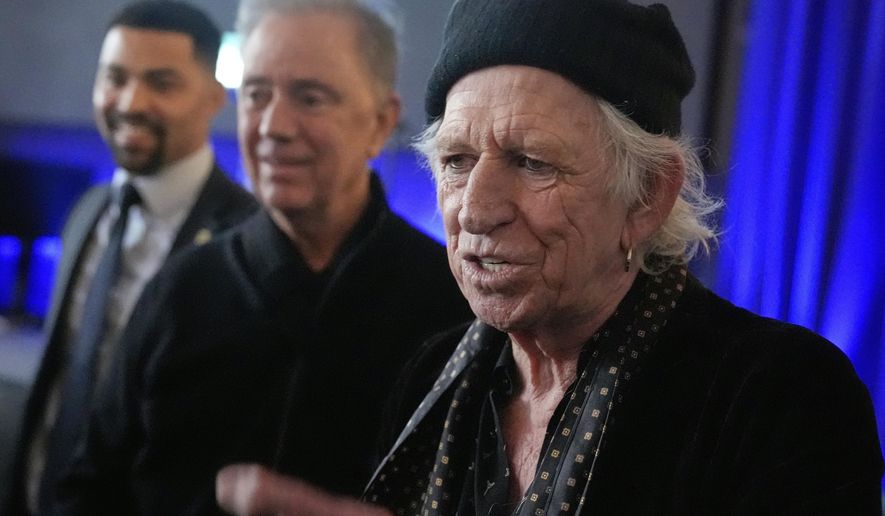

Rolling Stones guitarist Keith Richards said America has become “a bit of a disappointment at the moment,” weighing in on speculation that the band’s new single takes aim at President Trump.
Mr. Richards made the remark in a Sunday Times interview tied to the band’s forthcoming album, “Foreign Tongues,” out Friday. Asked whether the track “Ringing Hollow” amounts to an anti-Trump statement, the guitarist described the song as capturing “a nostalgic love affair with America, and [it being] a bit of a disappointment at the moment,” according to NME’s account of the interview. He did not say whether the lyrics specifically reference Mr. Trump.
Mr. Richards, who was born in England and has lived in Connecticut for four decades, added that everyday Americans are preoccupied with pocketbook concerns. “All you hear is the moaning about the price of gas. This is where it hurts people,” he said.
People were interested in these podcasts
Frontman Mick Jagger offered his own take on the song in a separate interview with MOJO magazine last month, saying it centers on “America generally and your experiences of it” rather than any single administration.
“The American Dream is intact for some people, and I’m sure we can find some wonderful immigrant stories that happened in the last 12 months, but we read about the decline of the American Empire,” Mr. Jagger said, according to the NME report. He went on to question “the money spent on an election” and whether the country’s political drift predates the current administration, concluding, “it’s not the same place as it was.”
The Rolling Stones have sparred with Mr. Trump over his use of their music dating back to his first presidential campaign. In May 2016, the band’s representatives said Mr. Trump’s campaign was never given permission to play its songs and demanded he “cease all use immediately,” according to an NBC News report from that period. Mr. Trump nonetheless closed out the Republican National Convention that July with the band’s 1969 hit “You Can’t Always Get What You Want,” prompting the Rolling Stones to clarify on social media that the song’s use did not constitute an endorsement, Billboard reported at the time.
This article was constructed with the assistance of artificial intelligence and published by a member of The Washington Times' AI News Desk team. The contents of this report are based solely on The Washington Times' original reporting, wire services, and/or other sources cited within the report. For more information, please read our AI policy or contact Steve Fink, Director of Artificial Intelligence, at sfink@washingtontimes.com
The Washington Times AI Ethics Newsroom Committee can be reached at aispotlight@washingtontimes.com.

Please read our comment policy before commenting.