


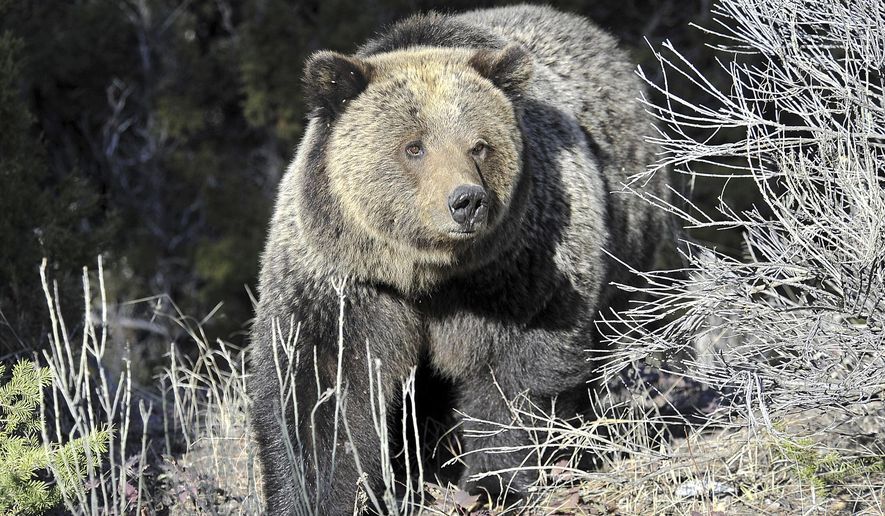

A San Diego man is recovering from multiple surgeries and mounting medical bills after a grizzly bear attacked him on one of Glacier National Park’s most popular trails last month, dragging him across a snow-covered mountainside before fellow hikers and an airlifted rescue team got him to a hospital.
Daniel Crago, 32, was wrapping up a weeklong trip to the park on May 28 when the attack occurred on the Grinnell Glacier Trail, a roughly 10-mile out-and-back route in the Many Glacier area on the park’s east side. Mr. Crago and a friend had hiked about 3.5 miles when the friend turned back at a snow-covered section of the trail. Mr. Crago pressed on alone, following two other hikers to a closure point, where he took photos before beginning his descent.
He was roughly halfway back across the snowfield when he noticed a grizzly cub that had already passed him and was walking away. As he scanned the area, he spotted a larger bear just 15 feet above him on the mountainside.
“I alerted the bear as they tell you to do, so you don’t frighten it,” Mr. Crago told Backpacker magazine. Before he could reach the bear spray on his belt, the animal charged him and bit down on his arm, dragging him 20 to 30 feet down the slope before running off into the trees.
“It was just pure panic,” he said.
Mr. Crago told NBC 7 San Diego that both bones in his forearm were broken and there was bone loss. Doctors replaced a section of destroyed bone with donor tissue from a cadaver, he said. He added that he believes his split-second decision to throw his arm up — rather than reach for his spray — may have kept the bear from biting his head or neck.
Fellow hikers on the trail responded quickly. A pediatric emergency room physician stabilized Mr. Crago’s arm and applied a tourniquet. Another hiker made continuous noise to prevent the bears from returning. A third used a satellite communication device to summon help. Mr. Crago was airlifted by the ALERT helicopter to Logan Health in Kalispell, Montana. Mr. Crago said the helicopter flight alone cost approximately $20,000.
The National Park Service said in a statement that the sound of rushing water from snowmelt may have prevented either party from hearing the other before the encounter — classifying it as a surprise attack.
Mr. Crago has since undergone three surgeries and expects to need at least one more, as well as plastic surgery to address external damage to his arm. He has established a GoFundMe campaign to help cover his medical expenses, with any funds beyond what he needs earmarked for donation to the National Park Service. The campaign page showed more than $44,000 raised toward a $60,000 goal as of Friday.
“I am deeply grateful for everyone who has supported me,” Mr. Crago wrote on the fundraising page.
The attack was the second major bear attack resulting in serious injury or death reported at Glacier this spring. Weeks earlier, Anthony Pollio, 33, of Fort Lauderdale, Florida, was killed by a bear on the Mount Brown Trail — the park’s first fatal bear attack since 1998, according to Hungry Horse News. The Grinnell Glacier Trail remains closed.
Despite his ordeal, Mr. Crago told NBC 7 he has not lost his love for the outdoors.
“It’s their environment, and we’re lucky to share it,” he said.
This article was constructed with the assistance of artificial intelligence and published by a member of The Washington Times' AI News Desk team. The contents of this report are based solely on The Washington Times' original reporting, wire services, and/or other sources cited within the report. For more information, please read our AI policy or contact Steve Fink, Director of Artificial Intelligence, at sfink@washingtontimes.com
The Washington Times AI Ethics Newsroom Committee can be reached at aispotlight@washingtontimes.com.

Please read our comment policy before commenting.