


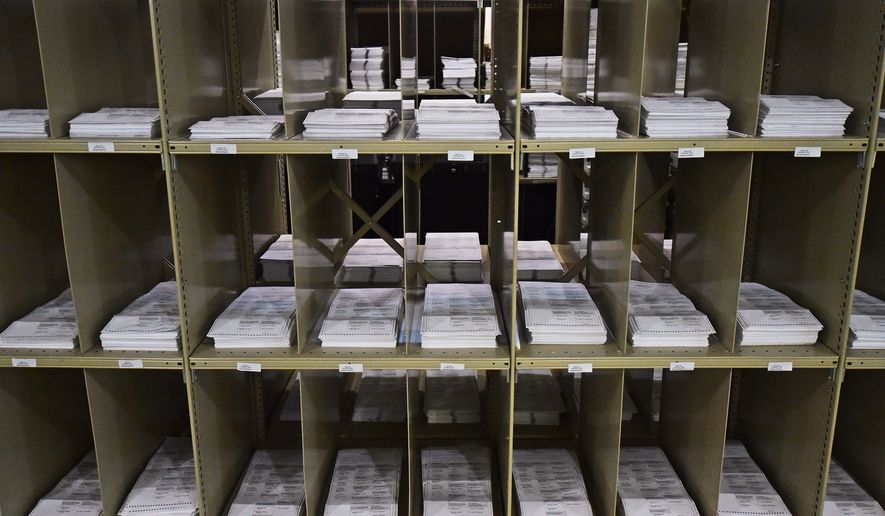

The Republican-run Ohio Legislature has approved a photo ID requirement for mail-in voting, but it will not take effect until November 2027.
Under the legislation, absentee voters will have to submit a copy of a photo ID, such as a driver’s license, when mailing in their ballots. Voters will not be required to provide a photo ID when applying for an absentee ballot.
The bill is now on Gov. Mike DeWine’s desk, awaiting his signature.
The Legislature also approved a separate constitutional amendment to require photo ID at the polls. Ohio voters in November will decide whether to adopt the amendment.
The constitutional amendment does not cover voting by mail, which some Republicans called a loophole, prompting the additional legislation.
Ohio absentee voters currently must verify their identity by providing the last four digits of their Social Security number or their driver’s license number. Under the new bill, voters must include a copy of a valid photo ID when returning their mail-in ballot or present it when delivering their ballot in person.
The legislation would also create a new online absentee ballot application system, where voters could also upload a photo ID.
Those exempt from the photo ID requirements include military members and overseas voters, people with severe medical conditions or disabilities, including those with a lack of mobility or another “material obstacle,” former inmates, and voters with “sincere religious objections.”
Republicans said the new protocol will strengthen election security, but Democrats argue it could disenfranchise some voters, specifically senior citizens who tend to vote absentee.
When GOP lawmakers approved Ohio’s current voter ID law in 2022, they opted to exempt mail voting from the requirement after election officials argued the change would disadvantage senior citizens and other groups.
The new requirement drew protests from Democrats, state election officials and the Ohio Election Officials Association, a group representing boards of election.
Contact the author


Please read our comment policy before commenting.