



The Senate Judiciary Committee on Thursday advanced a bipartisan bill to protect against unauthorized digital copies of a person’s voice or likeness amid a rise in AI copycats.
The bill, called the NO FAKES Act, creates intellectual property rights for Americans to control their digital replicas and enforcement mechanisms to prevent the online proliferation of unauthorized AI fakes.
It advanced via voice vote, which lawmakers on the panel said was a show of goodwill for the work that had been done to get the legislation to this point despite lingering concerns about stifling free speech.
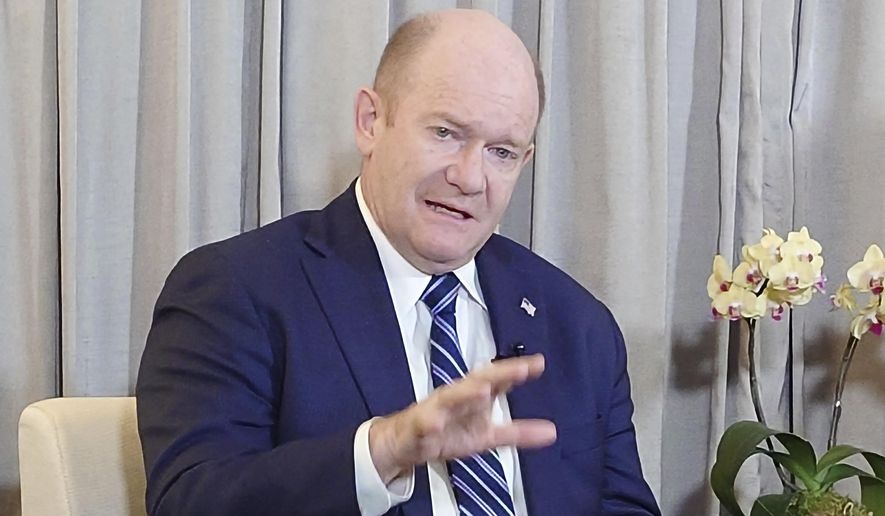
Sens. Chris Coons, Delaware Democrat, and Marsha Blackburn, Tennessee Republican, held dozens of negotiating sessions with colleagues and stakeholder meetings to hash out the details of the legislation as Congress builds momentum toward broader federal regulation of AI.
“This bill is about protecting what’s most personal to us, what makes us us — our voice and our likeness,” Mr. Coons said. “Every American should have the right to decide how their voice and likeness will be used, especially when generative AI can create highly realistic digital replicas that make it look like we said things we never said and did things we never did.”
He said the bill would impose financial penalties on platforms that do not take down unauthorized replicas and reins in the use of AI models that exist largely to create deepfakes.
“It is imperative that we put this national standard in place for voice and visual likeness protection of creators,” Ms. Blackburn said. “From artists and songwriters to students and everyday citizens, our nation deserves meaningful protections against deepfakes.”
The senators said their bill includes provisions to ensure it does not run afoul of the constitutional right to free speech.
“For example, we have excluded commentary, criticism, scholarship, satire and parody content from being removed, as well as news and sports broadcast material,” Ms. Blackburn said.
Republican Sens. Mike Lee of Utah, Ted Cruz of Texas and Eric Schmitt of Missouri supported moving the bill out of committee but said they would like to see additional free speech protections added before full Senate consideration.
“Legislating in this area is complicated and fraught with peril,” said Mr. Cruz, who chairs the Senate Commerce Committee that is also working on policies to regulate AI.
Sen. Alex Padilla, California Democrat, similarly supported advancing the bill but suggested future changes to ensure the obligations it places on music streaming services, video game developers and other user-generated content platforms are “appropriately tailored.”
The NO FAKES Act is endorsed by OpenAI, TikTok and a broad array of media and entertainment industry groups.
Sen. Amy Klobuchar, Minnesota Democrat, said the measure builds on her bill, the Take It Down Act, that criminalized nonconsensual publication of intimate images, including AI deepfakes, and hopes it serves as a model for even more laws protecting Americans in the digital age.
Contact the author


Please read our comment policy before commenting.