


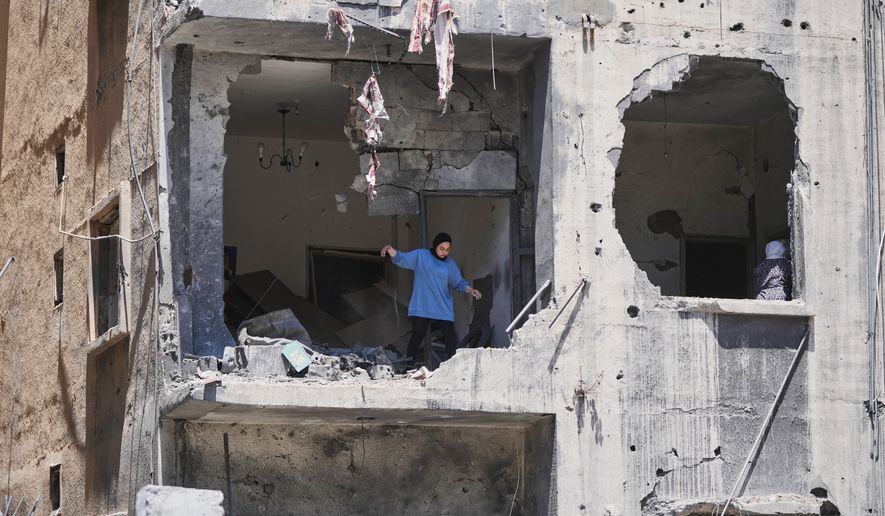

TYRE, Lebanon — The dust has barely settled in Tyre after weeks of Israeli airstrikes on the ancient city along Lebanon’s Mediterranean coast.
Despite the relative calm, life remains largely at a standstill.
A new ceasefire between Israel and the Iranian-backed Hezbollah militant group is in effect. But previous ceasefires have broken down. Uncertainty and fear linger, even as the U.S. and Iran meet for talks in Switzerland that Lebanese residents hope will bring calm to their troubled country.
People were interested in these podcasts
Over 4,000 people in Lebanon have been killed in Israeli strikes since the latest Israel-Hezbollah war began in March, two days after the Iran war began, when Hezbollah fired at Israel. The group has also clashed with Israeli troops making their deepest incursion into southern Lebanon in over a quarter century.
Large swaths of southern Lebanon have been left in ruins, including Tyre.
‘Where is this truce?’
During the summer, Lebanon’s fourth largest city is usually filled with tourists lounging on its beaches, walking through its Roman ruins, eating freshly caught seafood at picturesque restaurants or taking boat tours.
Now, tables at the few restaurants that haven’t closed are empty. Parking lots that are usually packed with beachgoers’ vehicles are filled with displaced people living in tents. Fishermen and mariners say they can’t sail far from port for fear of being targeted.
“Every day they tell us there’s a truce or ceasefire. Where is this truce? We can’t see it,” said Ali Bazzi, 31, who lives alone on a tour boat that belongs to family friends. His home in Toura, several kilometers away, was destroyed by an Israeli strike.
Like many who have fled to Tyre from surrounding areas, he doesn’t dare return until he sees long-term calm.
For months, Bazzi has been sleeping on a mattress on the deck, and selling sandwiches at a small stand a few steps away to earn money.
Israel in early June warned the entirety of Tyre to leave before it launched intense airstrikes across the city, saying it was targeting Hezbollah.
But Bazzi stayed. He recalled the emptied, ghostly city and the cries of women and children as Israeli strikes began. And he said he woke one night to the sound of a drone hovering over the port and worried it had come for him.
Even as the new ceasefire appeared to be largely holding, Tyre residents still pause anxiously when they hear Israeli jets overhead.
Ancient heritage and environment were threatened
It seems at least one building has been reduced to rubble on every street. Others remain standing with several floors blown off.
Pictures of those killed, including paramedics, families, and Hezbollah militants, are posted as memorials on the ruins of buildings and dashboards of parked cars.
The city’s iconic heritage sites are not unscathed.
Several buildings next to the remains of a 2nd century citadel were struck. Debris knocked the crowns off some Roman columns and damaged stones on the Roman road that have existed for thousands of years. Employees hope the damage to the UNESCO World Heritage site can be repaired.
“We’re waiting for a committee to come and inspect it,” said Adnan Istanbuli, an employee at the Lebanese Directorate General of Antiquities. “The city of Tyre is 5,000 years old, and what happened to it is huge.”
Just south of the city, the shoreline in Mansouri, a well-known wildlife preserve for sea turtles and other animals, is now inaccessible after Israeli strikes. Mona Khalil, a well-known environmentalist who lived along that shore, died Friday from her wounds, weeks after a strike hit her home.
Hospital workers say they no longer feel safe
One of Tyre’s largest hospitals is repairing some of its units that were destroyed when an Israeli airstrike struck a building across the street.
Doctors at the Jabal Amel Hospital have lived through multiple wars over the past few decades but said this one is different. In the past, they felt relatively safe as long as they were in the hospital. This time, the Israeli strikes occurred nearby and without warning.
Doors and windows were blown off. Staff rushed to treat wounded patients and colleagues. Thick smoke filled the hospital.
“We used to be scared, but we’re a lot more scared now,” said intensive care unit nurse Khadeeja Yousef, whose unit overlooks the hospital parking lot, now reduced to rubble and charred cars.
Cardiologist Mohammad Nassar’s private clinic across the street was hit. Now he rummages through the debris, looking for hundreds of books he had collected for over three decades.
“I don’t care about any heart monitoring machines or anything else, but the books are dear to my heart,” he said.
People in Tyre are constantly reminded that prospects for long-term stability are unclear as negotiations continue between Israel and Lebanon in Washington, with Hezbollah playing no role and resisting efforts to disarm it.
Large swaths of land just south of the city are under Israeli control, stretching to the United Nations-mandated Blue Line that separates the countries. In recent days, smoke from distant Israeli artillery fire was visible from Tyre’s shoreline.
And on a distant hilltop, an Israeli flag could be seen.
___
Associated Press journalist Malak Harb in Tyre, Lebanon, contributed to this report.

Please read our comment policy before commenting.