


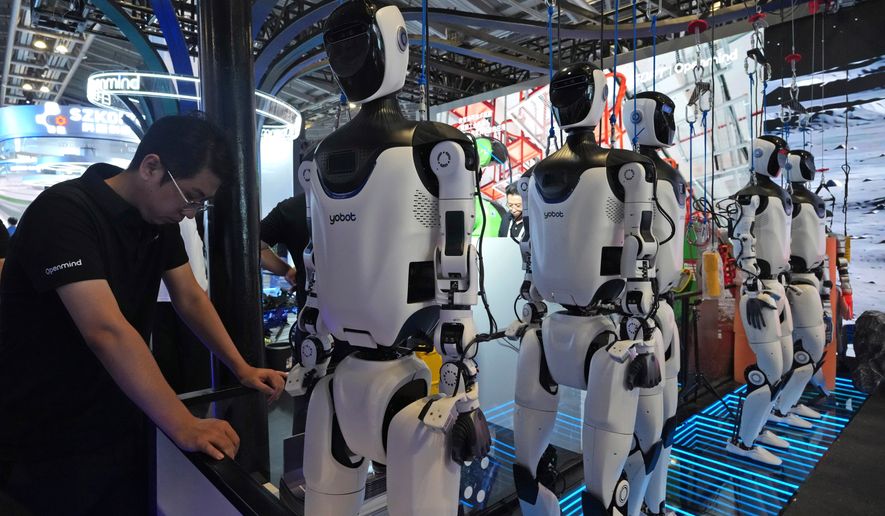

The public debate about warehouse automation tends to picture humanoid robots taking jobs wholesale. The reality on the floor is narrower, stranger, and further along than most of the debate assumes.
Amazon operates more than one million robots across its network. North American companies ordered nearly 18,000 robots worth about $1.2 billion in the first half of 2026, according to the Association for Advancing Automation, which tracks orders across industries. Order value rose 6.6 percent from a year earlier, more than three times the 2 percent rise in units.
What the warehouse robots do today
People were interested in these podcasts
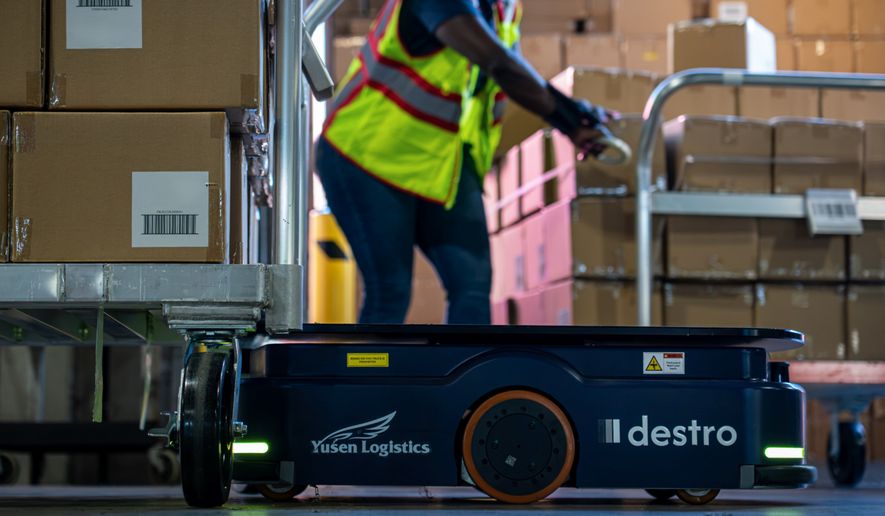
Mobile robots carry shelves and pallets so workers stop walking. Amazon’s original drive units, descended from its 2012 Kiva acquisition, eliminated the miles a picker once covered per shift. Newer machines roam freely among people, automated storage systems pack inventory into dense grids, and robotic arms like Amazon’s Sparrow use computer vision and suction to pick individual items. Amazon says the latest version can handle more than 200 million unique products.
The reported gains are large. Amazon describes a step change in efficiency from its latest-generation technology. One robotics vendor, Addverb, claims warehouse automation can raise productivity 25 to 70 percent. Amazon’s fulfillment expense rose 9 percent in the first quarter from a year earlier, excluding currency effects, while paid units rose 15 percent, CFO Brian Olsavsky said on the company’s April earnings call. In the second quarter, fulfillment expense rose about 14 percent, as reported, against 17 percent unit growth, according to Amazon’s quarterly results.
What they still cannot do
The frontier is the random pick: reliably grasping an arbitrary object from a cluttered bin, whether a bag of screws, a glass jar or a floppy garment. Suction arms handle a growing share but still fail on irregular, fragile and deformable items, which is why humans remain at picking and packing stations in even the most automated buildings.
Exception handling is the other gap. Damaged goods, mislabeled totes, jammed equipment and anything unusual still route to people. And the robots themselves need people: every large deployment creates maintenance, monitoring and flow-control roles that did not exist a decade ago.
What happens to headcount
The historical record cuts both ways. Amazon’s workforce grew from about 88,400 employees in 2012 to roughly 1.58 million at the end of 2025, according to its annual reports, even as the company deployed more than 1 million robots. Per-package labor, though, keeps falling, according to a Wall Street Journal analysis, and the newest robotics sites, starting with Shreveport, Louisiana, in 2024, are now the template for Amazon’s large U.S. launches. CEO Andy Jassy said in April that all such launches in 2026 will use the latest-generation technology.

Internal documents reported by The New York Times describe the next phase bluntly: plans to automate up to 75 percent of operations by 2033, avoid hiring some 600,000 U.S. workers the company would otherwise need, save $12.6 billion by 2027, and cut about 30 cents per shipped package, while retrofits of older buildings reduce their headcount. Amazon has said the documents reflect one team’s view rather than company strategy.
Firm-level studies of industrial robot adoption, mostly in manufacturing, generally find that adopting firms’ employment holds or grows, though the mix of jobs shifts. In Denmark, adopting firms cut demand for production workers and hired more technical staff. In Canada, robots were linked to fewer managers and middle-skilled workers, and more low- and high-skilled workers.
Retraining promised versus delivered
Amazon pledged $1.2 billion to train workers through its upskilling programs and offers prepaid tuition through Career Choice. Dissent magazine, describing internal documents reviewed by The New York Times, reports that Amazon plans to manage negative publicity by highlighting new jobs from robot retrofits and opportunities for retraining. Amazon told the Times the documents reflect the perspective of one team and do not represent its overall hiring strategy.
The gap matters because the jobs being created, robotics maintenance and floor monitoring, require training the displaced picker does not automatically receive. The machines’ limits guarantee warehouse work for years to come. The retraining ledger, promised against delivered, will decide who holds it.
This article was constructed with the assistance of artificial intelligence and published by a member of The Washington Times' AI News Desk team. The contents of this report are based solely on The Washington Times' original reporting, wire services, and/or other sources cited within the report. For more information, please read our AI policy or contact Steve Fink, Director of Artificial Intelligence, at sfink@washingtontimes.com
The Washington Times AI Ethics Newsroom Committee can be reached at aispotlight@washingtontimes.com.

Please read our comment policy before commenting.