


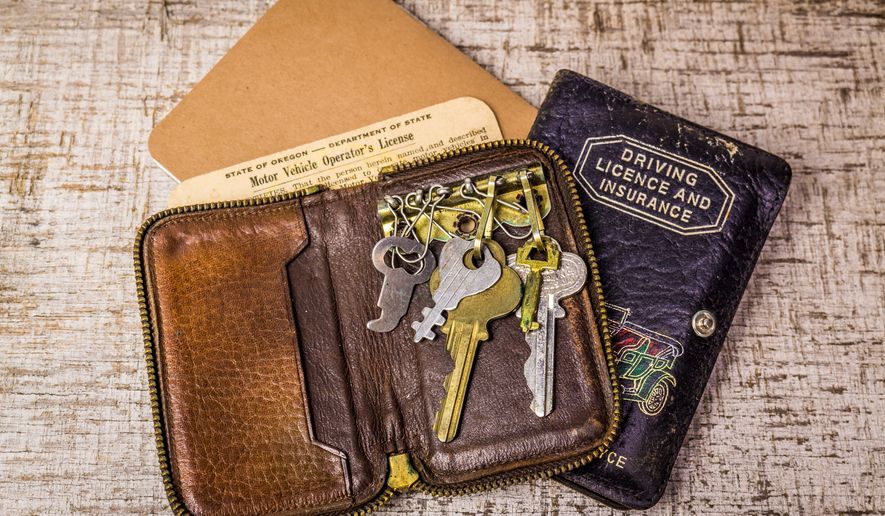

A red card marked “specimen” sat inside a new wallet in 1938. It was meant to show that the wallet could hold the recently introduced Social Security card. The nine-digit number printed on it, 078-05-1120, was real.
The E.H. Ferree Co. of Lockport, New York, produced the insert. Douglas Patterson, the company’s vice president and treasurer, used the Social Security number of his secretary, Hilda Schrader Whitcher, according to the Social Security Administration’s account. The wallets were sold nationwide through Woolworth stores and other department stores, the agency says.
Customers began reporting Mrs. Whitcher’s number as their own. Social Security reclaimed the number in 1941 and issued her a replacement, according to a 1962 agency publication, but use kept growing. In 1943, the peak year, 5,755 people used it, the Social Security Administration says. The agency publicized that the number was not valid, but 12 people were still reporting it in 1977.
People were interested in these podcasts
How did a wallet sample end up in payroll records?
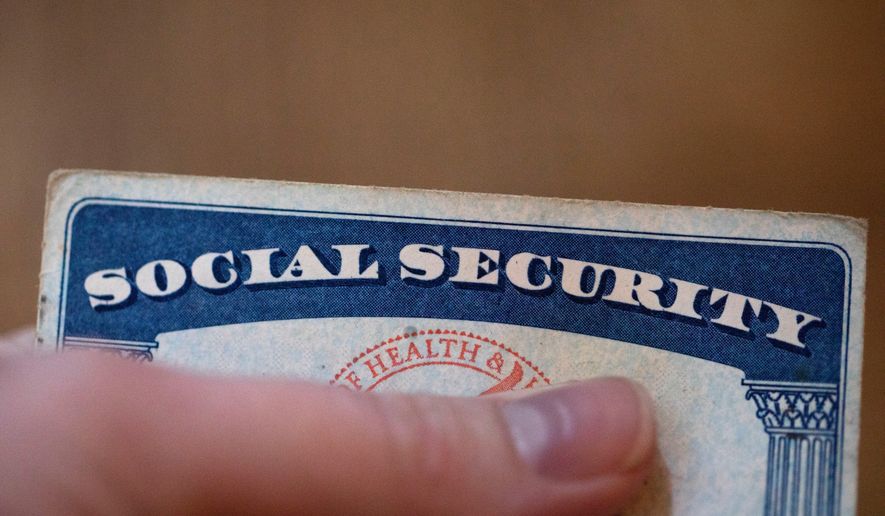
Social Security numbers were used to match workers with wage reports that would determine their future benefits. Thousands of wallet buyers gave the number to their employers, according to a 1977 Washington Post account.
Many buyers apparently believed the wallet entitled them to use the number, The Post reported. Others may have knowingly supplied a number that was not theirs when an employer asked for one. The surviving records do not establish how many people fell into each group.
The 1962 publication, from the agency’s internal OASIS, counted 29,526 reports of Mrs. Whitcher’s number between 1939 and 1948. Earnings reported under the number were held in suspense until they could be credited to the workers’ actual accounts. Officials tagged these “pocketbook” or specimen numbers because most were traced to sample cards produced by wallet makers, card-holder firms and even private insurance companies, the publication said.
Did 40,000 people really use the same Social Security number?
The Social Security Administration’s archival history says more than 40,000 people reported Mrs. Whitcher’s number as their own. That is the basis for the widely repeated description of the episode.
The agency’s research journal gives a somewhat different measure. A 2009 history of the number in the Social Security Bulletin says Social Security received 40,000 incorrect earnings reports under the number and had to reassign them. Reports and people are not necessarily equivalent because one worker could appear during more than one reporting period.
The Post’s 1977 account similarly referred to more than 40,000 “items” received by Social Security, not 40,000 individually confirmed users. The precise number of people is therefore less certain than the familiar version suggests. The records still establish that tens of thousands of wage reports carried the number.
What was a Social Security number used for in 1938?
The federal government created the Social Security number in 1936 to track earnings and calculate benefit eligibility. It was an account number, not proof that the person carrying a card was the person named on it.
The government registered about 35 million workers in its first concentrated national campaign. Sample studies in 1937 or early 1938 found that duplicate numbers had gone to no more than 3% or 4% of applicants, according to the Social Security Administration’s historical research. Some workers thought they needed a new number for each job, while others applied again after losing a card.
The number’s later role as a broadly used personal identifier had not yet developed. In 1943, federal agencies were directed to use Social Security numbers when setting up new record systems, but wider adoption came later. The Internal Revenue Service began using the number for federal tax reporting in 1962.
The wallet incident was therefore not identity theft in its modern form. It reflected a new national accounting system, limited public understanding and a sample card that looked official enough to use.
Did other sample Social Security numbers cause problems?
Ferree was not the only organization whose sample number escaped into circulation. The Social Security Administration says more than a dozen similar cases have occurred, usually involving a made-up number on a sample card. An agency manual quoted in a 1973 federal report counted more than 20 “pocketbook” numbers.
The government also made the mistake. In 1940, the Social Security Board published an explanatory pamphlet featuring the invented number 219-09-9999. In 1962, a woman visited a Social Security office in Provo, Utah, after an employer rejected that number. She had the original pamphlet with her. Asked why she used it, she said she had needed a number and that one was as good as any, according to the 1962 OASIS account.
Mrs. Whitcher’s number was the only pocketbook number ever issued to an actual wage earner, the same publication said, and it brought her personal trouble. The FBI showed up at her door to ask about the number’s widespread use, and coworkers teased her about her newfound fame, the Social Security Administration says.
Printing “specimen” on a card proved insufficient. Once an official-looking number entered nationwide circulation, voiding it did not stop people from using it for decades.
This article was constructed with the assistance of artificial intelligence and published by a member of The Washington Times' AI News Desk team. The contents of this report are based solely on The Washington Times' original reporting, wire services, and/or other sources cited within the report. For more information, please read our AI policy or contact Steve Fink, Director of Artificial Intelligence, at sfink@washingtontimes.com
The Washington Times AI Ethics Newsroom Committee can be reached at aispotlight@washingtontimes.com.

Please read our comment policy before commenting.