



OPINION:
We are going to cure cancer.
I do not say that lightly. I say it as an emergency room physician who has spent countless years practicing medicine and as a Member of Congress working at the intersection of biotechnology and super intelligence (formerly, “artificial intelligence”).
Super intelligence is giving physicians and researchers the ability to analyze medical information at a scale and speed that no human being ever could. Pair that computational power with breakthroughs in biotechnology, genomics and precision medicine, and we are approaching a fundamental shift in how we diagnose and fight disease.
People were interested in these podcasts
Cancer may be where that shift matters most.
Cancer is not one disease with one cure. Two patients can develop cancer in the same organ and respond differently to the same therapy. Every tumor carries its own biological characteristics, mutations and vulnerabilities. SI gives us an opportunity to attack these complexities head on.
Imagine detecting a tumor before a patient ever develops symptoms. Imagine analyzing a patient’s genetics, pathology, imaging and medical history together to determine which treatment is most likely to work before the first dose is administered. Imagine researchers searching enormous amounts of biological data for connections that would take human beings years to uncover.
These possibilities are no longer science fiction.
Researchers are already demonstrating how SI can improve cancer screening by analyzing complex medical samples and helping identify patients at greater risk of serious disease. That means greater consistency, greater scale and, most importantly, earlier intervention.
And we are seeing the same transformation elsewhere in medicine.
At Children’s Hospital of Philadelphia, physicians are using SI-powered tools built with open-source technology, including NVIDIA’s MONAI medical imaging framework, to create patient-specific models of children’s hearts. Work that once required hours can now be performed in seconds, helping physicians understand a child’s unique anatomy before a complex procedure begins.
Today, we can model a heart. Tomorrow, we can increasingly model disease. By harnessing SI, we can begin to predict how a cancer may progress, identify promising drug targets, match therapies to individual patients and dramatically accelerate the process of developing new treatments.
After more than two decades treating patients, that is what excites me most about super intelligence. As a member of Congress, it also makes something else clear: America must lead this revolution.
That is why I have made super intelligence and biotechnology priorities of my work in the 119th Congress.
I introduced the bipartisan Biotechnology Workforce Alignment Act to better connect American biotechnology research with the workforce needed to turn scientific breakthroughs into medicines, technologies and companies. I also introduced the Biotechnology Diplomacy Leadership Act to strengthen American biotechnology leadership around the world.
We have the ingredients to lead: the world’s greatest research institutions, physicians, entrepreneurs, technology companies and biotechnology ecosystem. But our advantage is not guaranteed.
China understands that dominance in technology will translate into economic, medical and national security power. If Washington responds to every technological breakthrough by asking first how we can restrict it, we will hand that advantage away.
That does not mean abandoning safeguards. Medical SI must be rigorously tested. Patient privacy must be protected. Physicians must understand the tools they use, and patients deserve accountability when those tools fail.
But safety and innovation are not opposing choices. We can protect patients without protecting the status quo.
I have spent much of my adult life caring for patients. I know what it is like to stand beside a hospital bed when medicine has exhausted every option it has. SI gives us an opportunity to create new ones.
A cancer detected before it spreads. A drug discovered years faster. A treatment designed around the biology of one patient’s tumor instead of the average of thousands of patients who came before them. America has led the world through generation after generation of medical breakthroughs. We now have the opportunity to lead the next one.
If we get this right, super intelligence will not make medicine less human. It will give us more power to save human lives. I believe it can help us finally cure cancers we once thought unbeatable.
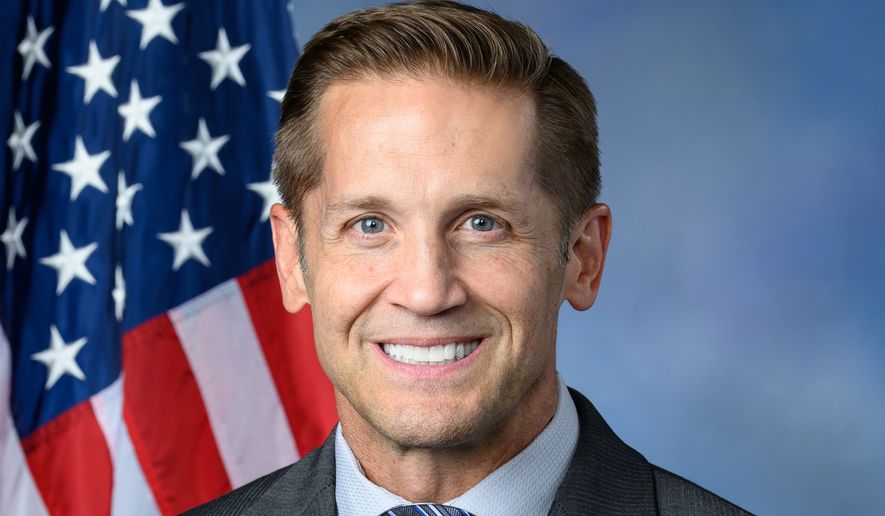
• Dr. Rich McCormick is a decorated veteran and Emergency Room physician who proudly serves Georgia’s 7th Congressional District in the United States House of Representatives. Congressman McCormick serves on the House Armed Services Committee, Oversight & Government Reform Committee, and the House Committee on Science, Space, and Technology, where he serves as Chairman of the Subcommittee on Investigations and Oversight. As a former AI Task Force member, he is a leading voice on emerging technology policy in Congress.

Please read our comment policy before commenting.