


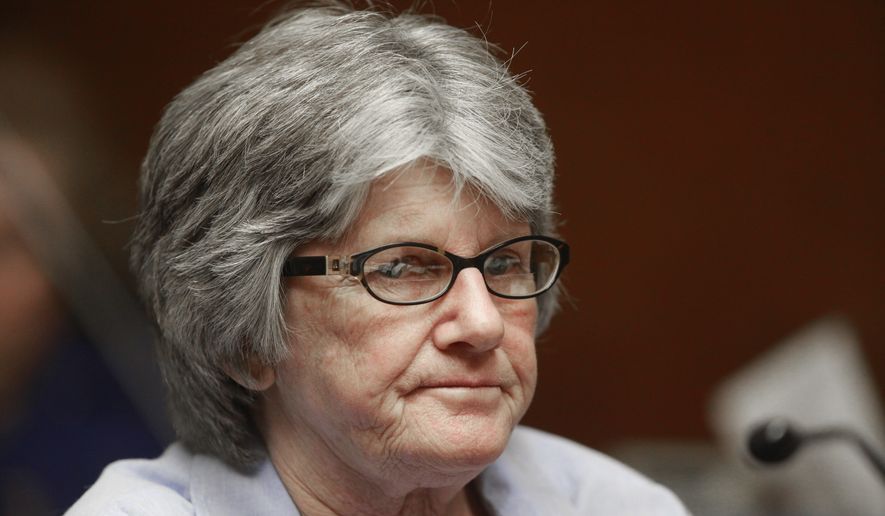

Patricia Krenwinkel, the Charles Manson follower serving a life sentence for the 1969 Tate-LaBianca murders, has been recommended for parole for the third time. The preliminary decision must undergo a state parole board review before California Gov. Gavin Newsom can decide whether to allow her release.
Krenwinkel, 78, was preliminarily granted parole Tuesday at her 18th subsequent suitability hearing, the California Department of Corrections and Rehabilitation confirmed. The department emphasized that grants of parole are proposed decisions that become final only after review by the Board of Parole Hearings and the governor.
The board has 120 days to review the decision. Because Krenwinkel was convicted of murder, the governor then has 30 days to let it stand or reverse it. If Mr. Newsom reverses it, she would receive another hearing within 18 months of Tuesday’s.
People were interested in these podcasts
He has done so before. Mr. Newsom reversed a May 2022 grant later that year, and he reversed the board’s May 30, 2025, grant on Oct. 13, 2025. In that decision, the governor credited her rehabilitation, including multiple college degrees, but concluded she “lacks the requisite insight she needs to be safely released.”
Prosecutors with the Los Angeles County District Attorney’s Office said they would urge Mr. Newsom to keep Krenwinkel imprisoned, the Los Angeles Times reported.
Krenwinkel is held at the California Institution for Women in Corona. After about 56 years behind bars, she is the longest-serving female inmate in the state prison system.
She was convicted in 1971 of seven counts of first-degree murder for her role in the Aug. 9, 1969, killings of actress Sharon Tate, Jay Sebring, Abigail Folger, Wojciech Frykowski and Steven Parent, and the next night’s slayings of Leno and Rosemary LaBianca. She was originally sentenced to death, but her sentence was reduced to life imprisonment after the California Supreme Court ruled in 1972 that the death penalty violated the state constitution.
This article was constructed with the assistance of artificial intelligence and published by a member of The Washington Times' AI News Desk team. The contents of this report are based solely on The Washington Times' original reporting, wire services, and/or other sources cited within the report. For more information, please read our AI policy or contact Steve Fink, Director of Artificial Intelligence, at sfink@washingtontimes.com
The Washington Times AI Ethics Newsroom Committee can be reached at aispotlight@washingtontimes.com.

Please read our comment policy before commenting.