


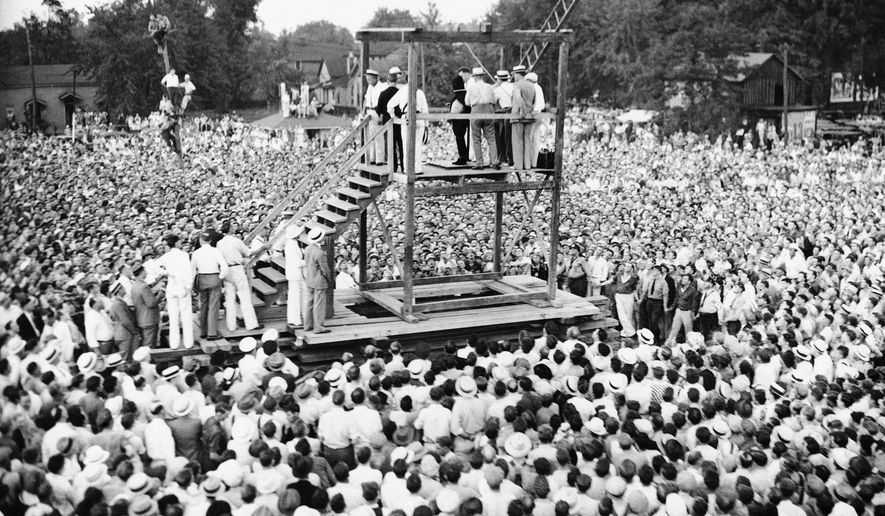

The Pentagon’s plan to livestream the Dec. 3 firing-squad execution of Fort Hood shooter Nidal Malik Hasan revives a spectacle the country largely abandoned in the 1930s. From Jamestown in 1608 to a Kentucky riverfront in 1936, hangings drew crowds of thousands before states moved them behind prison walls.
For much of the nation’s early history, executions were meant to be seen. The first recorded execution in the colonies took place at Jamestown, Virginia, in 1608, and public hangings became a fixture of colonial and early American life.
The crowds could be enormous. When John Tiernan was hanged for murder in Pittsburgh in 1818, a local newspaper put the crowd at eight to 10,000 people.
People were interested in these podcasts
By the 1830s, officials were increasingly uneasy about the disorder such spectacles produced. In April 1834, the Pennsylvania General Assembly passed an act abolishing public executions and moving hangings inside county jails. Pennsylvania is often cited as the first state to do so, though one scholar says Rhode Island banned them a year earlier.
Other states moved far more slowly. In West Virginia, the 1897 hanging of John F. Morgan in Ripley drew about 5,000 spectators and national press coverage. The Legislature responded two years later by requiring executions to be carried out behind penitentiary walls.
The final chapters came in the 1930s. On Aug. 14, 1936, Rainey Bethea, a 22-year-old Black man, was hanged in Owensboro, Kentucky, for the rape of a 70-year-old white woman. Authorities charged him only with rape, Mother Jones reported, because a rape conviction allowed a public hanging in the county where the crime occurred. Estimates of the crowd run as high as 20,000.
The case drew national attention, partly because the Daviess County sheriff, Florence Thompson, was a woman. The coverage and criticism helped prompt Kentucky lawmakers in 1938 to end the requirement that death sentences for rape be carried out by hanging.
Bethea’s hanging is generally cited as the nation’s last public execution, though accounts differ. A 1996 West Virginia Historical Society Quarterly article describes a 1937 hanging in Galena, Missouri, that drew about 500 spectators and attributes the relatively small turnout to a high admission charge.
This article was constructed with the assistance of artificial intelligence and published by a member of The Washington Times' AI News Desk team. The contents of this report are based solely on The Washington Times' original reporting, wire services, and/or other sources cited within the report. For more information, please read our AI policy or contact Steve Fink, Director of Artificial Intelligence, at sfink@washingtontimes.com
The Washington Times AI Ethics Newsroom Committee can be reached at aispotlight@washingtontimes.com.

Please read our comment policy before commenting.