



A Utah judge ruled Tuesday that Tyler Robinson must stand trial for aggravated murder and face the death penalty in the Charlie Kirk assassination.
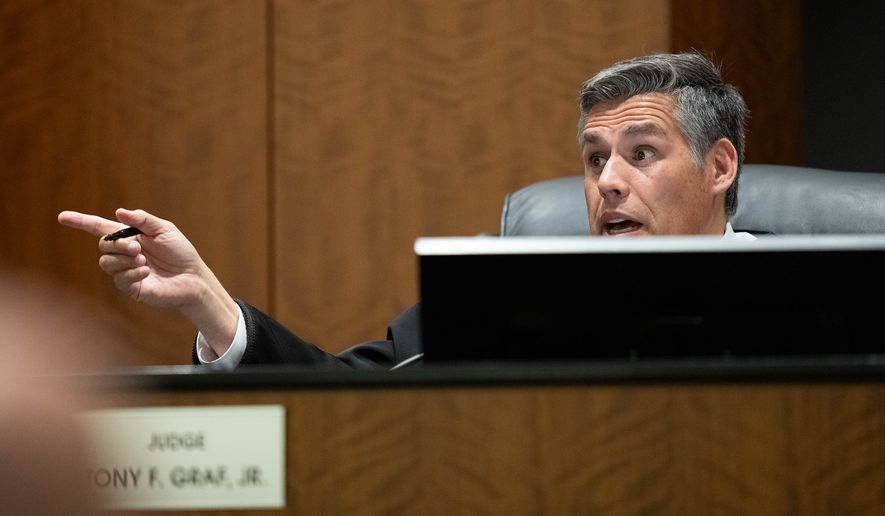
Judge Tony Graf rejected arguments by the defense team that the mountain of evidence put forward by prosecutors did not sufficiently tie Mr. Robinson to the conservative influencer’s death, including Mr. Robinson’s own admissions that he fatally shot Kirk with his grandfather’s rifle.
Mr. Robinson quickly entered a plea of not guilty.
People were interested in these podcasts
The ruling paved the way for Mr. Robinson’s murder trial to begin and was issued nearly a year after Kirk was gunned down on the campus of Utah Valley University.
Mr. Robinson, 23, will face the death penalty after Judge Graf rejected the defense’s efforts to have him strike the aggravating factors cited by prosecutors justifying capital punishment.
No trial date was immediately set though, and it may not happen quickly.
Defense lawyers said they needed another two months before they could all arrange to appear at a pretrial hearing and even then, the defense lawyers said, they wouldn’t necessarily be ready to set a trial date.
Judge Graf issued the decision to a courtroom filled with supporters from both sides. Mr. Robinson’s father was present, as were the parents of Kirk and his widow, Erika Kirk.
A Kirk family lawyer called on the court to hold the trial “swiftly,” to avoid eroding public confidence in the courts, claiming that “delay creates a vacuum, and vacuums fill with speculation that distorts public understanding and erodes confidence in the courts.”
Utah County prosecutors argued that DNA and security camera footage, as well as Mr. Robinson’s admissions, prove the 23-year-old killed the co-founder of Turning Point USA nearly a year ago on the campus of Utah Valley University.
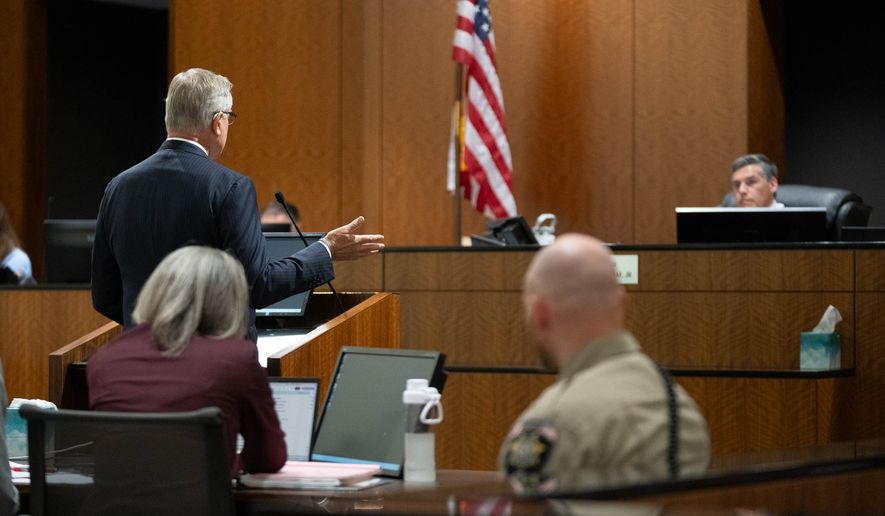
“The evidence and the clues the defendant left behind that day, and his actions over the next day or so, amount to overwhelming and devastating proof of his guilt,” Chief Deputy Attorney Chad Grunander argued before the court.
“The evidence presented at the preliminary hearing not only established the probable cause that he committed the offenses that killed Charlie Kirk in cold blood, but put others at great risk,” he said.
Defense attorneys, looking to undercut the prosecution’s case against Mr. Robinson, said the state has not proved Kirk, who debated students on transgenderism and same-sex marriage among other topics, was killed as a result of his political expression.
Defense attorney Richard Novak said Kirk “spoke hatefully” against certain people but that the prosecution lacked proof Mr. Robinson was motivated to do so because he was in a same-sex relationship with a transgender individual, Lance Twiggs.
“It is true that Mr. Kirk spoke hatefully of certain groups of people,” Mr. Novak said. “He spoke hatefully of people who don’t have traditional norm-conforming gender identities, he spoke hatefully of people who are not strictly heterosexual. He spoke hatefully of people who have sexual relationships out of marriage, and yes, it is true that the evidence from Mr. Twiggs is that he identified in a non-gender-conforming way to his friends, and that he was in a romantic relationship with Mr. Robinson,” Mr. Novak said.
“But that doesn’t mean that those personal choices by Mr. Twiggs and by Mr. Robinson equate with the hate that at least Mr. Robinson says he had toward Mr. Kirk,” the lawyer said.
Judge Graf issued his decision nearly two months after a preliminary hearing in which prosecutors showed extensive video evidence that tracked Mr. Robinson’s movement around the UVU campus on Sept. 10.
Kirk held an event with students on the campus green on that day, including his movement on the roof of the building from which the fatal shot was fired.
Prosecutors said the motive was political and sexual. Mr. Robinson was in a gay relationship and opposed Kirk’s conservative views.
He is accused of using his grandfather’s gun to fire the fatal shot with bullets engraved with messages including “Hey facist, catch,” misspelling the word “fascist.”
The bullet could have hit anyone, prosecutors argued, if the shooter’s aim had been off slightly, or if the bullet ricocheted.
“The defendant Tyler James Robinson shot and killed Charlie Kirk because he disagreed with him, and he did it by firing a high-powered rifle into a group of thousands who surrounded Charlie Kirk literally on all sides, and he, like any rational person, knew that would create a great risk of death to all those around Charlie Kirk in the event of any one of a number of likely possibilities,” Mr. McBride said.
Mr. Grunander said prosecutors “take great exception” to Mr. Novak’s characterization of Kirk’s speech as hateful.
“He had an opinion that he would express on politics and religion. That doesn’t make it hate, but the fact that Mr. Novak even considered it as hate makes the case for the state,” Mr. Grunander said. “In his client’s own words, he hated what Mr. Kirk stood for.”
A Kirk family lawyer spoke similarly at the end of the hearing and said Kirk had millions of followers and “was the opposite of hate.”
Contact the author


Please read our comment policy before commenting.