



OPINION:
Every advanced technology begins with materials extracted from the earth. From modern weapons systems and semiconductors to energy infrastructure and consumer electronics, the building blocks of America’s economic and national security depend on mineral supply chains, many of which are heavily influenced by China.
President Donald Trump has made rebuilding those supply chains on American soil a national priority. Under his leadership, Energy Secretary Chris Wright and this administration have streamlined permitting for domestic mineral projects, unlocked public and private investment and taken steps to increase American production and processing.
Those efforts are laying the groundwork for a stronger domestic minerals industry. But mines, processing facilities and manufacturing plants cannot operate without the skilled professionals who design, build and run them. Even as we work to reduce our reliance on foreign mineral supply chains, we face a shortage of the people we need to establish domestic ones.
China’s advantage is not limited to mining or processing capacity. It has invested heavily in the human capital necessary to sustain these industries. China’s 45 mining engineering programs graduate about 3,000 students each year, approximately 16 times the number graduating annually in the United States. If America intends to win the global race for critical minerals, that is a gap we need to close.
We can start by introducing young Americans to careers they may never have considered. For students trying to identify fields that can offer both opportunity and staying power, mining engineering, materials science and a range of related disciplines deserve a closer look.
These are not relics of an earlier industrial age. Modern mineral development combines advanced technology and sophisticated data analysis with expertise in geology, engineering, computing and environmental science. At a moment when students are questioning old assumptions about which degrees provide security, the minerals sector offers mounting opportunities for prestigious, in-demand, well-compensated work. America’s 14 mining schools — down from a high of 25 in 1982 — have sustained near-100% job placement rates in recent years.
The Trump administration wants more Americans to seize those opportunities.
Last month, the U.S. Department of Energy (DOE) launched a new program: Providing Opportunities for Specialized Education in Critical Technologies, or PROSPECT. This initiative will allocate up to $100 million to help universities attract students to careers that are vital to the creation and maintenance of domestic mineral supply chains. Through financial-aid packages, modernized curricula, experiential learning, and greater exposure to experts in the field, PROSPECT can help more Americans secure a future in these careers.
Transformation on the scale envisioned by this administration requires long-term thinking. A mine can take years to permit and construct, and developing a skilled engineer or geoscientist takes time, too. The people who will operate America’s new mines and processing facilities are sitting in classrooms right now — and now is the time to reach them.
The United States has world-class universities, innovative companies and an entrepreneurial culture that is second to none. What we need now is a new generation of prospectors — the homegrown mining engineers, geologists, metallurgists and data scientists who can make the most of our abundant mineral resources.
I encourage young Americans looking for meaningful, challenging and stable work to think outside the box of conventional majors and career paths. Go somewhere unexpected. Work underground, in a lab, at a mine site or operating the autonomous vehicles that modern mines require. You will be on the cutting edge of AI, material science and technology. The next generation of American prospectors will look nothing like the last — but they’ll be no less integral to their country’s prosperity.
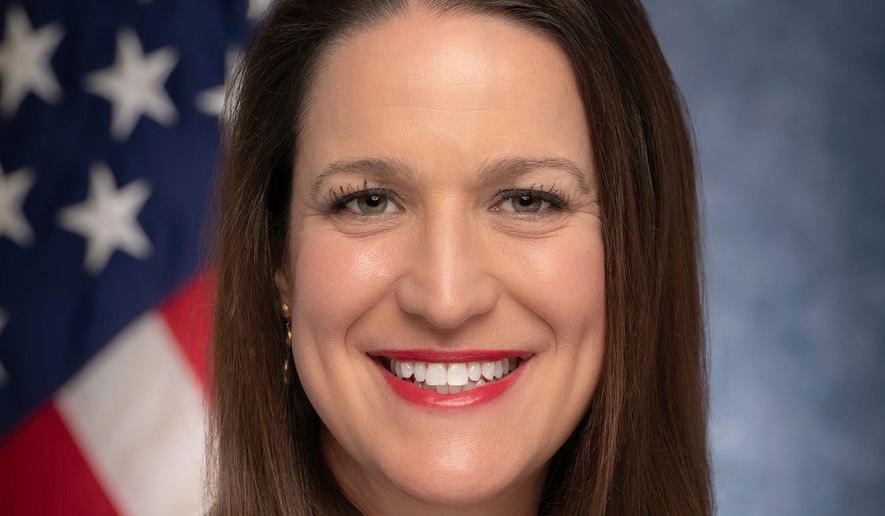
• Audrey Robertson is Assistant Secretary of Energy, Office of Critical Minerals and Energy Innovation.

Please read our comment policy before commenting.