



OPINION:
American energy powers the world — but bureaucrats in Brussels’ new regulatory regime threatens our ability to keep it that way.
The United States is the world’s leading producer of crude oil and natural gas. In April of 2026 alone, we exported liquefied natural gas (LNG) to 35 countries, and 54.6% of it went to Europe. That trade supports American jobs, fuels the global economy and gives our allies a reliable alternative to energy supplies produced by Russia and other foreign countries.
Yet, a wave of the European Union’s (EU) “sustainability mandates,” dressed up as progressive environmental policy, threatens critical American industries like energy. The EU is using access to its market as leverage to dictate how American companies operate on American soil under American law.
To protect American businesses from this foreign overreach, I introduced the Stop EU Overreach Act, now backed by 11 cosponsors. The bill directs the United States Trade Representative (USTR) to investigate four EU regulations — the Corporate Sustainability Due Diligence Directive (CS3D), the Corporate Sustainability Reporting Directive (CSRD), the EU Deforestation Regulation (EUDR) and the Carbon Border Adjustment Mechanism (CBAM) — and determine whether they impose unreasonable or discriminatory trade practices that burden or restrict U.S. commerce. If the USTR determines these mandates unfairly threaten American commerce, it would consider appropriate remedies under Section 301 of the Trade Act of 1974 and report its findings and proposed action to Congress.
It’s the same trade-enforcement tool America has used before against unfair foreign practices, aimed at the exact threat these EU directives pose.
Of the EU’s burdensome mandates, CS3D provides perhaps the clearest example of Brussels trying to export its regulatory agenda on American energy companies. If implemented, it would require the world’s largest companies to conduct extensive administrative due diligence efforts across their value chains — pressuring American suppliers, contractors, and other business partners not practicing business in Europe to adhere to its progressive mandates. One recent analysis estimates compliance could cost American businesses more than $1 trillion.
These ridiculous mandates force American companies that follow American law to still shoulder massive new expenses imposed by a bureaucrat thousands of miles away.
With roughly 217,000 Texans directly working in energy and extraction industries (more than any other state), Texas has a lot to lose if these regulations are enforced. Take, for instance, a Texas LNG provider exporting natural gas across the Atlantic. To maintain access to the European market, the company must demand costly compliance guarantees from every contractor and vendor in its supply chain, even those that never deal directly with European buyers. Under the EU’s mandates, that distinction is irrelevant and local vendors may have to shoulder massive administrative burdens and legal risks anyway.
American businesses aren’t the only ones affected by the EU’s sustainability mandates. Extra supply chain costs could trickle down to American consumers, raising prices for goods and energy.
What makes this even worse is that the EU has already acknowledged these problems and promised to fix them. In the same 2025 trade framework where Brussels committed to buying $750 billion in American energy, European negotiators also pledged to “undertake efforts” to keep its sustainability directives from restricting transatlantic trade.
Over a year later, the EU’s idea of relief is narrowing which companies must comply, while leaving the largest Texas exporters, job-creators and their supply chains just as exposed. Congress should not accept a partial promise as a substitute for real protection.
This isn’t the first time we’ve seen the negative effects of a progressive regulatory agenda on the American energy industry. For four years, the Biden administration imposed new burdensome energy regulations while American families experienced higher energy costs. Over the last two years, my House Republican colleagues and I have successfully undone Biden-era energy production damage by repealing these burdensome energy rules, cutting red tape, and expanding LNG exports. We won’t let a foreign government undo that hard work.
Texans who follow American law to drill, produce, transport, and export American energy should not have to satisfy a second set of rules written by regulators they never elected. If Brussels wants to regulate companies based in Europe, that is its prerogative. But the EU should not use its market access to impose regulatory requirements on activities that take place entirely on American soil.
American companies should be able to compete abroad without surrendering sovereignty at home.
Congress should pass the Stop EU Overreach Act before the lunacy of the EU’s progressive mandates costs the global economy a crucial energy supplier.
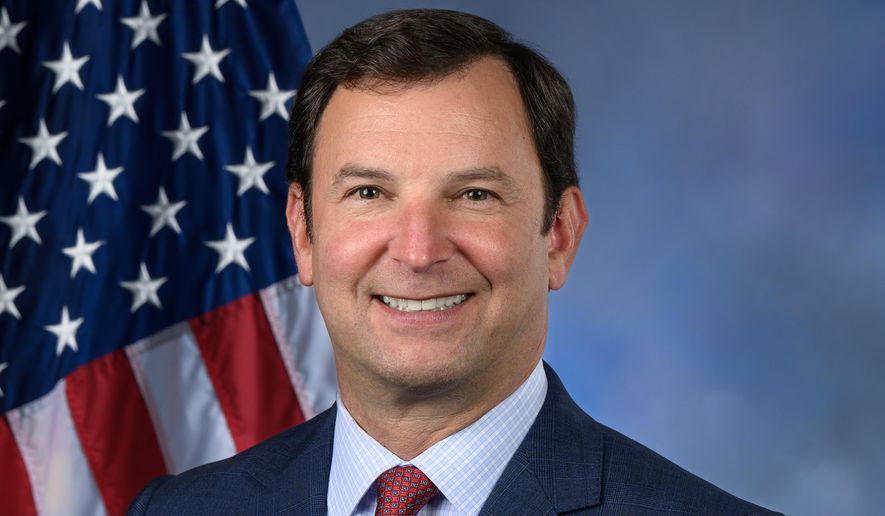
• Congressman Craig Goldman represents Texas’ 12th Congressional District in the U.S. House of Representatives and serves on the House Energy and Commerce Committee. A fifth-generation Texan and fourth-generation Fort Worth native, he previously served for 12 years in the Texas House of Representatives, including as Chairman of the House Committee on Energy Resources and the House Republican Caucus. Before entering public office, Rep. Goldman worked in his family’s Fort Worth business and earned his bachelor’s degree from the University of Texas at Austin.

Please read our comment policy before commenting.