


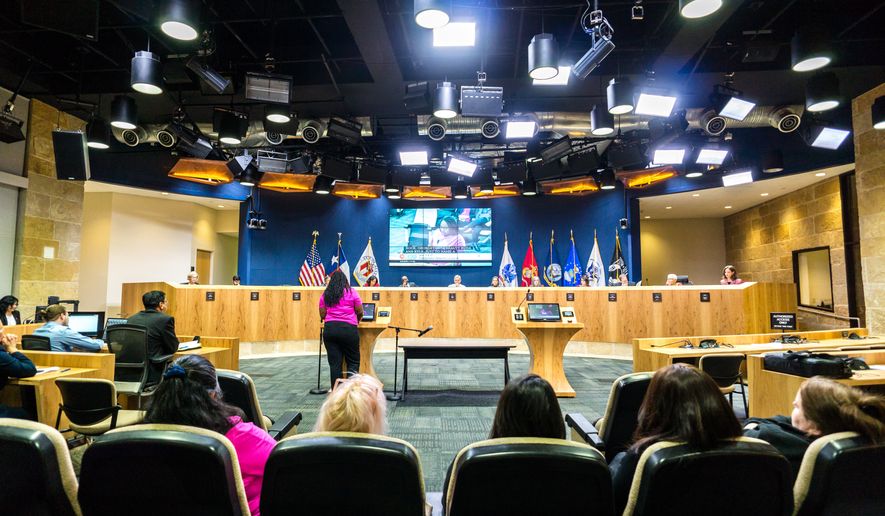

On June 3, 2024, the economic development director of West Memphis, Arkansas, sent a signed nondisclosure agreement for a data center project to the state’s economic development commission. The document didn’t name the company. It barred him from sharing information with any “third party,” and it committed the city to “assert all legally relevant” Freedom of Information Act exemptions to keep records from the public. He was the only person who signed it. Asked whether that left the rest of the city’s employees in the dark, the city attorney told the Arkansas Democrat-Gazette, “Yeah, that’s right.”
The company behind the NDA was Google, which is building a $4 billion data center campus in the city. “Fairly few people know until it’s time for them to know,” the city attorney said.
It’s a familiar pattern. The developer arrives with a rendering, a jobs number and, increasingly often, a nondisclosure agreement. The building behind the rendering can demand enormous amounts of electricity, run cooling fans around the clock, and operate with a few dozen permanent employees. Elsewhere in Arkansas, the Democrat-Gazette found, NDAs are frequently signed by members of the local chamber of commerce, a private group not ordinarily subject to open-records law.
People were interested in these podcasts
Local governments are scrambling to catch up. The Federation of American Scientists, which began collecting signed data center agreements in early 2026, found that many deals are negotiated behind closed doors under NDAs. Of the 42 local data center ordinances and ballot measures FAS tracked, 33 passed in 2026 alone. The agreements that have surfaced show how much is up for negotiation. In St. Louis, the developer agreed to seek no tax break at all. In Cedar Rapids, Iowa, the city agreed to rebate an estimated $529 million in property taxes. Water, noise, cleanup and grid costs are all on the table too. The lesson running through the deals is about timing: counties hold more cards than they think, but only before the vote. Every approval a developer needs (a rezoning, a permit, a tax abatement) is a moment of leverage. Once granted, the leverage is gone.
Tax abatements are not mandatory
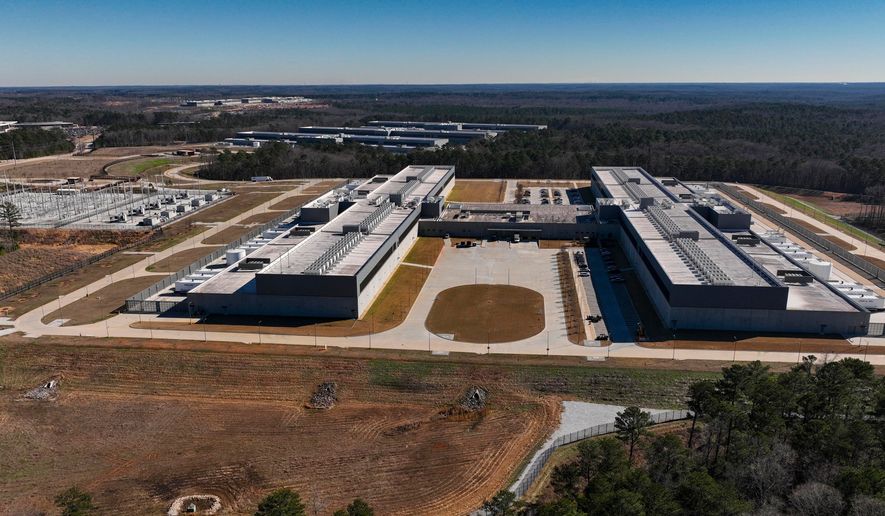
The strongest counterexample to the standard abatement package comes from the heart of the industry. Loudoun County, Virginia, home to what’s known as “Data Center Alley,” grants no local property tax abatement at all. It collects full real estate taxes and taxes the computer equipment inside data centers at $4.15 per $100 of assessed value. According to an independent review of signed data center agreements, that revenue funds roughly $1.3 billion of a $2.9 billion county budget.
Counties that do offer abatements can still set the terms, and the signed agreements FAS reviewed show how. In El Paso, Texas, the city shrinks the developer’s tax break if promised jobs don’t materialize. In St. Louis, the developer agreed to seek no abatement at all, and the agreement calls for damages if it hires fewer people than promised or if tax revenue falls short of projections.
In Marysville, Ohio, if the data center stops operating for more than a year, the city can take back up to 100 percent of the exempted taxes for that year and the two before it. FAS recommends that no tax break run past five years without a chance to reopen negotiations, warning that “the value of these properties may increase substantially” and that “we simply do not have enough information to understand the true economics of these deals.”
The stakes are large: the watchdog group Good Jobs First found that Georgia, Texas, Virginia and Ohio are each losing more than $1 billion a year to data center tax breaks.
Water, noise, and the end of the building’s life
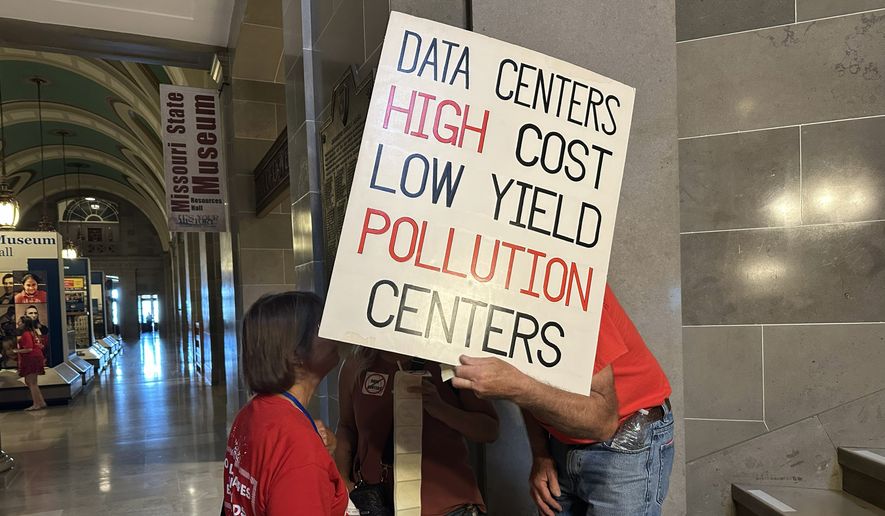
Water deserves its own contract. A single facility can use hundreds of thousands of gallons a day for cooling. In Denver, a CoreSite data center is expected to use about 235,000 gallons a day, according to Westword, and in May 2026 the city council approved a one-year pause on new data centers while officials write rules on water use and other standards.
Linn County, Iowa, requires large projects to complete a water study and sign a water-use agreement that covers what happens during droughts and other shortages. Jones County, Georgia, requires closed-loop cooling and bans evaporative systems outright. Water utilities and environmental advocates told FAS their most consistent frustration is the lack of facility-level reporting that would let anyone check actual use against what was promised at permitting. FAS recommends that agreements require developers to report water use in gallons.
Noise is handled through zoning and contracts. Jones County limits noise at property lines to 55 decibels during the day and 45 at night, requires a 400-foot setback for noise-producing structures and makes developers submit sound modeling with their applications.
In Frederick County, Maryland, the developer agreed to a 55-decibel limit even though the site’s industrial zoning would have allowed 70. St. Louis restricts diesel generator testing to limited weekday hours and requires an annual third-party noise report. FAS goes further, recommending yearly noise testing at property lines whether or not anyone has complained.
Decommissioning is the clause almost everyone forgets. In Jones County, a building-permit application must include a decommissioning plan describing how electronic equipment and other materials will be managed, recycled or disposed of. The developer must also post a bond or letter of credit large enough to cover the county’s estimated cost of decommissioning the facility.
None of these clauses has been tested yet: no one FAS interviewed knew of a single data center that had been formally decommissioned. One local official’s advice was simple: “approve a decommissioning plan when you approve a data center.” Without one, the county could inherit an obsolete industrial shell decades from now.
Who pays for the grid
Interconnection cost is the sleeper issue. Utility customers in seven states in the PJM grid region are being charged $4.4 billion for transmission upgrades approved in 2024 to bring data centers online, according to the Union of Concerned Scientists. Those costs are typically spread across all customers rather than billed to the data centers that caused them. At least 18 states have since introduced bills creating special rate classes or cost-sharing rules so large power users carry more of their own infrastructure costs.
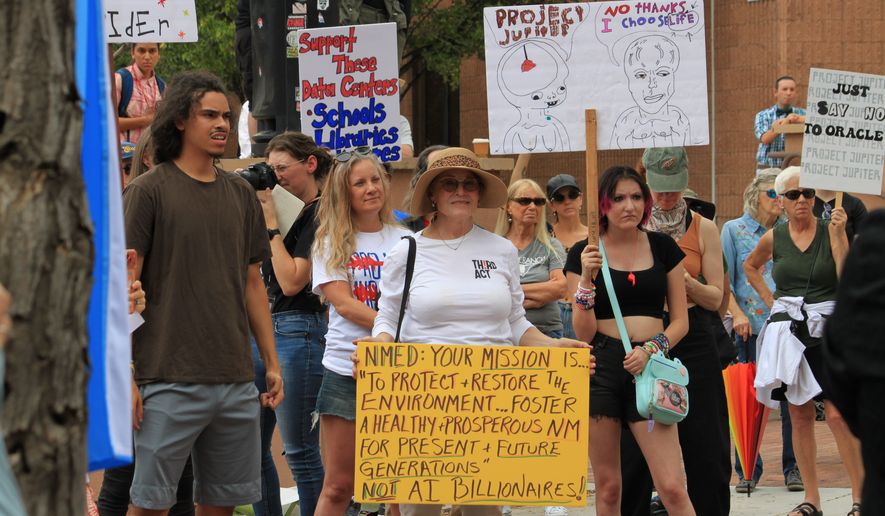
A county cannot set utility rates. But it can make the developer pay for what the project needs. St. Louis, for example, made approval conditional on the developer bearing the full cost of its impacts on public water and electrical infrastructure. Local governments can often weigh in when state regulators decide how those costs are divided.
Where zoning power is limited, community benefit agreements fill the gap. They are contracts, not ordinances, and can cover local hiring, community funds and independent checks on whether the developer is keeping its promises. The two tools work best together because, as FAS puts it, “a CBA cannot fix a zoning gap and a zoning ordinance cannot capture specific project commitments like a CBA can.”
Communities that got it right, and wrong
Cedar Rapids, Iowa, shows what a deal made in the open looks like, and what it can still cost. The city council approved QTS’s development agreement at a public meeting, and the city posts the agreements and related records online. The agreement spells out what counts as a default, gives QTS 60 days to fix one, and requires yearly certification of jobs and wages. According to the independent review of signed agreements, a road use agreement for the project requires QTS to post a $2 million bond within ten business days and pay $117,099.90 for road damage already done. But the city also agreed to rebate 70 percent of the project’s new property taxes for 20 years, an estimated $529 million. FAS found that the city, not QTS, is responsible for designing and building the public improvements, and the minimum job requirement is 15 per project phase.
In Michigan’s Saline Township, the board voted 4 to 1 in September 2025 against rezoning 575 acres of farmland for a data center. The developer sued, and the fight ended in a settlement that limits the project to 250 acres, keeps the rest as farmland or open land, creates a decommissioning fund to restore the site, and gives the community $14 million for farmland preservation, community investment and fire services. It took a lawsuit to get there.
The cautionary tales run the other way. In Memphis, xAI ran dozens of gas turbines for its Colossus supercomputer before it had air permits, according to the Southern Environmental Law Center. The group says aerial images showed 35 turbines on site, and that the company did not apply for a permit, covering 15 of them, until January 2025. Counties that approve first and write the rules later are working in exactly the wrong order. One local official put the fix plainly to FAS: “Determine up front if you want them, where you want them, and under what conditions you will take them.”
The researchers’ conclusion is just as blunt: settle the terms before granting permits, and put every term in an enforceable agreement with specific, measurable standards. The rendering is the developer’s opening offer, not the county’s.
This article was constructed with the assistance of artificial intelligence and published by a member of The Washington Times' AI News Desk team. The contents of this report are based solely on The Washington Times' original reporting, wire services, and/or other sources cited within the report. For more information, please read our AI policy or contact Steve Fink, Director of Artificial Intelligence, at sfink@washingtontimes.com
The Washington Times AI Ethics Newsroom Committee can be reached at aispotlight@washingtontimes.com.

Please read our comment policy before commenting.