



The Senate passed landmark legislation Monday night intended to regulate the Wild West of college sports compensation and transfers, teeing up a vote in the House after the November midterm elections.
In a 77-22 vote, the upper chamber passed the Protect College Sports Act, advancing the future of college sports and student-athlete compensation toward the finish line.
The bill guarantees athletes the right to profit from their name, image and likeness, known as NIL. It also sets rules on athletes’ ability to transfer schools, and requires top-tier schools to maintain programs and scholarships for sports that do not draw as much attention.
People were interested in these podcasts
A sizable coalition of Senate Democrats joined Republicans to move the bill through the chamber, giving the legislation momentum despite resistance from liberal colleagues and civil rights groups.
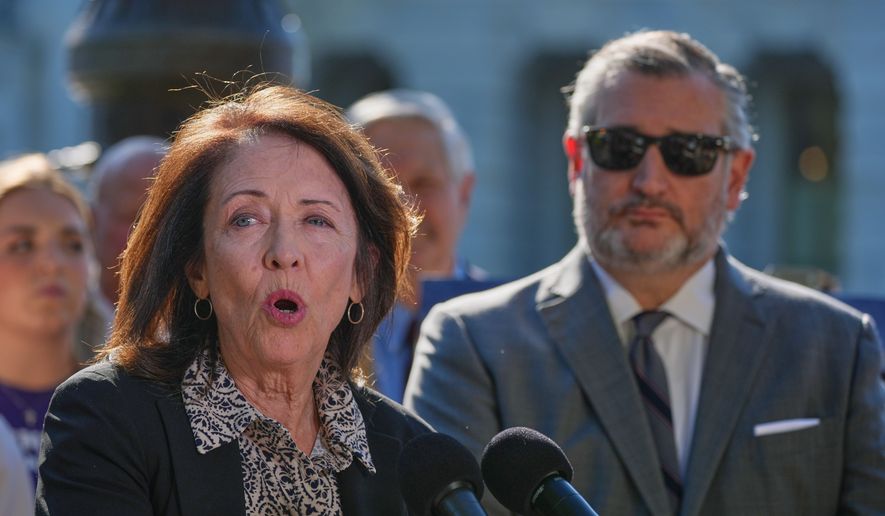
The bill, by Sens. Ted Cruz, Texas Republican, and Maria Cantwell, Washington Democrat, is the latest congressional attempt to stabilize the intercollegiate landscape.
However, an out-of-session House has yet to weigh in on the measure.
Mr. Cruz wants Speaker Mike Johnson, Louisiana Republican, to recall the House from recess to pass the bill so that President Trump, who has voiced his strong backing for the measure, can sign it live on ESPN’s College GameDay.
By establishing an NIL standard, the bill would preempt the current mishmash of state laws, codifying student-athlete compensation and guaranteeing student-athletes’ right to earn money.
It cracks down on above-market third-party deals, requiring athletes to report NIL compensation over $600 and capping agent endorsement fees at 5%.
The bill also raises total allowable school-to-athlete compensation to roughly $48.8 million per institution.
“Compensation on revenue sharing is probably the most important thing we could possibly do to enshrine in federal law today,” Ms. Cantwell said on the Senate floor Monday. “This is saying for the first time that an athlete gets a percentage of the media rights, the ticket sales and the sponsorship.”
The bill also requires universities to follow uniform rules on scholarships, medical coverage and transfer protocols while also granting antitrust protections.
It restores a standard one-time free transfer rule and solidifies a five-year eligibility window for student-athletes.
To prevent “super leagues,” the bill caps a major conference at 19 schools if it acquires another conference’s members or media rights. The top four athletic conferences — the SEC, Big Ten, Big 12 and ACC — would be barred from further consolidation or from growing too large.
Proponents praise the bill as a clear-cut standard that puts an end to years of legal decisions that have caused chaos for athletes and institutions.
It has the support of 32 collegiate athletic conferences and over 380 colleges and universities, according to the Senate Commerce Committee.
The legislation’s adversaries contend that it limits athlete compensation, hands too much legal protection and power to the National Collegiate Athletic Association and disadvantages players economically.
Sen. Chris Murphy refuted the premise that college sports are in “crisis” or “chaos,” as revenue, attendance and women’s sports are at an “all-time high.”
Instead, the Connecticut Democrat said the real “crisis” is that courts found the NCAA’s compensation system illegally suppressed athlete pay by violating federal antitrust laws. He said this bill’s function is to re-legalize that system.
“We are taking a system that the Supreme Court said could not persist under our law, and we are changing the law to allow that illegal system to persist,” he said on the Senate floor.
Contact the author


Please read our comment policy before commenting.