


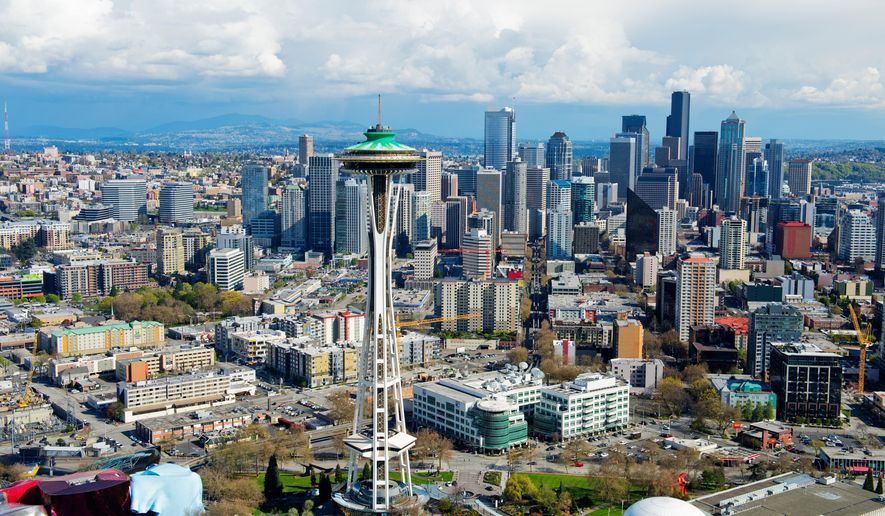

Seattle’s minimum wage will rise to $22.14 an hour in 2027, up from $21.30 this year, an increase of about 3.9%. The city’s economy is showing strain in hiring and downtown real estate.
The rate applies to every employer regardless of size, a rule in place since 2025 that also ended the small-business practice of counting tips and medical benefit payments toward the minimum. Adjusted annually for inflation, the 2027 rate works out to just over $46,000 a year for a full-time worker.
Fox News reported that Seattle could have the highest minimum wage in the country next year, though that depends on other jurisdictions. Tukwila’s 2026 rate of $21.65 is already above Seattle’s $21.30. The outlet said about 450 Seattle restaurants, roughly 16% of the city’s total, closed in the first half of 2025. It cited Square data reported by The Wall Street Journal showing restaurant and retail transactions down as much as 7% in some districts near Amazon and Microsoft campuses.
People were interested in these podcasts
The hiring picture has also weakened. Seattle-area job postings fell 35% between February 2020 and October 2025, second only to San Francisco’s 37% drop in Indeed data charted by Axios.
Downtown office vacancy stood at 35.8% in the second quarter of 2026, up from 34.6% a year earlier, according to Cushman & Wakefield.
Economists have studied how Seattle’s wage law affects where businesses open. A peer-reviewed study co-authored by a University of Wisconsin-Madison economist found that new hospitality and retail establishments declined in Seattle after the city announced its $15 wage in 2014, while entries rose in surrounding areas. The authors estimated that once those spillovers were counted, the total response in business entries was largely insignificant, meaning much of Seattle’s decline was offset by new establishments nearby. Their findings on business exits were inconclusive.
Supporters of the increases say Seattle’s high cost of living requires higher pay to keep workers out of poverty, and that higher wages can help employers retain staff, Fox reported. The outlet also noted that closures and storefront vacancies rose after the pandemic began, before the uniform wage took effect, so the figures do not isolate the wage’s effect.
This article was constructed with the assistance of artificial intelligence and published by a member of The Washington Times' AI News Desk team. The contents of this report are based solely on The Washington Times' original reporting, wire services, and/or other sources cited within the report. For more information, please read our AI policy or contact Steve Fink, Director of Artificial Intelligence, at sfink@washingtontimes.com
The Washington Times AI Ethics Newsroom Committee can be reached at aispotlight@washingtontimes.com.

Please read our comment policy before commenting.