



OPINION:
COMMENTARY:
Among the many wonders to be expected from an Obama administration, if Nicholas D. Kristof of the New York Times is to be believed, is ending “the anti-intellectualism that has long been a strain in American life.”
He cited Adlai Stevenson, the suave and debonair governor of Illinois, who twice ran for president against Eisenhower in the 1950s, as an example of an intellectual in politics.
Intellectuals, according to Mr. Kristof, are people who are “interested in ideas and comfortable with complexity,” people who “read the classics.”
It is hard to know whether to laugh or cry.
Adlai Stevenson was certainly regarded as an intellectual by intellectuals in the 1950s. But, half a century later, facts paint a very different picture.
Historian Michael Beschloss, among others, has noted that Stevenson “could go quite happily for months or years without picking up a book.” But Stevenson had the airs of an intellectual - the form, rather than the substance.
What is more telling, form was enough to impress the intellectuals, not only then but even now, years after the facts have been revealed, though apparently not to Mr. Kristof. That is one of many reasons intellectuals are not taken as seriously by others as they take themselves.
As for reading the classics, President Harry Truman, whom no one thought of as an intellectual, was a voracious reader of heavyweight stuff like Thucydides and read Cicero in the original Latin. When Chief Justice Carl Vinson quoted in Latin, Truman was able to correct him. Yet intellectuals tended to think of the unpretentious and plain-spoken Truman as little more than a country bumpkin.
Similarly, no one ever thought of President Calvin Coolidge as an intellectual. Yet Coolidge also read the classics in the White House. He read both Latin and Greek, and read Dante in the original Italian, since he spoke several languages. It was said the taciturn Coolidge could be silent in five different languages.
The intellectual levels of politicians are just one of the many things that intellectuals have grossly misjudged for years on end.
During the 1930s, some of America’s leading intellectuals condemned our economic system and pointed to the centrally planned Soviet economy as a model - all this at a time when literally millions of people were starving to death in the Soviet Union, from a famine in a country with some of the richest farmland in Europe and historically a large food exporter.
New York Times Moscow correspondent Walter Duranty won a Pulitzer Prize for telling the intelligentsia what they wanted to hear - that claims of starvation in the Ukraine were false. When British journalist Malcolm Muggeridge reported from the Ukraine on the massive deaths from starvation there, he was ostracized on returning to England and was unable to find a job. More than a half-century later, when the archives of the Soviet Union were finally opened up under Mikhail Gorbachev, it turned out that about 6 million people had died in that famine - about the same number as the people killed in Hitler’s Holocaust.
In the 1930s, it was the intellectuals who pooh-poohed the dangers from the rise of Adolf Hitler and urged Western disarmament.
It would be no feat to fill a big book with all the things on which intellectuals were grossly mistaken, just in the 20th century - far more so than ordinary people. History fully vindicates the late William F. Buckley’s view that he would rather be ruled by people represented by the first 100 names in the Boston phone book than by the faculty of Harvard.
How have intellectuals managed to be so wrong, so often? By thinking that because they are knowledgeable - or even expert - within some narrow band out of the vast spectrum of human concerns, they are wise guides to the masses and to the rulers of the nation.
But the ignorance of Ph.D.s is still ignorance and high-IQ groupthink is still groupthink, which is the antithesis of real thinking.
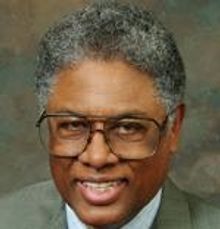
Thomas Sowell is a nationally syndicated columnist.
Follow the author

Please read our comment policy before commenting.