



OPINION/ANALYSIS:
Barack Obama looked Thursday to the lesson of Hiroshima. Sometimes one bomb won’t do it. Nagasaki had to follow to “reset” relations with Japan. Six decades later, the Apology Bomb the president dropped on Moscow during his visit last May didn’t do it, either. He had to drop another one Thursday.
When Mr. Obama, eager to “reset” relations with Russia, decided to abandon arrangements carefully worked out by the previous administration to base missile defense sites in the Czech Republic and Poland, he dropped amends the size of the H-bomb. Surprise was so important he only told the Czechs and Poles about it in a midnight telephone call so they wouldn’t read about it first in the morning papers.
People were interested in these podcasts
Then, while the Czechs and Poles were marinating in the bitter juices of double-cross and humiliation, the president made the official announcement on the 70th anniversary of the Russian invasion of eastern Poland, the first fruit of the infamous Hitler-Stalin pact of 1939. To be fair, Mr. Obama may not have been aware of the history - important to the Poles, but to a community activist from Chicago, not so much. This president is about sweet talk, not history. Maybe the young president-to-be was home with a tummy ache the day his high-school history class learned about World War II, the Cold War that followed, why that history is so important to the Poles, or why Americans revere Winston Churchill, or the fact that America is made up of only 50 (not 57) states. You can miss a lot by playing hooky.
Accusing a president of selling out an ally is a lot more serious than merely accusing him of lying, impolite as that may be, but the Czechs and the Poles can be forgiven if they think “sell-out.” What’s scary about this is not how it was done but that it was done at all, that the president and his men (and women) were acting in well-meant good faith. Said the White House: “We … welcome Russian co-operation to bring its missile defense capabilities into a broader defense of our common strategic interests.”
Never before has an American president put the defense of the country’s “common strategic interests” in the hands of an unreliable rival’s “defense capabilities.”
The president thinks defense against long-range missiles is not so important any more, anyway. Maybe an enemy will be considerate enough to dispatch short-range missiles. Maybe the Russians will help get a resolution through the United Nations condemning Iran’s nuclear-weapons program. Maybe Mahmoud Ahmadinejad will repent and find a peaceful religion. We can hope for change.
The timing of the announcement, though offensive in the eyes of the Poles and the Czechs, was fortuitous for a White House determined “never to waste a crisis.” With Americans distracted by the health care debate and the astonishing attempt by Jimmy Carter, the senile old crank in the White House attic, to ignite a race war, the president could usefully calculate that now is a good time to sell. But the implications won’t be lost on Europe.
“This is bad news for all who care about the U.S. commitment to the trans-Atlantic alliance and the defense of Europe,” observes Nile Gardiner in the London Daily Telegraph. “It represents the appalling appeasement of Russian aggression and a willingness to sacrifice American allies on the altar of political expedience.”
The decision, he writes, “sends a clear message that even Washington can be intimidated by the Russian bear.”
If only intimidation is all it is. The real fear is that Mr. Obama and his wise men regard such appeasement as the strategy to impose a bigger scheme, and were waiting for the opportunity to declare surrender to those with a history of plotting to do America ill. Mr. Obama’s instincts, tutored during his career with left-wing radicals in Chicago, instruct him that in any argument or confrontation it’s always America’s fault. If America could only mend its ways - or have them mended by someone else - the world would live in peace, harmony and love. In this world view, America must be cut down to size, to make it no more consequential in world affairs than Brazil or Sweden or Canada.
George W. Bush famously — and fatuously — said he had looked into Vladimir Putin’s eyes and found his soul. Barack Obama, alas, looked into Vladimir Putin’s cold, hard eyes and found a man he wants America to depend on.
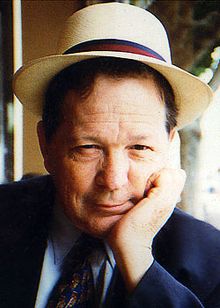
• Wesley Pruden is editor emeritus of The Washington Times.
Contact the author

Please read our comment policy before commenting.